Tuesday, November 28, 2023
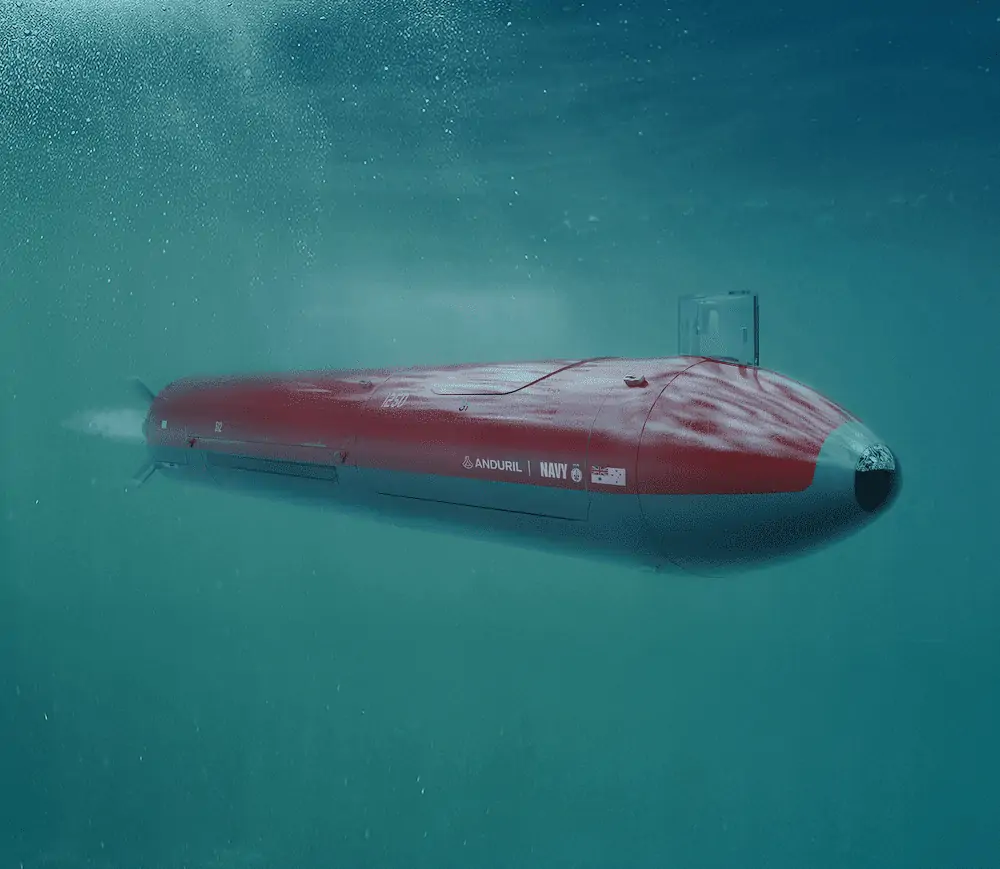
Mini drone carriers
Tuesday, October 03, 2023
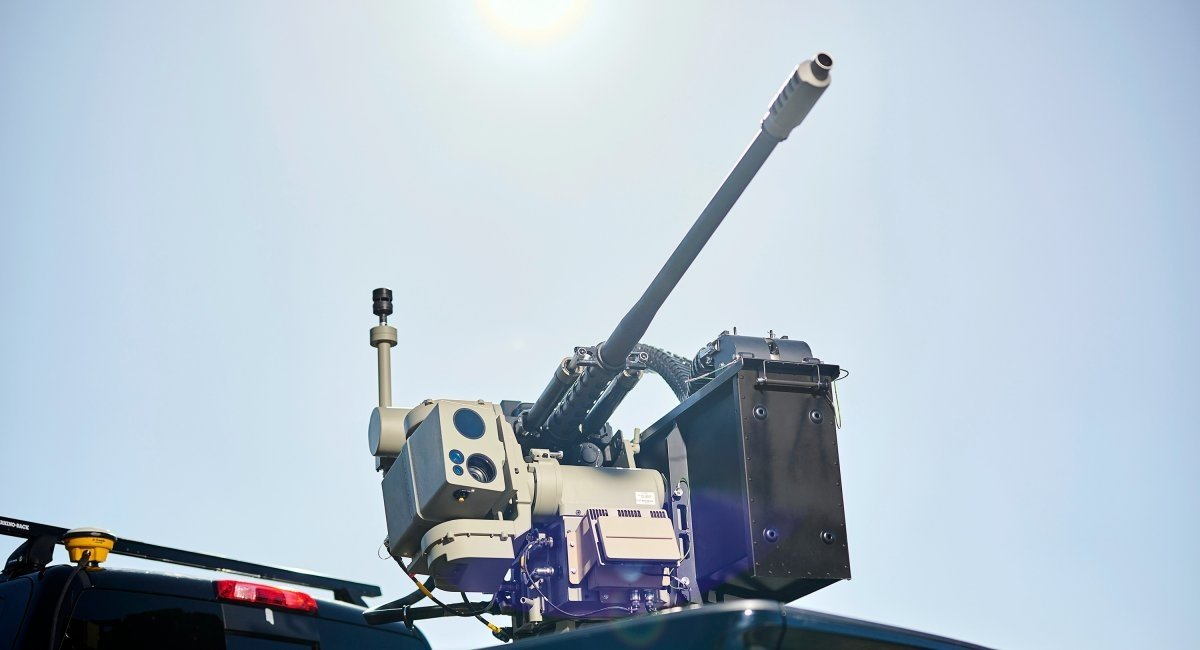
Canberra Counter-drone System for Ukraine
![]() |
| Ghost Gecko Concept |
Friday, July 21, 2023
Ghost Gecko Uncrewed Ground Vehicle
![]() |
| Ghost Gecko Concept |
The Ghost Gecko would be controlled by a hand held unit, usually carried aboard a nearby crewed Hawkei (but could also be operated remotely via satellite). The Ghost Gecko would be able to operate in convoy on road or cross country, in advance of crewed vehicles. It could remain active at one location, for weeks at a time, without the need for maintenance. Several Ghost Geckos could be controlled by one operator, from one station, and control could be handed off, to another location, or to a remote facility, when required.
The same controller, and operating procedures would be used for a waterborne version of the Ghost Gecko, based on a small Australian designed vessel. This speedboat sized craft could be towed behind a Hawkei, and launched from a civilian boat ramp or a beach.
Thursday, March 16, 2023
Plan C for AUKUS Submarine Project: Buy Just Three Submarines Armed with Drones
The largest of the drones would be ocean going robot submarines, capable of conducting surveillance, launching weapons, and perhaps even carrying small raiding parties. The robot submarines would be small enough to be transported by cargo aircraft, and could be maintained from, and carried on Australian made high speed transport ships.
The smaller drones would be the size of mini, lightweight, and full size torpedos. Some drones would operate as smart mines, then attack as torpedos. Others would provide aerial surveillance, and attack. These drones could be launched from submarines, ships, and aircraft.
Friday, May 27, 2022
Optionally Crewed Submarines for the Australian Navy?
In the 2022 Australian election campaign, the Australian Liberal Party has proposed an "Autonomous undersea warfare capability for Australia's navy" as part of its electoral platform (5 May 2022). The Liberal Party lost the election, but there is merit in the new government implementing this idea. Rather than a purely autonomous craft, I suggest optionally crewed submarines, with the ability to carry about seven people (three crew and four special forces passengers). Australia could acquire a dozen such submarines and two submarine tenders to support them, for the cost of one Collins size boat. This would also ease staffing, as the submarines would require far fewer crew.
The proposed submarines would be eXtra Large Autonomous Underwater Uninhabited Vehicles (XLAUVs), designed to operate in Australia's large maritime region. These could be developed using an engineering approach similar to that of the SpaceX Dragon spacecraft. SpaceX took the approach of first proving an uncrewed cargo version of their spacecraft, before adding manual controls and seats. With a submarine this would allow for more rapid development and operational use.
Such a small craft could be used for the same primary roles as a full size submarine: surveillance, deployment of mines, and delivery of special forces. They would not be carry large conventional torpedoes, for a direct attack. However, they could deploy self-propelled smart mines in this role, with the submarine leaving the vicinity before the attack, to increase its chances of survival.
| Cosmos-class submarine, Pakistan Navy, CC BY-SA 4.0, 2018 |
XLAUVs and mini-submarines have a shorter range than conventional and nuclear submarines. The range can be extended by the use of submarine tenders, to refuel, rearm, and exchange crews, closer to the area of operation. The tenders would be able to be designed and made in Australia, derived from Australian stealthy warship and fast military transport ship designs developed for the US military.
Wednesday, May 11, 2022
Jet Suits Bunkum?
I was surprised to get a note from the publication Lifewire, to say I was quoted in their article on Paramedics in Jet Suits (Mayank Sharma, April 1, 2022):
"[A] one person drone might be more useful. The paramedic could strap the patient in and have it fly them to safety, then return empty [for the paramedic]," Worthington wrote on Twitter.
Which I did, but I was bemused to have this summarized as "Tom Worthington, an independent educational technology consultant, thinks the whole idea is bunkum". I can't recall ever using the word bunkum. ;-)
Wednesday, September 22, 2021
New Generation of Underwater Drone Carrying Submarines Needed for Australia
| Korean KSS-III Submarine (model) |
Larger UUVs (underwater drones) would be similar in concept to the Boeing Airpower Teaming System (Loyal Wingman). This is a pilot-less aircraft design to accompany aircraft with crews. It is being designed and built in partnership between US Boeing and the Australian Government. Boeing has the Orca Extra Large Unmanned Undersea Vehicle (XLUUV), based on the Echo Voyager. This is 16 m long with a range of 12,100 km. Smaller drones are more like very smart torpedoes and mines, with limited range. Small UUVs will have far smaller warheads than conventional torpedoes and mines, due to the need for more space for batteries or fuel. This necessity could be made a virtue, by providing a "less lethal" option in grey zone conflicts. UUVs could be programmed to disable a ship's propulsion, steering, or sensors, rather than sinking it. This would deny ports and shipping lanes to an enemy, with less risk of negative publicity from causalities, where the target was a warship disguised as a civilian vessel.
![]() |
| Event canvas from NWIW 2020 by Paul Telling |
Just as battleships were rendered obsolete after WWII by progress with aircraft at sea, large submarines will become increasingly vulnerable to UUVs. Some battleships were converted to aircraft carriers, and similarly submarines will become UUV carriers. This will allow submarines to remain at greater distances, just as aircraft carriers can launch attacks from over the horizon.
However, converted battleships did not make ideal aircraft carriers. Their heavy guns were obsolete and so removed. They did not have optimal storage for aircraft. Similarly, the design of submarines will need to change, with the priority being UUV storage, not sensors or torpedoes. A good starting point would be a design like the Korean Dosan Ahn Changho-class KSS-III. This is the only conventionally powered submarine with a Vertical Launch System for cruise and ballistic missiles.
| Austral Spearhead class expeditionary fast transport |
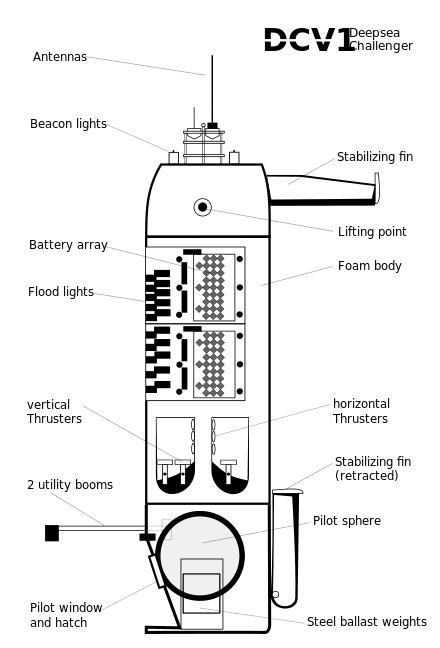
| Deepsea Challenger |
However, the key part of UUVs would be in-country manufacturing capability. This could use local flexible manufacturing, such as Core Electronics factory at Newcastle, for assembling the computer controls, and composite construction from Acheron Project Pty Ltd of Sydney (as used for James Cameron's Deepsea Challenger).
Saturday, December 01, 2018
Repairing a RAAF Leather Flying Jacket
There were spots of lighter color, where the leather had worn, some holes in the cloth inside (just above the woven waistband), and the woven cuffs have frayed.
The color of the leather is officially described as "seal brown" (after the sea mammal, not the special forces). But Waproo Dark Brown Raven Oil is a reasonable match for this. I purchased a 50 ml bottle from a shoe repair kiosk, and dyed the shoulder straps, collar, front pockets and front zip flap. There was was only half a bottle left, so I decided to order online a 500 ml bottle. It turned out I only needed about 150ml for the whole jacket. This is a powerful dye, so it is important to keep it off the cloth lining (and anything else you do not want dark brown).
The cuffs I repaired with a darning needle and dark brown DMC Stranded Cotton 3371.
The cloth lining was frayed just above the woven stretch cuff at the front bottom of the jacket, on each side, extending about 20 mm up. This is the point where my belt rubs on the inside of the jacket. I repaired it with a "fawn" iron-on patch (polyester cotton). I cut the patch length-ways into four strips 23 mm wide. These I ironed onto the cloth lining inside each front side of the jacket, just above the stretch cuff. First I ironed one end of a strip to just next to the zipper, then stretched the jacket out, and kept it stretched while ironing the strip flat onto the fabric. When the patch cooled down I let go, and the fabric puckered around the stretch cuff. It took two overlapping strips to reach the side seam of the jacket. I did not patch the back of the jacket as there was no sign of wear.
The total cost was about $40, and should keep the coat looking good for a few more years.
Thursday, April 12, 2018
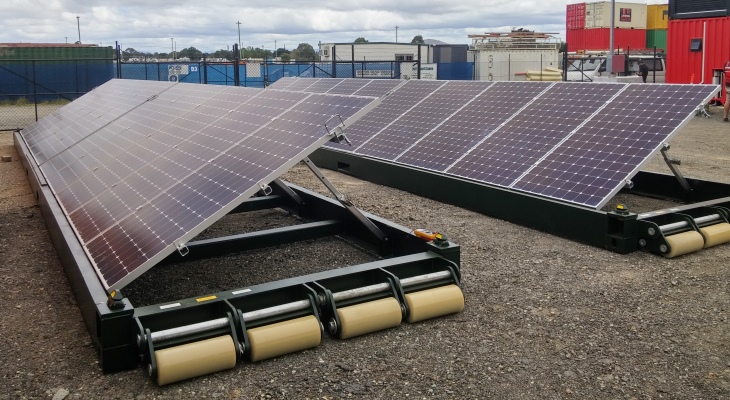
Container Roll-Out Solar System
The demonstration was held at the Canberra drag-strip, normally used for Street Machine Summernats Car Festival. In place of high speed cars there was a forklift which unloaded the solar panels from a shipping container.
The system is designed to provide power for military forward bases and mining camps. A stack of platforms is transported to the site in a standard 20 or 40 foot shipping container. The container is stacked with platforms, each fitted with 5 or 10 solar modules. Each platform is slid out, placed on the ground and then the panels hinged up to face the sun.
The panels are standard domestic units, mourned to an aluminum frame with standard brackets. While made of glass, the panels are reasonably robust. The steel platform they are mounted on appears heavy enough to keep the panels in place in the strongest wind.
This appears a workable system for military use, but may be over-engineered for civilian applications. The platform used is derived from one used for transporting tens of tonnes of supplies. The 20 foot unit weighs more than 1,350 kg, of which less than one quarter would be the panels and their frame. A much lighter platform might be developed to hold the few hundred kilos of solar panels. This would particularly useful for transport by air.
Monday, March 05, 2018
4th Age of War with 3D Printed Pizza Drone Delivered to Battlefield
Dr Palazzo then drew a contrast between a traditional trade route map of the world and a data transmission map. Current main routes are trans-Atlantic and he suggests this is where wealth will be created.
Dr Palazzo suggested that we don't know who makes the rules about trans-national data communications. This clearly is not true. There was a well established international governance framework for telecommunications before the Internet. This was supplemented with new bodies and rules with the advent of the Internet. I helped establish this structure and stumbled into one of the meetings of the people who ran the Internet one day in Stockholm.
Dr Palazzo then claimed that AI can't come up with quirky original actions and may result in predictability on the battlefield. My experience is that AI comes up with anticipated results, as it is not possible for the human, even the one who programmed it, to anticipate how the data will interact.
One area not addressed by Dr Palazzo were information warfare and irregular warfare techniques enhanced by the Internet. Examples of this are the use of sophisticated social media by terrorists, high quality videos by the Russian military in Syria and "Little green men" deployed in the Ukraine. Western military forces have had difficulty in countering these due in part to a lack of suitable training and doctrine.
That these new forms of warfare are now here was brought home to me when ANU started offering a course in "Offensive Cyber Security Operations" (COMP3702).
One point I agreed with Dr Palazzo on was that the barriers to entry with some new technologies is low. This just needs engineers.
ps: My nephew, Sam Worthington, is an engineer and just set up Rapid 3d Printing.
Monday, November 13, 2017
Lockheed Martin Collaboration Center for Canberra
It was mentioned that Lockheed Martin will open a Collaboration Center in Canberra, for local companies to demonstrate their capabilities. One aspect I found worrying was that possible local contribution was described as "niche", suggesting local companies can only have a minor role.
Wednesday, November 08, 2017
Lockheed Martin Looks for Battle Management Partners in Canberra
Saturday, July 04, 2015
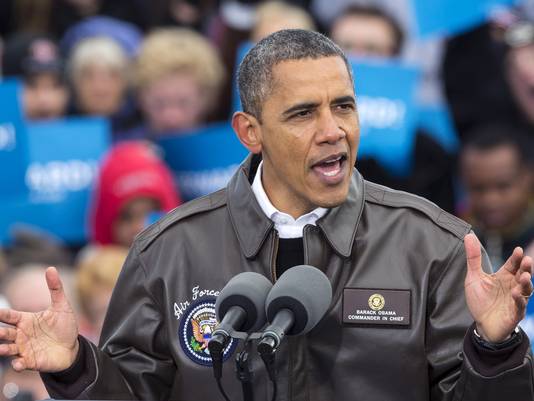
Flying Jacket for Australian Prime Minister
Following the US custom, the Australian PM could wear a jacket with the Australian Arms and kangaroo insignia.
Name Patch for Left Side of PMs Jacket
As a member of the Australian Parliament, can use the Australian Arms:Tony Abbot
Prime Minister of Australia
Kangaroo emblem for Right Side of PM's jacket
The kangaroo emblem is commonly used by the ADF to identify Australian personnel in situations where the Australian flag could be confused with the UK. It is also used by sporting teams and so is suitable for a civilian to wear. The green and Gold of the National Colours would be most suitable:
Australia
Tuesday, June 23, 2015
Digital Camouflage for Wind Towers
Monday, June 01, 2015
Killer Robots and the Laws of War
Australian National University in Canberra, where Professor Chris Jenks, from the Southern Methodist University, Dedman School of Law, is speaking on "Crossing the Rubicon: the path to offensive autonomous weapons".
A representative for the Australian Red Cross introduced Professor Jenks and said how they educate in Australia about the Geneva Conventions.
Professor Jenks started out by pointing out that he was not talking about "drone" aircraft, such as the General Atomics Reaper, which is under remote human control. However, he pointed out that there are degrees of autonomy and commercial airliners are flown by computer most of the time. A military example presented was the "Boomerang counter sniper system" which will detect the direction of incoming fire. Professor Jenks described this then pointing a weapon at the source of fire and await the human operator to pull the trigger.
The Phalanx CIWS is used on Australian warships to protect them from cruse missiles and has an "autonomous mode". The Patriot SAM system in autonomous mode incorrectly shot down allied aircraft in two gulf wars. With these systems a human operator can stop the system firing, but may not have the time to do so and may make worse decisions that the automated system.
Professor Jenks pointed out that small autonomous multi-copters are being trialled by companies for small deliveries, but there are numerous safety problems with these and their military equivalents. He showed videos of experimental swarming 'copters. As the Professor points out the best defence against a swarm of 'copters is another swarm.
Professor Jenks then moved on to driverless cars, pointing out that the majority of car accidents are due to driver error. Self driving cars could reduce accidents. Curiously he illsitrated this with a video about someone getting off a train and into a driverless car. It wuld seem to me much safer for the traveller to stay on the train. In the car they still had the capability to override the automated system.
The issue of responsibility of the driver of an autonomous vehicle has already come to court in Australia. In 2003 a driver was let of a charge of using a mobile phone because he was driving a horse and cart. ;-)
More seriously, Professor Jenks focused on hardware and did not discuss cyber-weapons. Currently there is concern about young people being indoctrinated into extremest causes online. Currently this is being done manually, with human operative doing the grooming. However, it would be possible to automate their process with a simple ELIZA Program which can befriend millions of young people and perhaps turn a few hundred into suicide bombers.
Sunday, May 31, 2015
Opportunity for Australian Defence Industry in Turkish Landing Ship Project
The HMAS Canberra recently commissioned by the Australian Navy is based on the same design (referred to by the RAN as "landing helicopter dock ships"). The superstructures for Canberra and sister ship Adelaide (now under construction) were built in Australia and there may be scope for Australian industry to assist with the Turkish build.
Monday, May 25, 2015
Autonomous Weapons in Canberra
"The current fixation with the possibility of autonomous weapons attacking humans overlooks their current anti-material applications as well as usage domains with minimal chance of civilian casualties. Lethal autonomous weapons systems are not coming, they’re already here. Militaries have employed defensive autonomous weapon systems for decades, and are starting to utilize them in large numbers or swarms.
At the same time the international community has paused at a legal, ethical and moral precipice of utilizing offensive autonomous weapons systems, hyperbolically called ‘killer robots’. What may prove the catalyst in crossing this Rubicon is that the most effective way to attack a defence comprised of swarming autonomous defensive systems is with their offensive analog. And the advancements in defensive systems necessitating consideration of this decision will flow from the surge in commercial use of unmanned aerial systems beginning this year with the United States issuing regulations for their domestic use.
The employment of increasingly autonomous offensive systems will not be predicated on advancements in artificial intelligence but rather on a time honored principle of military technological advances – development of an effective measure inevitably leads to equally if not more effective counter measures."
Wednesday, April 29, 2015
Designing Defence Hi-Tech in Canberra
Sunday, April 19, 2015
Japan’s Ocean Surveillance of Chinese Submarines
However, what the authors do not discuss is ways in which surveillance networks can be made less vulnerable with technological developments. Japan's manned coastal surveillance stations are, by their nature, prominently located along the coast and so vulnerable to attack. However, electronic surveillance can now be undertaken by miniaturized equipment operated by remote control, making it far less visible and vulnerable.
Table of Contents for The Tools of Owatatsumi:
- Introduction
- Post-Cold War Intrusions into Japanese Waters
- The JMSDF’s Ocean Surveillance Architecture
- The Japanese Ground Self-Defense Force (JGSDF)
- The Organisation of the JMSDF: The High Command, Fleet Bases and Regional Districts
- Japanese Undersea Surveillance Systems, 1920–45
- Technical Developments since 1945
- US SOSUS Stations
- JMSDF ELINT/Undersea Surveillance Stations
- Airborne Ocean Surveillance
- JMSDF SIGINT Collection and Ocean Surveillance Ships
- The US Ocean Surveillance Information System (OSIS)
- The Maritime Safety Agency (MSA)/ Japan Coast Guard (JCG)
- Assessment of Japan’s Ocean Surveillance Capabilities
From: Ball, Desmond & Tanter, Richard, (author.) (2015). The tools of Owatatsumi : Japan's ocean surveillance and coastal defence capabilities. Canberra ACT ANU Press. Retrieved from http://press.anu.edu.au/titles/the-tools-of-owatatsumi/