Greetings from the ANU Climate Update 2018 at the Australian National University in Canberra. Professor John Hewson from the ANU Crawford School of Public Policy warned that advances in renewable power technology could precipitate a global financial crisis. The concern, as I understand it, was that wind turbines, photovoltaic panels and batteries are dropping in cost. The problem then existing fossil fuel investments could become suddenly financial nonviable, disrupting financial markets.
I was reminded about sudden changes in technology yesterday, with the successful launch of the SpaceX Falcon Heavy reusable launch vehicle. This has been under development for at least ten years, but the success makes it a viable option for launching satellites at about one third the current cost.
It is similarly easy to overlook incremental improvements in renewable energy technology, until it is packaged in an understandable form. An example South Australia's 100MW battery and batteries for 50,000 homes.
Showing posts with label carbon emissions. Show all posts
Thursday, February 08, 2018
ANU Climate Update 2018
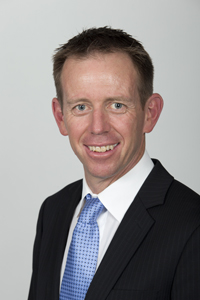
Greetings from the ANU Climate Update 2018 at the Australian National University in Canberra. The opening address was by Shane Rattenbury, MLA, Minister for Climate Change and Sustainability, ACT Legislative Assembly. He invited community comment on the ACT Climate Strategy to a Net Zero Emissions Territory.
The Minister surprisingly admitted that the Australian Capital Territory (where Canberra is) was easily able to become carbon neutral. This could be done as the ACT doesn't have a lot of coal fired power stations to replace.
ps: I am just finishing updating the notes for my course "ICT Sustainability" being offered by ANU in First Semester, starting online 19 February.
The Minister surprisingly admitted that the Australian Capital Territory (where Canberra is) was easily able to become carbon neutral. This could be done as the ACT doesn't have a lot of coal fired power stations to replace.
ps: I am just finishing updating the notes for my course "ICT Sustainability" being offered by ANU in First Semester, starting online 19 February.
Tuesday, March 21, 2017
Virtual Power Station Cheaper Than Snowy Hydro 2.0?
Tomorrow I am giving a guest lecture to Systems Engineering students (COMP3530) at the Australian National University on "Environmental
Concerns". As usual I will run them through "How Green is My Computer?", an exercise in estimating the carbon emissions from a computer. However, to make it topical, I thought I would see if computers can provide a cheaper alternative to the PM's Snowy Hydro 2.0 Proposal.
In February 2017, a team of ANU researcher, lead by Professor Andrew Blakers released a report proposing that "100% renewable electricity in Australia" was feasible. This would use pumped hydro energy storage: excess power from wind turbines and solar panels would be used to pump water into a high reservoir. At times when there was insufficient wind and sun, the water would run down to a lower reservoir and drive a turbine. Blakers and Fulton described how this could be implemented at the existing Snowy Hydro Scheme, in 2014.
Malcolm Turnbull, Prime Minister of Australia then announced the "Snowy Mountains Scheme 2.0." (16 March 2017), to add 2000 megawatts of pumped hydro storage, at a cost of AU$2B ("Malcolm Turnbull plans to upgrade Snowy Hydro to version 2.0" (Video), ABC TV, 16 March 2917).
However, are there cheaper, quicker alternatives for low pollution energy, using computer and telecommunications? Companies including Canberra's Reposit Power (Founded by ANU graduate Dr Lachlan Blackhall) aggregate the power from home solar systems (and batteries) and sell this back to the grid.
However, there is another underused source of on-demand power available in people's homes: the air-conditioner. The air-conditioner is a large part of the energy supply problem but could be part of the solution. A home ducted home air-conditioner uses about 5KW of power. A medium room air-conditioner uses 2.3KW. What if we could pay householders to halve their air-conditioning energy use at times of high energy demand?
Smart meters and some air conditioners have a Demand Response Enabling Device (DRED) option. This allows the electricity supplier to remotely switch the air-conditioner to a lower power mode at times of peak demand. The supplier offers a cash payment up front and a lower electricity charge to householders who take up the option. However, this is not very popular.
If we could use smart-phones, and sharing economy techniques to provide more of an incentive to consumers, would this be cost effective?
A quick back-of the-envelope calculation:
Assuming a consumer would halve their air-conditioner consumption on demand, 5KW to 2.3KW = 2.7 KW saved. This would have to cost less than $2,700 to be cheaper than Snowy #2. Retrofitting DRED may well cost more than this. However, smart air-conditioners may require no extra hardware. The difficulty would be making it feasible for the consumer to enable the function, without requiring a technician to visit.
The computing power needed to provide the DRED function, could be provided by a computer equivalent to a $50 Raspberry PI. The computer needs no touch screen as it can instead use the consumer's smart-phone for the interface. The connection to the energy supplier can be via WiFi to the household hub. The system could be made fail-safe (and prevent the consumer cheating it) by having the unit programmed to operate on low power, until it receives an encrypted signal from the power company to switch to high power.
However, how many households would need to have DRED? The Snowy Hydro 2 scheme is proposed to produce 2000 MW. At 2.7 KW saved per household, that requires almost three quarters of a million households: 8% of the 9m in Australia. Also it is unlikely that these householders would be willing to give up half their air-conditioning for long periods. But such a system might be used during the annual peaks and when there is a problem with regular supply, rather than have fossil fuel stations on standby. So I propose the Snowy 2 Scheme include a 2000 MW virtual power station to be operational by the end of 2021 at a cost of $200M.
![]() |
The Conversation, CC BY SA 4 |
![]() |
| Murray 1 Snowy Hydro Station, by Martin Kraft/Wikimedia Commons, CC BY-SA |
However, there is another underused source of on-demand power available in people's homes: the air-conditioner. The air-conditioner is a large part of the energy supply problem but could be part of the solution. A home ducted home air-conditioner uses about 5KW of power. A medium room air-conditioner uses 2.3KW. What if we could pay householders to halve their air-conditioning energy use at times of high energy demand?
Smart meters and some air conditioners have a Demand Response Enabling Device (DRED) option. This allows the electricity supplier to remotely switch the air-conditioner to a lower power mode at times of peak demand. The supplier offers a cash payment up front and a lower electricity charge to householders who take up the option. However, this is not very popular.
If we could use smart-phones, and sharing economy techniques to provide more of an incentive to consumers, would this be cost effective?
A quick back-of the-envelope calculation:
Cost of Snowy #2 power: $2B for 2000 MW = $1,000 per KW.
Assuming a consumer would halve their air-conditioner consumption on demand, 5KW to 2.3KW = 2.7 KW saved. This would have to cost less than $2,700 to be cheaper than Snowy #2. Retrofitting DRED may well cost more than this. However, smart air-conditioners may require no extra hardware. The difficulty would be making it feasible for the consumer to enable the function, without requiring a technician to visit.
| Raspberry Pi
Computer, photo by By Ayaita (Own work) [CC BY 3.0], via Wikimedia Commons |
However, how many households would need to have DRED? The Snowy Hydro 2 scheme is proposed to produce 2000 MW. At 2.7 KW saved per household, that requires almost three quarters of a million households: 8% of the 9m in Australia. Also it is unlikely that these householders would be willing to give up half their air-conditioning for long periods. But such a system might be used during the annual peaks and when there is a problem with regular supply, rather than have fossil fuel stations on standby. So I propose the Snowy 2 Scheme include a 2000 MW virtual power station to be operational by the end of 2021 at a cost of $200M.
Wednesday, September 14, 2016
Green Services Export Opportunities for Australia
Greetings from the Australian National University in Canberra, where Alex Teytelboym from the University of Oxford is speaking on "Climate and Innovation". He started by pointing out that the commitments to emissions reductions made at the COP 21 Paris Agreement were not sufficient to limit global warming to 2 degrees. He suggested that most coal will have to be left in the ground and changes to development needed by next year to avert global disaster.
Dr. Teytelboym has carried out a detailed analysis of the development of green products, to see how new industries emerge (a "Green Complexity Ranking"). He found, not surprisingly, that Germany makes complex green products, whereas South Africa makes simpler ones. Surprisingly Australia ranks very poorly in production of both simple and complex green products, near the bottom of the list at 116 out of 117, between Trinidad and Panama. However, Dr. Teytelboym points out that Australia ranks well in the export of services, such as higher education.
Dr. Teytelboym has published papers on climate change. Interestingly, he has also published papers on Social Networks, but none on climate change and social networks. I suggest that just as major changes in emissions from vehicles with conventional internal combustion engines has been made possible by the addition of computer controls, ICT can be used more generally to reduce emissions. An example is a social networking applicaiton which introduces people so they feel confortable to share local co-working office or a ride-share vehicle. I discuss this in my course "ICT Sustainability: Assessment and Strategies for a Low Carbon Future".
Dr. Teytelboym has carried out a detailed analysis of the development of green products, to see how new industries emerge (a "Green Complexity Ranking"). He found, not surprisingly, that Germany makes complex green products, whereas South Africa makes simpler ones. Surprisingly Australia ranks very poorly in production of both simple and complex green products, near the bottom of the list at 116 out of 117, between Trinidad and Panama. However, Dr. Teytelboym points out that Australia ranks well in the export of services, such as higher education.
Dr. Teytelboym has published papers on climate change. Interestingly, he has also published papers on Social Networks, but none on climate change and social networks. I suggest that just as major changes in emissions from vehicles with conventional internal combustion engines has been made possible by the addition of computer controls, ICT can be used more generally to reduce emissions. An example is a social networking applicaiton which introduces people so they feel confortable to share local co-working office or a ride-share vehicle. I discuss this in my course "ICT Sustainability: Assessment and Strategies for a Low Carbon Future".
Sunday, November 22, 2015
Flexible Coal: Better to Wear Away Than Rust Away
"Flexible Coal" with current base-load power stations converted to peaking plants, may provide a way to increase the use of renewable energy and reduce greenhouse gas emissions. Photo-voltaic and wind generated power are intermittent: when the sun stops shining, or the wind stops blowing, the energy production stops. Conventional wisdom has been that these renewable sources could not make up more than a small fraction of energy generation, until an affordable way to store that energy was found.
The problem was that coal fired power stations, now used to provide the base-load in countries such as Australia, could not be simply switched on when needed. However, the report "Flexible CoalEvolution from Baseload to Peaking Plant", from the U.S. Department of Energy, Office of Energy Efficiency and Renewable Energy, indicates that with some limited hardware modifications and changes to operational practice, coal fired power stations can be cycled on and off and run at lower output than previously thought (less than 40% of capacity). Cycling the plant does damage equipment and limit its life expectancy, but may be preferable to scrapping a working plant and having to replace it with an alternative such as gas power.
Modifying coal power stations to provide a backup for renewable energy could significantly reduce greenhouse gas emissions far quicker than storage options, such as batteries. Instead of coal providing the base-load and renewable energy supplementing this, PV and wind could provide most of the energy on most days of the year. Coal power would just be switched on when needed: on cloudy windless days, at peak times during the day and at night. Also excess renewable power could be used to heat the coal station's equipment, so it is ready to start more quickly and also reduce damage from cooling.
The conversion of coal stations to peaking plants would provide a political solution for the Australian Government, needs to find a way to reduce greenhouse gas emissions, while not being seen to be damaging the Australian coal industry. Obviously off-peak coal power stations are not a long term option, as they still will emit significant amounts of carbon dioxide pollution. However, this could be a useful interim measure for the decade or so it takes for storage of renewable energy to become practical.
The problem was that coal fired power stations, now used to provide the base-load in countries such as Australia, could not be simply switched on when needed. However, the report "Flexible CoalEvolution from Baseload to Peaking Plant", from the U.S. Department of Energy, Office of Energy Efficiency and Renewable Energy, indicates that with some limited hardware modifications and changes to operational practice, coal fired power stations can be cycled on and off and run at lower output than previously thought (less than 40% of capacity). Cycling the plant does damage equipment and limit its life expectancy, but may be preferable to scrapping a working plant and having to replace it with an alternative such as gas power.
Modifying coal power stations to provide a backup for renewable energy could significantly reduce greenhouse gas emissions far quicker than storage options, such as batteries. Instead of coal providing the base-load and renewable energy supplementing this, PV and wind could provide most of the energy on most days of the year. Coal power would just be switched on when needed: on cloudy windless days, at peak times during the day and at night. Also excess renewable power could be used to heat the coal station's equipment, so it is ready to start more quickly and also reduce damage from cooling.
The conversion of coal stations to peaking plants would provide a political solution for the Australian Government, needs to find a way to reduce greenhouse gas emissions, while not being seen to be damaging the Australian coal industry. Obviously off-peak coal power stations are not a long term option, as they still will emit significant amounts of carbon dioxide pollution. However, this could be a useful interim measure for the decade or so it takes for storage of renewable energy to become practical.
Wednesday, August 26, 2015
Australian Electricity Demand in the Future
Greetings from the Australian National University in Canberra, where Dr Hugh Saddler is speaking on "Electricity demand and Australia’s renewable energy targets: where to?". He showed a graph which showed that the feared "peak demand" for electricity in Australia did not happen. Also he emphasized that not only is demand for electricity in Australia decreasing, but the decrease is accelerating. Dr Saddler points out that some electricity use is not measured (for example power from a roof top solar system which is used in the household). Dr Saddler pointed out this would increase as companies such as Ikea installed their own PV. Residential use of electricity is about at the same level as large industries, both of these are less than general business. All three categories of electricity use are decreasing, residential most rapidly. The largest factor in reduction in electricity use is energy efficiency, not from PV panels. Detached houses use about 50% more electricity than other forms of housing. Dr Saddler concluded that the worst case would be that electricity consumption would remain constant, not increase. Gas consumption for homes is decreasing due to efficient reverse cycle air-conditioning, but this will not significantly increase electricity consumption. There is less scope for reduction for electricity use in business. Interestingly, the Queensland coal seam gas industry is expected to cause an increase in electricity use, associated with the extraction.
Tristan Edis then talked on "50% Renewables: Have We Gone Mad?". He mentioned "Learning the hard way: Australia’s policies to reduce emissions". He argues that regulatory measures have been more effective and less politically contentious than measures such as a carbon price. He argues that emissions need to be reduced by 80% soon and the cost of solar panels and wind turbines have reduced with volume of production. I am not sure I believed Tristan Edis' analysis, but by considering the political palatability of emissions policy he introduced a more useful way to discuss the issues than previously at ANU.
Friday, April 17, 2015
Carbon emissions trading in China
Greetings from the Australian National University in Canberra, where Professor Zhong Xiang Zhang (å¼ ä¸ç¥¥), School of Economics, Fudan University is speaking on "Carbon emissions trading in China". His paper "Carbon Emissions Trading in China: The Evolution from Pilots to a Nationwide Scheme" is also available.
China currently has seven regional pilot carbon trading schemes running (Beijing, Tianjin, Shanghai, Hubei, Guangzhou, Shenzhen and Chongqing). Professor Zhong Xiang Zhang indicated that the government would not have a national scheme before 2017. The Chinese schemes are targeted at enterprises and include indirect emissions from electricity from outside the region. No forward or futures trading is allowed (it would be interesting to see, I suggest, if it is happening anyway, informally).
Professor Zhong Xiang Zhang notd with some amusement, that some government entities and well known companies had failed to comply with the requirements of the Beijing scheme, most notably Microsoft.
The previous Australian government was planning to link its trading scheme to that of Europe. But this was abandoned by the incoming government. government. This may have been fortunate as the European scheme has had problems. Perhaps Australia should instead join the Chinese scheme. Given the level of trade between the countries this could be workable and could be done without contradicting the Australian government anti-carbon tax rhetoric.
China currently has seven regional pilot carbon trading schemes running (Beijing, Tianjin, Shanghai, Hubei, Guangzhou, Shenzhen and Chongqing). Professor Zhong Xiang Zhang indicated that the government would not have a national scheme before 2017. The Chinese schemes are targeted at enterprises and include indirect emissions from electricity from outside the region. No forward or futures trading is allowed (it would be interesting to see, I suggest, if it is happening anyway, informally).
Professor Zhong Xiang Zhang notd with some amusement, that some government entities and well known companies had failed to comply with the requirements of the Beijing scheme, most notably Microsoft.
The previous Australian government was planning to link its trading scheme to that of Europe. But this was abandoned by the incoming government. government. This may have been fortunate as the European scheme has had problems. Perhaps Australia should instead join the Chinese scheme. Given the level of trade between the countries this could be workable and could be done without contradicting the Australian government anti-carbon tax rhetoric.
The Chinese central government has approved the seven pilot carbon trading schemes. These seven pilot regions are deliberately selected to be at varying stages of development and are given considerable leeway to design their own schemes. These pilot trading schemes have features in common, but vary considerably in their approach to issues such as the coverage of sectors, allocation of allowances, price uncertainty and market stabilization, potential market power of dominated players, use of offsets, and enforcement and compliance. This article explains why China opts for emissions trading, rather than carbon or environmental taxes at least initially, discusses the key common and varying features of these carbon trading pilots and their first-year performance, draws the lessons learned, discusses the potential pathways for evolution of regional pilot carbon trading schemes into a nationwide carbon trading scheme, and raises fundamental issues that must be addressed in order to make such an emissions trading scheme to work reliably and effectively and with an increasingly expanded coverage and scope.
From: Zhang, ZhongXiang (2015), Carbon Emissions Trading in China: The Evolution from Pilots to a Nationwide Scheme, CCEP Working Paper 1503, April 2015. School of Economics, Fudan University
Tuesday, March 24, 2015
Building Australia's Greenhouse Gas Emissions Data System
While the government policy on how to reduce emissions has changed every few years, the need for a system to track emissions has remained. There were problems with different contractors writing different systems for different aspects of emissions tracking systems, but the systems were workable and passed the political test (they did not appear in newspaper headlines).
One of the difficulties of such a system is that it has to track emissions from facilities, not just businesses. If a business sells a facility, such as smelter, its emissions need to continue to be tracked over time. In financial accounting terms the smelter would disappear from one firm's records and pop into existence on another, which is no use for tracking emissions. The CER system uses XML.
All of this is of close interest to me as I have a class of ANU students learning how to do the calculations needed for emissions monitoring, so they can build such systems.
Tuesday, April 29, 2014
Australia's Climate Change Targets and Progress
Greetings from the Australian National University in Canberra, where the ANU Climate Change Institute is holding its "First Climate Change Colloquium to Discuss Australia's Targets and Progress". The first speaker is Anthea Harris, CEO of the Australian Government's Climate Change Authority (CCA).
Since the Climate Change Authority was established, the Australian Government has changed. The Australian Department of Environment issued a "Emissions Reduction Fund White Paper", which expresses the new government's "direct action" approach, which differs from the previous cap-and-trade system. Under the new approach the government will pay organizations to reduce emissions, with a price set through a limited auction, rather than organizations trading permits on a market.
Ms. Harris pointed out that reductions beyond the Government's -5% target for 2020 would be relatively inexpensive. Some measures which could be carried out are to purchase international carbon permits. However, I doubt this would be welcomed in the current political climate with an emphasis on budget savings. Sending money off shore, boosting other countries economies, is unlikely to be adopted by government.
In my view the academic community in Australia is not serving the public interest well on the issue of climate change. There is a prevailing attitude that if scientists simply present the evidence governments will act. The evidence shows this is not the case. Presenting more climate science evidence is unlikely to help and may well lower the credibility of the scientific community with government and the general public. This is a matter which needs to be addressed by economists, social and political science, it is not a problem of hard science, but of perception.
The current discussion of climate change reminds me of a conversation between a patient and doctor I overheard while in hospital. The doctor explained to the patient that they were seriously ill with liver failure due to excess alcohol consumption. The patent asked when they would be able to have a drink. The doctor explained that if the patient gave up alcoholic completely immediately they may live long enough to get a liver transplant. The patent again asked when they would be able to have a drink. No matter how many times the doctor explained the seriousness of the situation, the patient could not accept they must give up alcohol. Similarly the world needs to give up its addiction to fossil fuel to reduce the extreme harm resulting. However patiently scientists explain this, the addict will not understand and not act. This situation can be changed, but will take the sort of measures used to treat addiction.
Since the Climate Change Authority was established, the Australian Government has changed. The Australian Department of Environment issued a "Emissions Reduction Fund White Paper", which expresses the new government's "direct action" approach, which differs from the previous cap-and-trade system. Under the new approach the government will pay organizations to reduce emissions, with a price set through a limited auction, rather than organizations trading permits on a market.
Ms. Harris pointed out that reductions beyond the Government's -5% target for 2020 would be relatively inexpensive. Some measures which could be carried out are to purchase international carbon permits. However, I doubt this would be welcomed in the current political climate with an emphasis on budget savings. Sending money off shore, boosting other countries economies, is unlikely to be adopted by government.
In my view the academic community in Australia is not serving the public interest well on the issue of climate change. There is a prevailing attitude that if scientists simply present the evidence governments will act. The evidence shows this is not the case. Presenting more climate science evidence is unlikely to help and may well lower the credibility of the scientific community with government and the general public. This is a matter which needs to be addressed by economists, social and political science, it is not a problem of hard science, but of perception.
The current discussion of climate change reminds me of a conversation between a patient and doctor I overheard while in hospital. The doctor explained to the patient that they were seriously ill with liver failure due to excess alcohol consumption. The patent asked when they would be able to have a drink. The doctor explained that if the patient gave up alcoholic completely immediately they may live long enough to get a liver transplant. The patent again asked when they would be able to have a drink. No matter how many times the doctor explained the seriousness of the situation, the patient could not accept they must give up alcohol. Similarly the world needs to give up its addiction to fossil fuel to reduce the extreme harm resulting. However patiently scientists explain this, the addict will not understand and not act. This situation can be changed, but will take the sort of measures used to treat addiction.
I am a member of the ANU Energy Change Institute and teach ICT Sustainability to masters students. They spend some time estimating energy and emissions from ICT, which is relatively easy, them more time on the harder problem of reducing them and then the really hard task of convincing their boss to actually make the required changes.
At the beginning of the year I had to revise my course notes to take into account the new government's approach. This proved to be much easier than I expected. As my students focus on how to estimate energy and emissions, then how to reduce them, the government policy dictating that this should be done does not much matter. While the pricing mechanism will change, it does not appear how emissions are estimated will not.
Wednesday, November 13, 2013
World Energy Outlook 2013
Mr Ian Cronshaw, of the International Energy Agency, will speak
on the "World Energy Outlook 2013
at the ANU Energy Update, 5 December 2013. The event is free and is hosted by the Australian National University in Canberra.
The ANU Energy Change Institute (ECI) is pleased to host Mr Ian Cronshaw from the International Energy Agency (IEA) to present the latest insights from the 2013 World Energy Outlook. This year the IEA published the WEO on November 12th, providing a snapshot of international energy trends.
The Energy Update will provide Australian researchers, policymakers, industry and members of the public with the latest state of play in the world’s energy markets.
The inaugural Energy Update has a particular focus on Asia, where energy demand is growing faster than anywhere in the world. In addition to the rapid growth in China and India, Southeast Asia as a region is rising fast as a global energy player. The region’s booming economy is expected to drive this trend in years to come. Efforts to close the development gaps and sustain economic growth using fossil fuels could result in a significant rise in greenhouse gas emissions, while efforts to secure energy supplies could potentially redraw the global map of energy security and geopolitics.
The full day event features national and international presenters from government, universities and the private sector to discuss a range of issues such as global and regional energy outlook, sustainable energy technologies, energy security and energy poverty. The speakers participating are at the cutting edge of politics, economics and trade, and each session will focus on opportunities and challenges in these fields. ...
The ANU Energy Update is organised in by The ANU Energy Change Institute in conjunction with the ANU College of Asia and The Pacific.
Presenters include (in alphabetical order):Registration is required at: anuenergyupdate.eventbrite.com
- Dr Marwansyah Lobo Balia, National Energy Council of the Republic of Indonesia, Special Advisor to the Energy Minister of the Republic of Indonesia
- Professor Ken Baldwin, Director of The ANU Energy Change Institute
- Professor Andrew Blakers, Centre for Sustainable Energy Systems, ANU
- Dr Paul Burke, Crawford School of Public Policy, ANU
- Mr Allaster Cox, First Assistant Secretary, Department of Foreign Affairs and Trade
- Mr Ian Cronshaw, International Energy Agency
- Dr Matthew Dornan, Crawford School of Public Policy, ANU
- Professor Peter Drahos, Regulatory Institutions Network, ANU
- Mr Bruce Godfrey, Board member of ARENA
- Professor Quentin Grafton, The Crawford School of Public Policy, ANU
- Professor Chris Greig, UQ Energy Initiative, University of Queensland
- Dr Edward Halawa, Centre for Renewable Energy, Research Institute for the Environment
- Professor Andrew MacIntyre, Dean of the ANU College of Asia and the Pacific
- Professor Hugh Outhred, School of Electrical Engineering & Telecommunications, UNSW
- and Livelihoods, Charles Darwin University
- Dr Michael H. Smith, Fenner School of Environment and Society, ANU Mr Bruce Wilson, Bureau of Resources and Energy Economics
- Professor David Stern, Crawford School of Public Policy, ANU
- Dr Ivor Frischknecht, Australian Renewable Energy Agency (ARENA)
E adhityani.putri@anu.edu.au T 02 6125 6599
This event is free and open to the public
Thursday, August 01, 2013
What a Ton of Carbon Dioxide Looks Like
Ken Dean asks "What does a ton of Carbon Dioxide look like? (Naracoorte Herald, 1 August 2013). He points out CO2 is a colorless gas and asks how it can cost $23 per ton under the carbon pollution scheme. CO2 is an everyday commodity, used to put the bubbles in fizzy drinks. If you have seen a truck loaded with gas cylinders delivering to a pub, then you have seen a ton of CO2. Thirty of these large steel cylinders used in pubs for beer, hold about one ton of CO2. The cylinders are very heavy and if you dropped on on your foot you would realize how real CO2 is. Smaller CO2 cylinders are used in home soda-water makers. These hold about half a kilogram of CO2 and the last time I got a refill it was $14.00, making the CO2 of the carbon pollution scheme a bargain.
Monday, July 08, 2013
Planting Trees Will Not Offset Fossil Fuel Emissions
Professor Mackey commented this was his first presentation using Prezi. He apologized if this made us seasick, but it was a very clear and interesting visual presentation (much better than another dull Powerpoint slide show).
The issue of carbon emissions is not just an academic one for ANU. The ANU student newspaper has a lead article criticizing thee university for increasing its investment in coal seam gas mining (ANU Turns Up The Gas, Woroni", Ben Latham, No 7, Vol 65, Thu 16). Research by Southern Cross University suggests that far more methane is leaking from coal seam gas mining than previously expected (Fugitive Emissions from Coal Seam Gas, Santos and Maher, 2012). So it appears possible that coal seam gas increases global warming, not reduce it.
Friday, October 12, 2012
ICT Sustainability Global Benchmark Report
A drop of 2.2% in the global ICT Sustainability Index (ITSx) over the last year indicates that CIOs have made little headway implementing power saving measures in the computer systems. The figures are contained in the "ICT Sustainability: The Global Benchmark 2012 Report" was sponsored by Fujitsu and used a methodology developed by Connection Research and RMIT University. The USA did well (ITSx of 57.3) , compared to Australia with 50.1.
The report recommends that organizations should track their ICT energy use, however I suggest this will not lead directly to savings. As has been shows with domestic smart meters, the monitoring may simply cause frustration as energy saving primarily requires capital investment and so there is little to be gained from real time monitoring. I teach students of my ICT Sustainability course to prepare back-of-the envelope estimates of energy use and then concentrate their efforts on convincing senior management of the need for changes in investment.
Subscribe to:
Posts (Atom)