Showing posts with label ANU Centre for Climate Economics and Policy. Show all posts

Wednesday, September 14, 2016

Green Services Export Opportunities for Australia

Greetings from the Australian National University in Canberra, where Alex Teytelboym from the University of Oxford is speaking on "Climate and Innovation". He started by pointing out that the commitments to emissions reductions made at the COP 21 Paris Agreement were not sufficient to limit global warming to 2 degrees. He suggested that most coal will have to be left in the ground and changes to development needed by next year to avert global disaster.

Dr. Teytelboym has carried out a detailed analysis of the development of green products, to see how new industries emerge (a "Green Complexity Ranking"). He found, not surprisingly, that Germany makes complex green products, whereas South Africa makes simpler ones. Surprisingly Australia ranks very poorly in production of both simple and complex green products, near the bottom of the list at 116 out of 117, between Trinidad and Panama. However, Dr. Teytelboym points out that Australia ranks well in the export of services, such as higher education.

Dr. Teytelboym has published papers on climate change. Interestingly, he has also published papers on Social Networks, but none on climate change and social networks. I suggest that just as major changes in emissions from vehicles with conventional internal combustion engines has been made possible by the addition of computer controls, ICT can be used more generally to reduce emissions. An example is a social networking applicaiton which introduces people so they feel confortable to share local co-working office or a ride-share vehicle. I discuss this in my course "ICT Sustainability: Assessment and Strategies for a Low Carbon Future".

Tuesday, April 28, 2015

Ethics and Climate Change Prediction

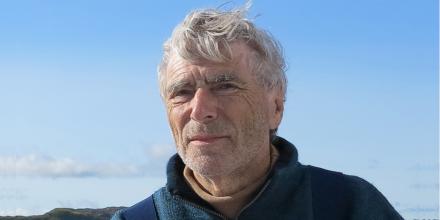
Greeting from the Australian National University in Canberra, where Professor John Broome is speaking on "Ethics in the IPCC process" at the Centre for Climate Economics and Policy
Professor Broome explained how the International Panel on Climate Change (IPPC) is an independent scientific organization, but taken notice of by the UNFCC, which is the relevant treaty organization on climate change. The IPCC has three working groups on science (WG1), impacts (WG2) and mitigation (WG3) of climate change. The main reports are the equivalent of 5,000 pages and there were 143,000 comments received. 
Professor Broome went to 13 meetings of 4.5 days each and worked out he was responsible for a considerable amount of carbon emissions just commuting to the meetings. ;-)

The scientists are volunteers, not paid by their work. He commented that the structure of the reports had already been decided. The recommendations are checked word by word. There were two moral philosophers included. Professor Broome wrote on "Justice, equity and responsibility" (3.3, page 12) and Professor Lukas Meyer, Graz University, Austria on "Values and wellbeing" (3.4 page 20).

Professor Broome commented on the differences between the scientific authoring approach and that of philosophers (Aristotle never wrote any refereed papers). The philosophers wrote on justice and value, which the scientists accepted, eventually. Also he commented on how the scientists and other academics wrote the detail of the reports, but there was government and political input into summaries (which is all anyone reads anyway).
I have some experience of the process of developing international standards, but not on this scale. Also I have been working recently with educators who come from the social science and have a different outlook on the world to the "hard" sciences.

Professor Broome described how the final drafts were produced with the text on the screen using Microsoft Word track changes, color coded with changes. Controversial sections are sent to a smaller "contact group" in the case of the philosopher's section taking three and half pages for three pages of text. He described how other sections got cut down due to lack of time and people.

What I found most surprising about Professor Broom's presentation was that he was generally positive about the outcome of the IPCC process. This is despite at one point describing how Saudi Arabia attempted to have a graph "censored" from the report, as it showed how the rich nations had caused the global warming problem. The Netherlands delegate attempted to outmaneuver this by having another section inserted (but the Netherlands government was un-contactable and so their delegate could not get approval).

It strikes me the IPCC process is similar to an open outcry auction system, as previously used for commodity trading. Such systems have mostly been replaced by on-line computer based systems, which are more efficient and by having a lower transaction cost, more equitable. The IPCC process excludes most of the people in the world from participating, because they cannot afford to attend the meeting.

Professor Broome described how some national delegations were in continuous voice contact with their experts at home and sending screen captures, taking instructions. If the process is to not be put on-line, then this practice should be banned, as it is inequitable. However, it would be better to put the whole process on-line.

If the IPCC is not willing to put their process on-line, then this could be done by volunteers. If the secretariat was not willing to cooperate, then volunteers amongst the delegates could transmit the video and audio from the meeting room. This could then be distributed publicly on-line and real time discussion rooms of experts, national representatives and the general public could debate the issues and make recommendations to the delegates.

Wednesday, April 22, 2015

Ethics of Climate Change Prediction

Professor John Broome will speak on "Ethics in the IPCC process" at the Centre for Climate Economics and Policy, Australian National University in Canberra, 5:30pm, 28 April 2015.
The Fifth Assessment Report is the first of the IPCC’s reports that has explicitly given a place to ethics. Two philosophers were included as Lead Authors for this purpose. However, an IPCC report is designed to be a review of scientific literature, and the process of writing it is organised with that aim in mind. Philosophy does not fit easily into that framework. Moreover, IPCC reports are commissioned by governments and must ultimately be approved by governments. Each sentence in the summaries for policymakers has to be explicitly approved by a consensus among all governments. This poses further difficulties for ethics in the IPCC, since ethics tends to be politically contentious.

Professor John Broome will describe how the process went from the point of view of a moral philosopher, and assess how successful the IPCC has been in its aim of taking account of the importance of ethics in responding to climate change.

 John Broome is Emeritus White’s Professor of Moral Philosophy at the University of Oxford, and an Adjunct Professor at ANU. He was once Professor of Economics at the University of Bristol. For the IPCC’s Fifth Assessment Report, he was a Lead Author in Working Group 3 and a member of the Core Writing Team of the Synthesis Report.