There are secret codes, provided by the Australian Signals Directorate, embedded in the fabric of the Hanna Neumann Building at ANU. But I wasn't aware of this happening with other buildings.
Showing posts with label Security. Show all posts
Tuesday, October 10, 2023
Code Embedded in the Floor of ANU Building
Standing in the coffee queue on the ground floor of the Marie Reay building at the Australian National University today, I accidentally decoded the floor. I was intending to scan a QR code on a poster, but pointed the camera at the polished concrete floor. To my surprise my phone interpreted the pattern of stones embed in the concrete as the number 08371140.
Wednesday, August 21, 2019
New Reality TV Show Proposed: Geopolitical Survivor
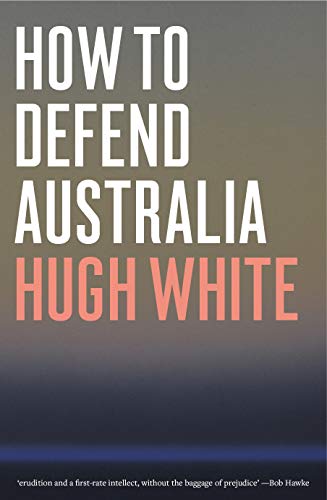
Greetings from the National Gallery of Australia, where I am taking part in "Australia 360", a conference on regional security hosted by the Australian National University. The morning had conventional panels of security experts. The afternoon started with Professor Hugh White's provocative views, in his new book "How to Defend Australia". To make it more interactive we are being polled on questions to do with China, Australia, and the region, with the results displayed on a large screen, and Associate Professor Nicholas Farrelly, as the MC, walking around the floor getting the views of delegates. Professor Rory Medcalf quipped the MC could host a game show called "Geopolitical Survivor". My contribution was to suggest a 360 view should also include the role of India.
"Panel 3: How to defend Australia
This session is an interactive, hands-on component delving into the hard choices Australia has to make about its defence as the world rapidly changes.
Chair Associate Professor Nicholas Farrelly
Associate Dean, College of Asia and the Pacific, ANU
With contributions from Emeritus Professor Hugh White, Strategic and Defence Studies Centre, ANU
Dr Joanne Wallis, Strategic and Defence Studies Centre, ANU
Dave Curran, Chairman, Westpac Scholars Trust
Professor Rory Medcalf, National Security College, ANU
Katherine Mansted, National Security College, ANU"
From Australia 360 Program
Monday, October 01, 2018
Secured My Website with Let's Encrypt
I now have Let's Encrypt providing a free security certificate for my Tomw website. I am not doing any e-commerce transactions requiring high security, but it was annoying web browsers were issuing "Not Secure" warnings for my web pages, so I set about fixing this. The Cpanel system provided by my web hosting provider offered several for-fee certificates. Then I saw Let's Encrypt offering a free certificate. There was a lot of complex technical detail about how to get a certificate. Instead I asked my provider if they could do it and an hour later it was done. About the only difference is that you use HTTPS, rather than HTTP (with HTTP automatically redirected to HTTPS).
Friday, September 29, 2017
Australian Signals-intelligence in the Pacific War
In "The Secret Code-Breakers of Central Bureau" David
Dufty provides a boys (and girls) own adventure account of Australian signals intelligence in the WW2 Pacific War. The book makes the case for Australia's contribution to Macarthur's fight from Australia back to the Philippines, the role of academics and civilians in this effort and of women, against bureaucratic obstacles. The book is packed with anecdotes, as well as history.With modern day concerts over cyber-security and its likely part in future wars in our region, it is useful to be reminded where the Australian Signals Directorate (ASD) came from and their difficult relationship with government, the military establishment and Australia's allies.
Thursday, March 23, 2017
Limit Electronic Devices on Airlines to 300 mm and 200 g?
The US and UK have banned electronic devices larger than a cellphone from aircraft cabins on flights from some countries. But what is “larger than a cellphone”?
Perhaps airline check-in counters need a gauge, like the one for carry-on luggage, or weight alone would be sufficient.
It is not clear what the threat from laptops and tablets is. There could be good reasons for authorities are not wanting to make this clear, but I don't know what they are.
The Guardian article mentions the risk of bombs and of lithium batteries. The bigger and heavier the device is, the bigger the bomb or battery it can hold. So it would make sense to limit the size of devices, but to do that an actual size needs to be specified, not just “larger than a cellphone”.
Large phones ("phablets"):
- iPhone 7 Plus, with a 5.5 in screen is 158.2 mm x 77.9 mm x 7.3 mm and weighs 188 g.
- Samsung Galaxy S7 Edge with a 5.5 in screen is 150.9 mm x 72.6 mm x 7.7 mm and weighs 177 g.
- Samsung Galaxy Tab 7.0 with a 7.0 in display is 190.09 mm x 120.45 mm x 11.98 mm and weighs 380 g.
Just to check, my chunky old Lenovo A588T Android Flip Phone is 120.6 mm + 62.5mm + 16.8mm = 199.9 mm at 178.4 g,. That would pass, provided I don't open the flip, which makes the phone 115 mm longer. ;-)
Tuesday, February 17, 2015
Institution-building in transitional countries
Greetings from the Australian National University in Canberra, where Jean-Marie Guéhenno, President of the International Crisis Group is speaking on "Reconfiguring the international response to rising security threats". Guéhenno was introduced by his predecessor as President of the International Crisis Group, Gareth Evans, now Chancellor of the ANU.Guéhenno began by characterizing the Russian intervention in Ukraine and rise of the Islamic State terrorist group as black-swan events. By this he meant they were events no one expected (but should have). He described the diffusion of power after the end of the cold war. He also mentioned the information connectivity of the world, with news of one death in Europe being reported world wide.
I was not convinced by Guéhenno's thesis. For more than one hundred years, since the invention so he electric telegraph, we have had global communications. The cold war had the USA and USSR restraining their client states to some extent, but there were still conflicts in places such as Afghanistan, Est Asia and the Middle East.
Terrorist/Liberation movements franchising their operations is not a new phenomenon, nor is the influence of non-state actors in conflict.
Guéhenno's argument that institution-building in transitional countries (which I assume is the new term for developing nations) is a good idea. However, I do not share his concern about parents sending their children to a Madrasa. A Madrasa is simply the Arabic word for a school, usually one associated with Islam. Secular schools and schools of any religion can teach rigid dogma and intolerance, or not.
Perhaps the problem is that Western powers have forgotten that one rule still applies in international relations: the Golden Rule: Those who have the gold make the rules.The Western countries have less funding to spend on military and other interventions, as a result have less global influence.
It is possible to use soft power, through aid and provision of education, but this still costs money. Western democratic governments have gone down a path of promising their citizens peace and prosperity at no cost, which is unachievable.
Australia current has advanced fighter jets attacking ISIS. A more cost effective approach may be to conduct an on-line information campaign and provide low cost education, particularly for teachers and other professionals, with e-Madrasa.
Guéhenno argues that compromise and diplomacy is required, balancing principles with realism. He used the example of calls for removal of the current Syrian government helped with the rise of ISIS.
Guéhenno's argument that institution-building in transitional countries (which I assume is the new term for developing nations) is a good idea. However, I do not share his concern about parents sending their children to a Madrasa. A Madrasa is simply the Arabic word for a school, usually one associated with Islam. Secular schools and schools of any religion can teach rigid dogma and intolerance, or not.
Perhaps the problem is that Western powers have forgotten that one rule still applies in international relations: the Golden Rule: Those who have the gold make the rules.The Western countries have less funding to spend on military and other interventions, as a result have less global influence.
It is possible to use soft power, through aid and provision of education, but this still costs money. Western democratic governments have gone down a path of promising their citizens peace and prosperity at no cost, which is unachievable.
Australia current has advanced fighter jets attacking ISIS. A more cost effective approach may be to conduct an on-line information campaign and provide low cost education, particularly for teachers and other professionals, with e-Madrasa.
Guéhenno argues that compromise and diplomacy is required, balancing principles with realism. He used the example of calls for removal of the current Syrian government helped with the rise of ISIS.
Guéhenno argued for building of resilient societies. However, this can be undermined by the short term need for politicians to stay in power. An example of this is a recent statement by the Australian Prime Minister, Tony Abbot: "It’s clear to me, that for too long, we have given those who might be a threat to our country the benefit of the doubt." (A message from the Prime Minister, 15 February 2015).
Asked what would be the hot-spots in 2015, Guéhenno nominated Central Asia.
Asked about terror as a weapon, Guéhenno commented it might be better to have a degree in psychology, than political science.
Asked what would be the hot-spots in 2015, Guéhenno nominated Central Asia.
Asked about terror as a weapon, Guéhenno commented it might be better to have a degree in psychology, than political science.
Responding to international security threats
"Increasing geopolitical competition is amplifying international conflict and diminishing the global community’s ability to respond to rising distributed threats like extremism and post-authoritarian chaos. The international community needs to get back to basics: supporting the long, hard slog of institution-building in transitional countries; addressing the social and political problems that provide the fertiliser for radical movements; and recognising that we are unlikely to solve conflicts if we only talk to people who agree with us."
Wednesday, February 04, 2015
Responding to international security threats
Jean-Marie Guéhenno, President of the International Crisis Group will speak on "Reconfiguring the international response to rising security threats", at the Australian National University in Canberra, 5:45pm, 17 February 2015. "Increasing geopolitical competition is amplifying international conflict and diminishing the global community’s ability to respond to rising distributed threats like extremism and post-authoritarian chaos. The international community needs to get back to basics: supporting the long, hard slog of institution-building in transitional countries; addressing the social and political problems that provide the fertiliser for radical movements; and recognising that we are unlikely to solve conflicts if we only talk to people who agree with us."
Thursday, November 21, 2013
Security Professionals Register
One topic at the Australasian Council of Security Professionals and combined Associations’ Seminar was the Security Professionals Register. which was created to raise the standard of professionalism in the security industry. So far the register appears to have only 15 people on it.
Security challenges in the Indian Ocean littoral and the US pivot to Asia
Greetings from the Australasian Council of Security Professionals and combined Associations’ Seminar at the Australian National University in Canberra, where Peter Leahy, former Chief of the Australian Army and Director of the National Security Institute, is speaking on "Security challenges in the Indian Ocean littoral and the US pivot to Asia".
Professor Leahy pointed out that the Indian Ocean was surrounded by many unstable states and 50% of the world's shipping cargo crosses the region, with a number of vulnerable choke-points. The Australian warships were sunk in the Indian Ocean in WW2. HMAS Stirling is the main naval base for the west.
Professor Leahy referred to "Gateway to the Indo-Pacific: Australian Defense Strategy and the Future of the Australia-U.S. Alliance" (Jim Thomas, Zack Cooper, and Iskander Rehman, November 2013, Center for Strategic and Budgetary Assessments). He pointed out that despite the title, this publication, like much US strategic thinking is fixated on China. I did a quick check and found "India" occurs 10 times in the document, "China" 13 times. What worried me more was that "Cyber" occurs only twice and "Internet" and "World Wide Web" not at all. The RAAF's E-7A Wedgetail AEW&C aircraft are mentioned as providing early warning of approaching aircraft. An expansion of the JORN Over the Horizon Radar is suggested. While the P-8 Poseidon maritime patrol aircraft is mentioned once, but not the pod-mounted, active electronically scanned array (AESA) radar option.
Professor Leahy pointed out that the Indian Ocean was surrounded by many unstable states and 50% of the world's shipping cargo crosses the region, with a number of vulnerable choke-points. The Australian warships were sunk in the Indian Ocean in WW2. HMAS Stirling is the main naval base for the west.
Professor Leahy referred to "Gateway to the Indo-Pacific: Australian Defense Strategy and the Future of the Australia-U.S. Alliance" (Jim Thomas, Zack Cooper, and Iskander Rehman, November 2013, Center for Strategic and Budgetary Assessments). He pointed out that despite the title, this publication, like much US strategic thinking is fixated on China. I did a quick check and found "India" occurs 10 times in the document, "China" 13 times. What worried me more was that "Cyber" occurs only twice and "Internet" and "World Wide Web" not at all. The RAAF's E-7A Wedgetail AEW&C aircraft are mentioned as providing early warning of approaching aircraft. An expansion of the JORN Over the Horizon Radar is suggested. While the P-8 Poseidon maritime patrol aircraft is mentioned once, but not the pod-mounted, active electronically scanned array (AESA) radar option.
Protective Security Policy Framework
Greetings from the the Australasian Council of Security Professionals and combined Associations’ Seminar at the Australian National University in Canberra, where someone from Attorney General's Department is talking about the "Protective Security Policy Framework". They made the point that rather than a rigid set of rules on what to do, the framework is designed help agencies identify their needs. Australian personnel vetting practices include a physiological profile of each individual, which can help identify future problems.
Staff of the Australian Cyber Security Center will move into the new ASIO building in Canberra, when it is ready.
Friday, November 08, 2013
Australian National Resilience, Cyber Security and the US pivot to Asia
Michael Rothery, First Assistant Secretary,
National Security Resilience Policy Division, Attorney-General's Department, will speak on Cyber Security, at the Australian National University, 21 November 2013. Also Peter Leahy, former Chief of the Australian Army and Director of the National Security Institute, will speak on "Security challenges in the Indian Ocean littoral and the US pivot to Asia". This is part of the in the Australasian Council of Security Professionals and combined Associations’ Seminar. Registration is now open. The event is by ASIS Australia, RMIA, AIPIO, ISACA Canberra, ACSP, SPR-A, ARPI and ASMF.
Thursday, November 07, 2013
Strategic Ecology for Cyberspace Security
Public seminar
Connection, Communication and Conversation: Shaping a Strategic Ecology for Cyberspace
Speaker: Professor Paul Cornish
Date: Tuesday 12 November 2013
Time: 5.45pm – 7.00pm, refreshments served from 5.15pm
Register: Register here
The expanding global communication infrastructure brings with it the possibility of a worldwide conversation across all dimensions and at all levels of human life. In most of the cases of human interaction, customs, protocols and ‘rules of the road’ emerge with usage. Where government interactions are concerned, however, there is a tendency to revert to established ideas and methods with which to stabilise and then manage competitive strategic relations – often those drawn from the Cold War.
Yet, while cyberspace should indeed be managed as an arena of human interaction and contestation, more thought is needed as to how this can be achieved in an efficient and durable manner. The relaxation of cyber tensions between China and the West, for example, will not come as a result of a technological fix of some sort, and nor will it lie in a Cold War-style strategic stand-off.
The current strategic narrative is dominated by mistrust, by claims of espionage, crime and terrorism, by rumours of worse to come and by disagreement over the basic terms of debate. Cyberspace appears to be a lawless frontier in which each actor operates according to the rules he prefers. Consequently, the governance of cyberspace is in a state of arrested development.
A strategic ecology for cyberspace is needed: a sense of cyberspace as a rule-bound political environment in which the scope and limitations of interaction can be discussed, in which trade-offs and compromise are made possible, and in which mutual interest can be pursued. Above all, this ecology should correspond more closely to the digital environment of the 21st century than to the missile environment of the 20th.
Paul Cornish is Professor of Strategic Studies at the University of Exeter, having previously been Carrington Professor of International Security at Chatham House. He has taught at the UK Defence Academy and at the University of Cambridge, and has served in the British Army and the Foreign and Commonwealth Office. His work covers national strategy, cyber security, the ethics of armed conflict and civil-military relations. He is a member of the UK Chief of Defence Staff’s Strategic Advisory Panel, a Fellow of Oxford University’s Global Cyber Security Capacity-Building Centre, and a Senior Associate Fellow of the Royal United Services Institute.
The National Security College is a joint initiative of the Commonwealth Government and ANU.
Wednesday, November 06, 2013
Hacking Encryption Keys Demonstrated
Yuval Yarom from University of Adelaide has just demonstrated reading a RSA public key for SSL encryption being used by one user on a shared computer system, by another user's program. This "generic cache side-channel attack" exploits a security weakness in the Intel's X86 computer architecture (but also applies to other company's designs). There are ways to fix this problem, but this will reduce the performance of applications. There is a full paper available.
FLUSH+RELOAD and the Relaxed Security of Read Operations on the X86 Architecture
Yuval Yarom (University of Adelaide)
COMPUTER SYSTEMS SEMINAR
DATE: 2013-11-06
TIME: 14:00:00 - 15:00:00
LOCATION: CSIT Seminar Room, N101
CONTACT: josh.milthorpe@anu.edu.au
ABSTRACT:
FLUSH+RELOAD is a recently developed generic cache side-channel attack technique. It exploits a security weakness in the popular X86 architecture, which allows a spy program to monitor a victim program read from shared memory regions. Unlike previous cache side-channel attacks, the technique targets the last level cache. Consequently, the spy and the victim programs do not need to execute on the same processing core. The technique is not limited to a traditional OS environment and can be applied in a virtualised environment where it can be used to leak information from programs running in co-located virtual machines. In this talk I present FLUSH+RELOAD and the weakness it exploits. I also describe the spy program behind CERT advisory VU#976534 and Mitre CVE-2013-4242 which uses the technique to attack the GnuPG implementation of the RSA encryption. By snooping a single decryption or signature process, the spy program is able to recover over 98% of the secret key bits, effectively breaking the cryptosystem. Further information on the technique can be found in http://eprint.iacr.org/2013/448
Researching National Security in Cyberspace
A public forum on "Strategy and Statecraft in Cyberspace" is being held at the Australian National University in Canberra, 12:30pm, 8 November 2013. International security experts will discuss if we face a ‘digital Pearl Harbor’, or as I suggest in Australia's case, a Binary Bombing of Darwin. The question is if Australia is vulnerable to a cyber attack on its national information infrastructure on a scale similar in effect to 19 February 1942, when Japanese aircraft attacked Darwin.
Strategy and Statecraft in Cyberspace
Date: Friday 8 November 2013 - 12:30 to 13:45
Register: Register online now
Join us for a panel discussion and open forum to explore the complexities of cyberspace from a national security perspective – a domain in which states and non-state actors interact with each other in an increasingly contested environment.
This event has been organized by the ANU National Security College (NSC) as it finalises priorities for its new research program on Strategy and Statecraft in Cyberspace. The NSC has brought together leading researchers from Australia, the United States and the United Kingdom for this event which will be facilitated by the ABC’s Michael Brissenden:
Like the traditional domains of land, sea, air and space, states and non-state actors are using the cyberspace domain to pursue their objectives in an increasingly complex world. The panel will discuss the rise of cyberspace, which has created a number of ‘wicked’ policy problems for global security including:
- Professor Roger Bradbury is a complex systems scientist with experience in international cyber issues, and is with the National Security College at ANU.
Professor Fred Cate specialises in information privacy and security law issues, and is Director of the Center for Applied Cybersecurity Research at Indiana University, USA.
Professor Paul Cornish is an expert in cyber security and cyber war, and Professor of Strategic Studies at the Strategy and Security Institute at the University of Exeter, UK.
- Dr Jon Lindsay is an expert in international relations at the University of California Institute on Global Conflict and Cooperation at UC San Diego, USA.
the proliferation of cyber weapons to state and non-state actors the systemic vulnerabilities in the infrastructure of globalisation and military power the friction between private sector actors who manage the Internet and the public sector actors who are supposed to defend them the mismatch between the pace of policy formation and the pace of technological change the failure to coordinate among government agencies responsible for national security, law enforcement and industrial policy major disagreements about how the Internet should be managed domestically and internationally.
Some authors foresee grave new risks of a ‘digital Pearl Harbor’, while their critics dismiss these warnings as inflating the threat. Technological complexity has amplified political complexity, which in turn has complicated political analysis. Our panel will endeavor to unpick these issues from the perspectives of social policy, security policy and the future of technology. We look forward to welcoming you at this important event focusing on an issue of critical significance.
Wednesday, August 14, 2013
Roots of Terrorism in Indonesia
Greetings from the atrium of the Hedley Bull Centre at the Australian National University in Canberra, where Professor Gareth Evans, Chancellor of the Australian National University, Allaster Cox, First
Assistant Secretary, Department of Foreign
Affairs and Trade and Solahudin are launching the book The Roots of Terrorism in Indonesia: From Darul Islam to Jema'ah Islamiyah" (by Solahudin, with English translation by Dave McCrae, NewSouth Publishing 2013). The book is already available in electronic format from Amazon.com.
The launch event started 20 minutes late. Also the book was not available at the launch (blamed on the incompetence of Australia Post). Perhaps this is one reason why combating terrorists has been difficult, as they are better at logistics. ;-)
The Lowy Institute is pleased to invite you to the launch of The Roots of Terrorism in Indonesia: from Darul Islam to Jema'ah Islamiyah by a leading expert in Islamic extremism in Indonesia, Solahudin. Published jointly by the Lowy Institute and New South Publishing, the book is an edited English language edition of Solahudin's best selling NII Sampai JI: Salafy Jihadisme di Indonesia, translated by the Lowy Institute's Dr Dave McRae. Based on a remarkable array of original sources it shows how the ideas and form of activism that lead to the Bali Bombings in 2002 have a long and complex history, stretching back to the Darul Islam revolt in the 1950s. The translation and publication of the book was supported by the Department of Foreign Affairs and Trade.
Speakers at the launch will include Professor the Hon. Gareth Evans AC QC, Chancellor of the Australian National University, Allaster Cox, First Assistant Secretary, South-East Asia Division, Department of Foreign Affairs and Trade and the book's author Solahudin. ...
Thursday, August 01, 2013
New Book on Terrorism in Indonesia
Professor Gareth Evans, Chancellor of the Australian National University, Allaster Cox, First
Assistant Secretary, Department of Foreign
Affairs and Trade and Solahudin will speak on "The Roots of Terrorism in Indonesia", at the ANU in Canberra, 5:30pm, 14 August. This is to mark the launch of the book The Roots of Terrorism in Indonesia: From Darul Islam to Jema'ah Islamiyah" (by Solahudin, with English translation by Dave McCrae, NewSouth Publishing 2013). The book is already available in electronic format from Amazon.com.
The Lowy Institute is pleased to invite you to the launch of The Roots of Terrorism in Indonesia: from Darul Islam to Jema'ah Islamiyah by a leading expert in Islamic extremism in Indonesia, Solahudin. Published jointly by the Lowy Institute and New South Publishing, the book is an edited English language edition of Solahudin's best selling NII Sampai JI: Salafy Jihadisme di Indonesia, translated by the Lowy Institute's Dr Dave McRae. Based on a remarkable array of original sources it shows how the ideas and form of activism that lead to the Bali Bombings in 2002 have a long and complex history, stretching back to the Darul Islam revolt in the 1950s. The translation and publication of the book was supported by the Department of Foreign Affairs and Trade.
Speakers at the launch will include Professor the Hon. Gareth Evans AC QC, Chancellor of the Australian National University, Allaster Cox, First Assistant Secretary, South-East Asia Division, Department of Foreign Affairs and Trade and the book's author Solahudin.Light refreshments will be servedThis event is complimentary. Please register by 5.00pm on Friday, 9 August 2013
Thursday, July 25, 2013
Brightest LED Light in Australia
Greetings from Security 2013 Exhibition at Darling Harbor in Sydney. There are security devices on display ranging from the low tech fence with pints on it, up to automatic infrared cameras. The notable display was Australia brightest LED security light (50,000 Lumen, 600 Watt), with it own water cooing radiator.
Cloud Computing Security
Professor John Grundy, Swinburne University, will speak on "Model-driven software security engineering for the cloud" at the Australian National University in Canberra, 12 Noon, 31 July 2013.
Also, as noted by Senator Kate Lundy, Minister Assisting for the Digital Economy, the Federal Government released a National Cloud Computing strategy. The Australian Computer Society has released a Cloud Computing Consumer Protocol Discussion Paper and is inviting input for the consumer code. In the ACS Cloud Discussion Paper, cloud computing is defined as:
"... a general term for the delivery of hosted services over the internet, enabling users to remotely store, process and share digital information and data."That would not seem to make it any different to a 1960s Time-sharing business.
From: Cloud Computing Consumer Protocol, July 2013: http://www.acs.org.au/__data/assets/pdf_file/0011/19928/ACS-Cloud-Discussion-Paper.pdf
Model-driven software security engineering for the cloud
Professor John Grundy (Swinburne University)
GENERAL Software Engineering
DATE: 2013-07-31
TIME: 12:00:00 - 13:30:00
LOCATION: CSIT Seminar Room, N101
CONTACT: lani.smales@anu.edu.au
ABSTRACT:
Software security engineering is a challenging problem. The emergence of cloud computing platforms as a "new" way to deliver software services in many ways compounds the problem: multiple tenants have differing security requirements; service and cloud providers have differing (sometimes conflicting) security requirements and platforms; and many security issues are emergent at run-time as tenants, service providers, cloud providers and deployment environments all evolve. We describe our recent research into securing cloud-hosted software applications from cloud provider, service provider, and cloud consumer (tenant) perspectives. This includes a new infrastructure-as-a-service security monitoring appliance, a new platform-as-a-service security analysis, design and management framework, and a novel tenant security requirements capture and management console. We describe several evaluations of these approaches identifying key strengths and weaknesses and some of our on-going research in this area.
BIO:
John Grundy is Professor of Software Engineering and Deputy Dean of the Faculty of ICT at Swinburne University of Technology. Previously he was Head of Computer Science and Software Engineering at Swinburne, Head of Department for Electrical and Computer Engineering at the University of Auckland, New Zealand, and Director of Software Engineering, University of Auckland. He has published widely in the areas of automated software engineering, model-driven engineering, visual languages, software architecture and software methods and tools. He is an Associate Editor for IEEE Transactions on Software Engineering, IEEE Software and Automated Software Engineering. He is currently the CORE Australia President, was on the ERA 2012 MIC Panel, and is on the Steering Committee for the IEEE/ACM International Conference on Automated Software Engineering. He is a Fellow of Automated Software Engineering and Fellow of Engineers Australia.
Thursday, June 20, 2013
Real-time surveillance with wireless cameras
Professor Chun Tung Chou, University of New South Wales, will speak on "Enabling real-time tracking in embedded camera networks using compressive sensing" at the Australian National University, in Canberra, 11am 24 June 2013. Apart from the obvious application in building security, I expect this could also be applied to robot surveillance aircraft (UAVs).
Enabling real-time tracking in embedded camera networks using compressive sensing
Associate Professor Chun Tung Chou (School of Computer Science and Engineering, University of New South Wales, Sydney)
COMPUTER SCIENCE SEMINAR\
DATE: 2013-06-24 TIME: 11:00:00 - 12:00:00 LOCATION: CSIT Seminar Room, N101 ...
ABSTRACT:
An embedded camera network consists of distributed video sensors interconnected by wireless links. Due to the high data rate of video sensors, it is not feasible to stream the video data to a centralised location (sink) for processing. This means that a lot of the video processing must be performed on the embedded device. However, this presents a challenge because of limited computation power on embedded platforms. For example, conventional background subtraction methods can only process a few video frames per second on embedded platforms.
In this talk, we discuss how compressive sensing can be used to address this computational bottleneck. We present a compressive sensing based background subtraction method, whose accuracy is similar to conventional methods, but is five times faster. We show that this faster background subtraction method enables real-time tracking in an embedded camera network. If time allows, I will also discuss briefly on some of my other work on using compressive sensing in wireless sensor networks.
BIO:
Chun Tung Chou is an Associate Professor at the School of Computer Science and Engineering, University of New South Wales, Sydney, Australia. He received his Ph.D. from the University of Cambridge, UK. He has published over 100 articles on various topics, including, wireless mesh networks, wireless sensor networks and system identification. His current research interests are wireless sensor networks, compressive sensing and nano-communication.
Saturday, June 01, 2013
Australia's Cyber Security
Technical Advisor, CERT Australia will speak on "Current trends in Cyber Security" at the Australian Computer Society in Canberra, 2nd July 2013.
ACS Branch Forum: Current trends in Cyber SecurityCERT Australia’s views on current and emerging threats in the Cyber Security landscape, and what ICT Professionals can do to combat them.Topics covered will include targeted intrusions, 2nd tier targeting, industrial control systems, Distributed Denial of Service attacks (DDOS), and will include several Australian case studies.
The last 12 months have clearly shown that no company can assume that they are immune to ICT Security threats, or assume that they will not be a target. While the focus of security is usually on preventing a threat from causing damage, having effective plans to deal with the aftermath of an incident is critical to maintaining security.
Subscribe to:
Posts (Atom)