Showing posts with label Libraries. Show all posts

Wednesday, February 14, 2018

Love Letter to the Libraries of Canberra

I walked into the UNSW Canberra Library at the Australian Defence Force Academy (ADFA), as I have done every few weeks for many years. But this is the first time someone has rushed up, handed me two heart-shaped chocolates and asked me to write them a love letter. Well, not to them, but to the library. So here it is, to Canberra's academic libraries.

Libraries Like Airport Business Lounges
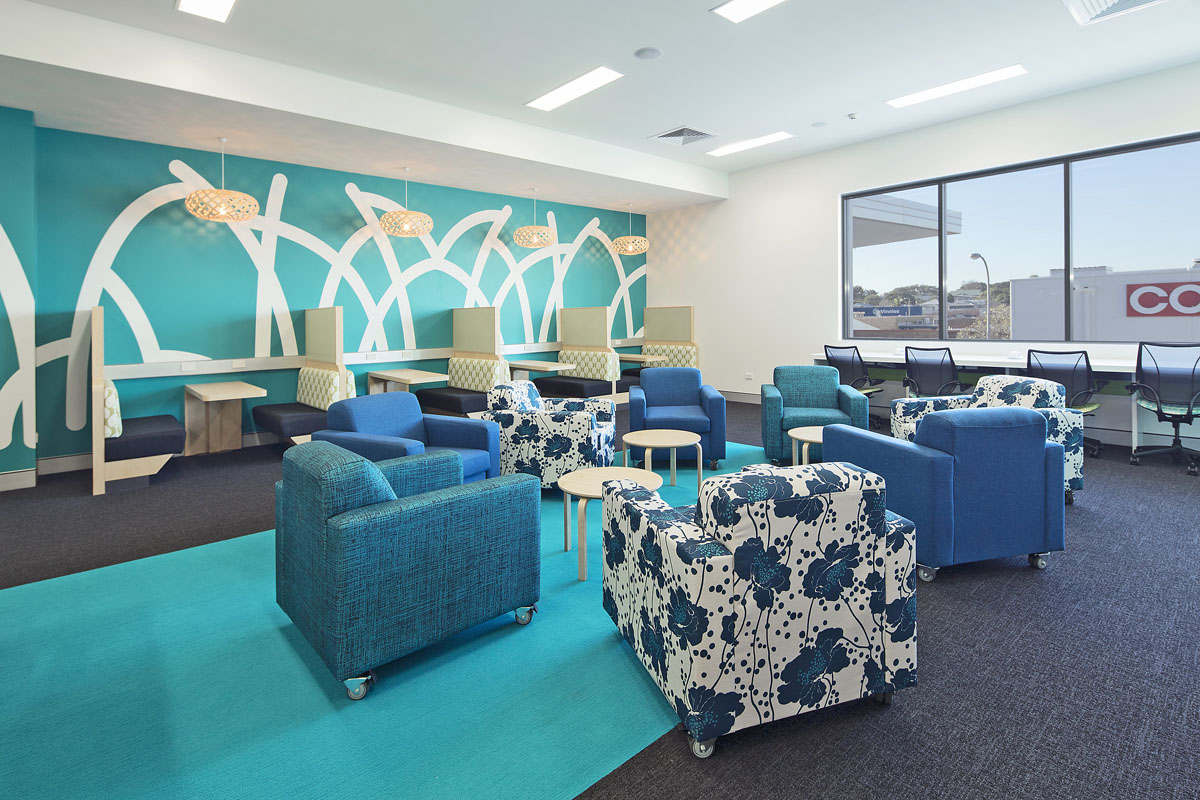

Wynnum Library by Deluca.
Photo by Carole Margand (2016)
Wynnum Library by Deluca.
Photo by Carole Margand (2016)
This love of libraries was not one which started early. At school, the library was more of a chore, than a pleasure (except for the forbidden books locked away). The local public library was too far away and intimidating to enter (looking like a courthouse). Recently I visited where I grew up, and there is a new "Wynnum Library", very welcoming and accessible. I spent an hour browsing and recharging my laptop. It was controversial, being built on top of a supermarket, but I like it, because it looked like an airport business lounge, not a courthouse.

My love of libraries came later in life, first as somewhere to sleep at university, before the next party. Then much, much, later, somewhere to find knowledge.

One of the wonders of Canberra's (and most of Australia's) public and academic libraries is that they are open for anyone to walk in. In some countries, you have to show your ID to enter a public library and the public is not admitted to university libraries at all.

NLA and the Internet Revolution


Canberra's libraries give generously of their facilities. This does not involve just keeping copies of other people's books. Along with having an excellent cafe and bookstore, the National Library of Australia (NLA) had a central role in getting the Australian Government on the web. In the 1990s a cabal of politicians, public servants, academics and industry people were working on making government information freely available online. At the time this was contrary to government policy: the government sold information, on paper, in its bookstores. It was decided each government agency would create a website. But there would need to be a central index and none of the central agencies wanted to do it. So the National Library of Australia stepped in and created the Australian Government's first home page. This was so successful that government policy was changed.


ANU and the Innovation Revolution


In my closing address for the 1998 Information Industry Outlook Conference in Canberra, I argued that Australia could emulate Cambridge (England) as a high technology industry center. I could put this confidently, not only because I had been and talked to the people doing it in Cambridge, but because I had read a book. Not really read the book, so much as devoured it. In the ANU's Hancock Library I found Segal Quince & Partners 1985 report on "The Cambridge phenomenon: the growth of high technology industry in a university town" (still in the ANU library). Over several days I made notes, appropriately, on a Cambridge Computer Z88. I included that Summary in a book, which is mentioned occasionally by Cambridge scholars (who apparently had difficulty finding a copy of their report). Technology companies are now springing up in Canberra, next to the ANU campus.

UNSW Canberra and the Education Revolution


Two decades later, I became almost by accident a mature age graduate university student. My studies were in online education and mostly conducted online, at institutions 1,000 km and 13,000 km away. But I found e-books not ideal for intensive study and was delighted to discover that all of Canberra's university libraries would let me borrow books. Most useful for education studies were the small and friendly Australian Catholic University library and UNSW Canberra. UNSW Canberra had a collection of books published decades ago by Open University UK (OUUK) on how to design, plan, budget and deliver distance education. These books had been overlooked in a rush to MOOCs as a new form of education, but many of the problems and solutions discovered with MOOCs has already been addressed decades ago by OUUK.

I left the Department of Defence in 1999, but DoD have now followed me to the ANU (paying for an extra floor in the new ANU Computer Science building). So its back to UNSW Library to brush up on cybersecurity.

Tuesday, January 01, 2013

New Version of the Mobile Library

The Pew Research Center "Mobile Connections to Libraries"  reports that 13% of Americans have accessed library websites via mobile device in the last year. This might be considered the modern version of the bookmobile. But mobile access is still less than the 27% of people who visited a library in person at least once a month in person. The report released 31 December 2012 is by Lee Rainie, Kathryn Zickuhr and Maeve Duggan and is 12 pages (1Mbyte).

Friday, December 07, 2012

Learning: The 21st Century Growth Industry

It seems to me that education might be the new 21st century growth industry. This will be about everything from on-demand apps, community learning circles at the local library through to higher university degrees online.

The ACT Library sent me a survey about community learning. As the library points out  "Learning is not limited to formal education or study". The library provides a good venue for such less formal learning.

The President of the ACS in a recent newspaper column pointed out the value of education via the Internet.  The ACS President was specifically referring to MOOCS (Massive Online Open Courses).

Sylvia Pennington, writing in The Age newspaper reported some concern from academics about industry sponsored courses ("This lecture proudly brought to you by ...",

The ACS itself runs more bespoke courses online as a finishing school for computer professionals to teach them about management (I run the Green ICT course for the program).


Tuesday, July 31, 2012

Great Library Cafés of the World

According to the Australian Bureau of Statistics, a Linkthird of the population visit a library. But they may not go to read books. So I suggest we need to seek out the "Great Library Cafés of the World". My nomination is the Bookplate Café of the National Library of Australia. This has good food and on a sunny day the tables are flooed with coloured light from the stained glass windows , designed by Leonard French. Outdoors, there is a panoramic view of Lake Burley Griffin on the terrace. In addition it is easy to get in, unlike some other high status libraries, with no need to go through security, or show a reader's card, to get to the Café (or the reading room).

Sunday, July 22, 2012

Library Permitted Bag

The State Library of NSW allows bags up to 30cm x 40cm x 10cm. Other state libraries and cultural institutions have a similar policy. In practice I find my satchel, which is similar to the "Kenneth Cole Reaction" is allowed in. These bags are about 33 x 23 x 100 cm when empty, but bulge out to 20 cm when you fill them. They are large enough for A4 pad and notebook computer. Such a satchel with a shoulder strap, along with a carry-on size wheeled backpack makes travel easier.

Tuesday, July 10, 2012

Big Data for Big Science

Greetings from the Australian National University in Canberra, where Ian Gorton, from the Pacific Northwest National Laboratory of the US Dept. of Energy, is speaking on "Towards a Collaborative Scientific Knowledge Management Platform with Velo". The software has been used for modelling carbon sequestration and climate change. He began by explaining that "Velo" was not an acronym for anything, it just came from one of the french collaborator's interest in bicycles.

Velo is designed for high performance computing. Scientists want to be able to easily get at their data. Large scientific instruments can produce large amounts of data quickly. This requires that the definitions of the data and the requirements ("Scientific Knowledge-Management Requirements") need to be understood by the people building the software. Also new applications need to be able to access old data and applications.

Traditionally, a new software tool would be built for each area of science. However, this is becoming prohibitively expensive. Just as is using more package software, so is science.

Velo uses open source software, including MediaWiki and the Alfresco Content Management System (CMS). These are tools normally though of being used for e-publishing (the Australian Computer Society uses Alfresco for keeping its course content).

Originally ontologies were used for defining the data, but this was found to be to complex for scientists and now a spreadsheet is used.

The Velo approach is an interesting one as it goes some way to unite the document and data repositories which universities, such as the ANU are now building. The Australian National Data Service (ANDS), location at ANU, is building a system for cataloguing and allowing sharing of research data. But this is separate from the repositories used for the research papers about the same data. Essentially the same technology is used to describe the data and the papers and so there is no reason why they need to be kept separate.

At question time I asked IAn when the software would be freely available. He replied that the interfaces are now being documents and the software should be freely available online as open source in ten weeks time.

The rival product to Velo is "Hub Zero" from Purdue.

There is a set of slides with an overview of "Velo: Knowledge Management for Collaborative Science available. Unfortunately, this is a large file, so here is the text (minus images):

Velo:
Knowledge Management for Collaborative (Science | Biology) Projects


A framework to support collaborative

1

Scientific Knowledge Management (KM)

    • Knowledge Management
      • systematic strategy of creating, conserving, and sharing knowledge to increase performance and innovation
    • Capabilities required for a collaborative scientific KM Platform
      • Associating disparate information
      • Questioning data and results
      • Experimenting with data
      • Sharing hypotheses, data, results


2

Velo Overview

    • Velo supports common knowledge management needs across science domains
      • Carbon sequestration
      • Climate Modeling
      • Bioinformatics
      • Subsurface modeling
      • …..
    • Easily customized to specific science needs
      • Data types
      • Analysis/simulation tools
    • Pluggable, extensible architecture
    • Robust and scalable – built on widely used open source technologies
    • Built to support collaboration across multi-disciplinary teams

Knowledge Management in Velo
    • Knowledge = data + models + results + provenance
      • Scientific Data
        • Manage empirical/observational/derived data used to set up and parameterize models
        • Velo can be easily customized to handle different data types
      • Models and Simulations
        • Manage multiple versions of models and associated results
        • Launch simulations and data analysis on HPC/cloud platforms
      • Results
        • Automatically retrieve and store outputs associated with specific model versions
        • Incorporate visualizations of simulation/model outputs
      • Provenance
        • Automatically and manually create links between related inputs and outputs and computational processes

4

Velo: Data Management
    • Ingest any data types into Velo
      • Incorporate scripts and tools to visualize and analyze data
        • Extensible programmatic framework for new data types
    • Examples:
      • Incorporating well bore data logs for subsurface modeling
      • Managing genome data for bioinformatics

16

Models: Model Setup and Simulation

    • Manage conceptual models
    • Launch simulations on remote HPC platforms
    • Extensible to incorporate tools for model creation
    • Examples:
      • Conceptual model worksheets for subsurface models
      • Simulation launching
      • Mesh visualization

17

Results: Management and Analysis

    • Retrieve simulation results from execution platforms
    • Automatically visualize results
    • Framework for incorporating analysis and visualization tools
    • Examples:
      • Plots for climate simulation outputs
      • Visualizing plume extents for contaminants

18

Tool History

    1. Velo gives option to the user to record
      • Inputs
      • Outputs
      • Control parameters

    1. Automatically loads the last saved inputs in tool’s input form

    • Current Development plan – Browse and re-run any earlier invocation


19

Provenance

    • Ability to link related artifacts for forensic investigations
      • Both manually and automatically
    • Examples:
      • Link input data sets to models
      • Link conceptual model versions to results
      • Associate comments and analyses to simulation outputs

20

Next Steps
    • We’re keen to work with others
      • To deploy Velo to support scientific communities
      • To partner on proposals
      • To collaborate on projects
      • To enhance the technology
    • We’ll open source the Velo technology mid-year
      • Downloadable
      • User documentation
      • Programmer documentation

22

Friday, July 06, 2012

Online Scientific Collaboration Software

Ian Gorton, from the Pacific Northwest National Laboratory of the US Dept. of Energy, will speak on "Towards a Collaborative Scientific Knowledge Management Platform with Velo" at the Australian National University in Canberra, 11:30am, 10 July 2012. The software has been used for modelling carbon sequestration and climate change:

ANU College of Engineering & Computer Science

SOFTWARE ENGINEERING SEMINAR

Towards a Collaborative Scientific Knowledge Management Platform with Velo

Ian Gorton (Pacific Northwest National Laboratory, US Dept. of Energy)

DATE: 2012-07-10
TIME: 11:30:00 - 12:30:00
LOCATION: Engineering Lecture Theatre (Building 32)

ABSTRACT:
Facilitating transformative improvements in the collaborative practices of the scientific community and their ability to share, manage and analyze massive data sets represents a software engineering challenge of immense magnitude. State-of-the-art collaborative platforms are examples of discipline-specific, stovepiped solutions, which have extremely limited utility for other science communities. Given the immense costs of building and maintaining such customized solutions, continuing down this path is unsustainable given the need to build even more sophisticated collaborative systems and accomplish wider scale deployment. Achieving a quantum leap in the utility of collaborative platforms to meet future requirements necessitates new approaches to designing and constructing their underlying software foundations.

This talk will describe our Velo software platform, which is designed to meet these future scientific collaboration requirements. Velo is designed to be highly customizable and scalable to meet a broad range of software requirements. Veloas architecture will be described, and the mechanisms adopted to address various quality requirements will be presented through examples from existing Velo deployments.

BIO:

I'm a Laboratory Fellow in Computational Sciences and Math at Pacific Northwest National Laboratory. I manage the Data Intensive Scientific Computing group, and was the Chief Architect for PNNLas Data Intensive Computing Initiative. I'm also Senior Member of the IEEE Computer Society and a Fellow of the Australian Computer Society. Until July 2006, I led the software architecture R&D at National ICT Australia (NICTA) in Sydney, Australia. My passion is analyzing and designing complex, high performance distributed systems, and embodying useful design and architecture knowledge in methods and tools that can be exploited by architects in other projects.

Sunday, November 27, 2011

Even Genius Needs to Do Paperwork

The exhibition "Handwritten: Ten Centuries of Manuscript Treasures from Staatsbibliothek zu Berlin" at the the National Library of Australia shows a great range of work over the centuries. Some of the manuscripts shown are of great works, such as a draft of Beethoven's Fifth Symphony, but others show that great people had to deal with paperwork, such as receipt from Michelangelo acknowledging funds from a patron. Others show that even geniuses don't always get it right, with Heisenberg's draft of a universal equation for everything which did not work out.

The exhibition's music room was of most interest, with a cacophony of the different music displayed being played in the background. There is an iPad on a wall with headphones, where you can pick from the works. The exhibition organisers need to install a set of white headphones on a white hook, as the room so dim (to preserve the manuscripts) and so the headphones and where to hand them up is almost invisible.

Other works to get my attention were Schliemann writing about the discovery of Troy, a patent by Watt (of steam engine fame), Diesel asking for state funding for his engine and several authors complaining about reviews they got.

It is unfortunate there is not a web site to accompany the exhibition, given the work which has gone into its preparation. Such a web site could be produced with a few days work, using the materials already prepared for the exhibition. This is something the ACT Government might consider funding to boost tourist numbers.

The exhibition is open until 18 March 2012 and is free, but it is a good idea to book a free ticket online (the NLA is using an Apple iPad to check the bookings at a desk in the foyer). There are also various events associated with the exhibition.

Manuscripts from Berlin State Library in Canberra

Greetings from the National Library of Australia, where Professor Everardus Overgaauw, head of the Manuscript Department of the Berlin State Library is talking about the manuscripts on display in Canberra in the exhibition: "Handwritten: Ten Centuries of Manuscript Treasures from Staatsbibliothek zu Berlin". The Berlin State Library was founded in 1661 and the story of the library and its manuscripts is bound up with that of the German state, with formation, war, partition and reunification.

On display are handwritten documents by: Bach, Beethoven, Cook, Curie, Dante, Darwin, Dickens, Dostoyevsky, Einstein, Galileo, Goethe, Haydn, Kafka, Kant, Kepler, Machiavelli, Marx, Michelangelo, Napoleon, Newton, Nietzsche, Nightingale, Nobel, Pasteur and Watt.

The exhibition is open until 18 March 2012 and is free, but it is a good idea to book a free ticket online (the NLA is using an Apple iPad to check the bookings at a desk in the foyer). There are also various events associated with the exhibition.

Sunday, October 23, 2011

National Library of Australia Treasures Gallery Open

The new Treasures Gallery has opened at the National Library of Australia in Canberra. This is not on the scale of the Treasures from the World's Great Libraries, held in 2001/02, but is worth seeing. There is a Treasures Gallery mobile application for Android and iPhone with a guide to the exhibition and audio tour available. Some of the items on display which got my attention were a proclamation from the Rum Rebellion of 1808 (Australia's only military Coup d'état), the portable writing desk which Captain Cook took on his voyages, a print by Pablo Picasso and a page from a Gutenberg Bible. Unfortunately I could not find a web based guide to the exhibition on-line. I suggest the NLA list the items on display, with links to Trove. The same audio tour as provided for mobiles could be used on the web for a virtual tour.

Wednesday, September 07, 2011

Library Support Needed for Australian Publishing

Submissions for a Review of the operation and vision of Review of Electronic Resources Australia (ERA) have been invited by 12 September 2011. ERA is a buying consortia of Australian libraries, headed by the National Library of Australia, which buys on-line information services, mostly from overseas sources.

One interesting aspect of the review is that three out of five of the members of the committee are from the education sector (school, TAFE and University).

One aspect the ERA review terms of reference does not seem to cover is how to publish Australian works on-line at low cost. I suggest that Australian libraries and educational institutions should look at how to foster on-line publishing, including free and open access, as a way to reduce costs (as well as boost Australian culture and commerce).

Yesterday I was contacted by an award winning Australian author asking about how to publish their new book on-line. They do not particularly want to make a lot of money, they mostly want to get there book out there.

Australian libraries could provide facilities for Australian authors to publish their work at low cost. Some universities do this, where they provide e-books and e-journals on-line for free. An example is ANU e-Press, which sells copies of book by Australian National University authors on paper, but also allows free access to the web versions of the books.

There are some open access journals from Australian universities, most using the Canadian "Op-en Journal System" (OJS) software, but these tend to last only an few issues, due to lack of support.

Sunday, July 10, 2011

New Reading Room at National Library of Australia

Greetings from the new look main reading room of the National Library of Australia. The marble gallery in front of the reading room has been shortened to make more space in the reading room itself. There is a reception desk to one side just inside the door, and a row of walk-up terminals on a bench on the wall opposite. The space in between has two rows of round tables with arm chairs.

A head high partition behind the information desk is backed by new book and periodical racks. The racks are lit, and have glass fronts, making it much easier to browse than the old wooden racks.

The layout reminds me of an airport business lounge, or the learning commons of an up-market university and is well thought out and comfortable. On a cold and gloomy Canberra winder's day the reading room is comfortable and calm, with a scholarly but welcoming atmosphere.

While the furniture in the new foyer looks good, I found it uncomfortable. The chairs appear to be out of proportion, with legs which are too long and backs too short. The tables have a very thick central pillar, which makes it impossible for me to place my legs comfortably under the table. The library might wish to replace the arm chairs with the same gas lift models used at computer desks, but with the optional arms bolted on. The table supports have been designed for concealing cabling to the desktop, but this has not been utilized and so slim slim supported could be used.

One lack in the new layout are any breakout rooms for group work. The Petherick Reading Room remains unchanged, and mostly unused, at the rear of the reading room. The library might give some thought to making that space available for casual use, rather than having specific desks reserved for researchers. The current system seems to result in about 90% of the Petherick Room being unused most of the time. This could be changed to a "hot desk" system, to make better use of the space. Researchers could have priority, but casual users could otherwise use the space.

The refurbished exhibition space of the library is due to open 8 October 2011.

Sunday, June 05, 2011

New Gungahlin Library and Learning Centre

Greetings from the new Gungahlin Library, which opened 21 May 2011. It is adjacent to the Gungahlin town centre, in the north of Canberra. Downstairs the library has a branch of the Canberra Institute of Technology (CIT). Next to the library is the Gungahlin College which also shares the library facilities. The library is a large open, modern, well equipped building, but not without problems.

The library is at an intersection next to the town centre. This should make it convenient to walk from the shops, across the road to the library. However, the library is set back 25 metres from the intersection and the library entrance is about another 25 metres along at the other end of the building. The open space next to the library probably looked like a pleasant open space in the artist's renderings, but in reality is a cold, windswept, desolate expanse of concrete, in a Canberra winter. This flaw in the design could be fixed in the future by extending the building up to the road with a door at that end. The space freed up at the other end of the building could then be used as a learning commons for the CIT and the College. The extended building would also shelter the small located park in front of the college.

Once I found the door, the library proved to be warm, bright and inviting. Unfortunately it is too bright, with unshaded glass on the northern side of the building, resulting in direct sunlight hitting the computer screens, which have been placed on this side of the building (they would have been better on the south side). Some shading devices need to be placed on the building.

Contrary to the modern trend in libraries, most of the floor space is taken up with library shelves. But this is somewhat deceptive, as the shelves are only half full. The librarians have placed numerous books flat on the shelves and multiple copies of popular novels to fill up some of the space. But even so, there are sections of shelving completely empty giving the library a slightly deserted feeling. This, combined with the problem of not being able to see clearly up the rows of shelves when looking north (due to the glare from the windows), did not make for the most pleasant browsing experience.

There are useful group rooms located in the library, as well as the training rooms downstairs for the CIT. There is also an excellent children's area with some built in games, such as hopscotch.

Computers for the patrons are on interesting hexagonal desks with alternating short and long sides. Unfortunately ugly, poorly designed metal arms have been used to mount the LCD computer screens on the desks. These are very difficult to adjust and incorporate badly located USB sockets. I had to unclasp the arm and wiggle the weight of the monitor and arm down to adjust the height. I found I could then not tilt the monitor into an upright position. Also tilting the monitor resulted in the power plug falling out. The Library should send these arms back to the suppler and reinstall the desk stands which came with the monitors.

The Library is advertised as having a Cafe and while there is an area with a kitchen, counter and cafe tables, there is no cafe operating.

Apart from a cafe, what I look for in a library is a magazine rack with comfortable chairs nearby. This library has an excellent rack, but the actual magazine selection proved disappointing and the seating, while comfortable, had the problem of glare from the excessive northern glazing.

Overall this is an excellent facility for the community to grow into, after the problems with the design are fixed.

Saturday, May 07, 2011

Architecture Education in South Australia

Yesterday I stepped into the City West Library of the Unviersity of South Australia, where I found the staff setting up the display for "Louis Laybourne Smith and Gavin Walkley : Architecture Educators", as part of the SA History Festival. Louis Laybourne Smith was an architect and on display are his drawing instruments, blueprints and notebooks. The note books were most interesting with meticulously rendered technical sketches. It would be useful if the Library could scan some of these and put them online for scholarly research. The outstanding example of this being done for an architect is the scanning of the whole of Marion Mahony Griffin's "The Magic of America", by the Art Institute of Chicago, 2007.

Friday, May 06, 2011

Libraryhack at State Library of South Australia

Greetings from the Adelaide North Terrace Cultural Precinct. I am in town for a meeting for the ACS Education faculty, but thought I would spend some time at the Libraryhack at State Library of South Australia, this evening. Similar Library Hack events are being held around Australia, during Net Traveller: Information Awareness Month.
Event Type: Launch
Age Group(s): Young Adult, General
Date: 6/05/2011
Start Time: 5:30 PM
End Time: 7:30 PM
Description:
Learn about creating digital media by listening to our special guest speaker, acclaimed digital media artist Cindi Drennan. Bring your own laptop and use the free wi-fi to experiment with datasets. Seize the opportunity to share ideas, explore the possibilities and collaborate with experts in the field. Be inspired to create your own amazing Libraryhack entry to win a great prize in the national competition

Location: Treasures Wall Spence Wing first floor
Other Information:
Free. No need to book, just turn up!
Contact: Cate Parkinson / Jo Hocking
Contact Number: 8207 7292
Presenter: Cindi Drennan

Tuesday, April 26, 2011

Science on Wheels

Science Library at the Unviersity of Western AustraliaGreetings from the new Science Library at the Unviersity of Western Australia. The library has a relatively conservative interior design, blending a traditional library with that of a new learning commons. The colour pallet is muted, with blond wood panelling matching the cream coloured concrete, which reflects the tones of limestone blocks of the campus's traditional buildings. There is a small reserve collection of books on the ground floor, enclosed in floor to ceiling glass, to show books still have a place in libraries. There is also a selection of new books and journals on display. There are rows of computers and some small work-group booths with chest high partitions. What is not noticeable at first is that most of the furniture, including tables and bookcases, are on wheels, allowing them to be easily rearranged. Apart from the reserve collection, there are no fixed walls in the space.

Wednesday, April 06, 2011

E-books are worth it

Greetings from CCA-EDUCAUSE Australasia 2011 in Sydney, where Ksenija Mincic-Obradovic, University of Auckland Library talked on "E-books: how can we show they are worth it?". Ksenija showed statistics on the borrowing of paper and e-book copies of the same works, showing the electronic versions are accessed far more often than the paper books. She pointed out that students are borrowing these books because they are required to for courses, not for casual browsing. She also pointed out that proper cataloguing of e-books is just as important as for paper books. The university provides an e-learning course to familiarise both students and staff with e-books.

Tuesday, April 05, 2011

Gallery of Modern Art Queensland

The Gallery of Modern Art Queensland (GOMA) proved an entertaining place to spend a half a day. The gallery is part of the Brisbane South Bank cultural precienct, next to the Queensland State Library. The venue was lively with many groups of school chldren interacting with modern artworks, such as a slippery slide (Carsten Holler's Left/Right Slide, 2010) and building buildings with Lego. Other works of interest were Zhoux Iahn's Utopian Theatre (2006), Arlo Mountford's The Folly (2007-08) and Julian Opie's People Walking (2008).

GoMA runs an excellent talk series in conjunction with ABC Radio, Thursday fortnights, with the next 14 April, for "Future Tense". I attended 31 Match "Science: How are Health and the environment linked in the 21 Century ..." for "Australia Talks". Unfortunately I could not find a usable web site for the talks from either GoMA or the ABC. Like many cultural institutions, GOMA has a website (which I now can't find) where style has triumphed over substance: as a result it is very difficult to find any useful information. The ABC has good information on the past talks, but not upcoming ones.

Tuesday, February 15, 2011

Library of Alexandria was Not Destroyed

As I tell my e-document students, the Library of Alexandria was founded around 290 BC, destroyed by fire around 48 BC and opened again for business in 2002AD, with an on-line catalogue. It was surprising to hear the librarian detailing the library's role in the recent revolution in Egypt.

In scenes reminiscent of Isaac Asimov's Foundation series of books, Dr. Ismail Serageldin, Director of the Bibliotheca Alexandrina has described how library staff joined hands with members of the public to protect the library during recent protests. Dr. Serageldin also described how the library spread "the values of democracy, freedom of expression, tolerance, diversity and pluralism" and so helped ferment the revolution.


As demonstrations continue despite the delegation of presidential powers to the Vice-President, the Library continues to be protected by the people. Alexandria saw massive demonstrations throughout the city (see video). Young students from the university designed and made a huge National Flag, and put it on the steps of the Library (see images) which elicited cheers from passing demonstrators as the director waved to the crowds (see image)....

From: "Under the protection of the People", Bibliotheca Alexandrina, February 2011

Monday, January 24, 2011

Gungahlin College and Library an Example of the School of the Future

Artists Rendering of the New Gungahlin LibraryIn "Australian Learning Commons Proposal" I outlined how all Australians could be offered free online publicly accessible education from pre-school to university level. This would be supported through public libraries and schools. The new $72.4 million Gungahlin College in Canberra provides a good example of this approach.

Gungahlin Library PlanThe College will accommodate 900 upper secondary students and include a CIT learning centre (for vocational TAFE education). The college library will be available to the community, providing the , with learning rooms for adults and children.

The Gungahlin College is planned to have a 5 Green Star design rating from the Green Building Council of Australia. The ACT Government aims to install photovoltaic (solar power) systems at all public schools over the next four years. One enhancement I would suggest is extra investment so that the solar panels can provide emergency power to the buildings during blackouts. This way the schools can be used as emergency centres during disasters. As recent flooding in Queensland has highlighted, standard solar panels cease to provide power when mains power is lost.