Showing posts with label ADFA. Show all posts

Wednesday, February 14, 2018

Love Letter to the Libraries of Canberra

I walked into the UNSW Canberra Library at the Australian Defence Force Academy (ADFA), as I have done every few weeks for many years. But this is the first time someone has rushed up, handed me two heart-shaped chocolates and asked me to write them a love letter. Well, not to them, but to the library. So here it is, to Canberra's academic libraries.

Libraries Like Airport Business Lounges
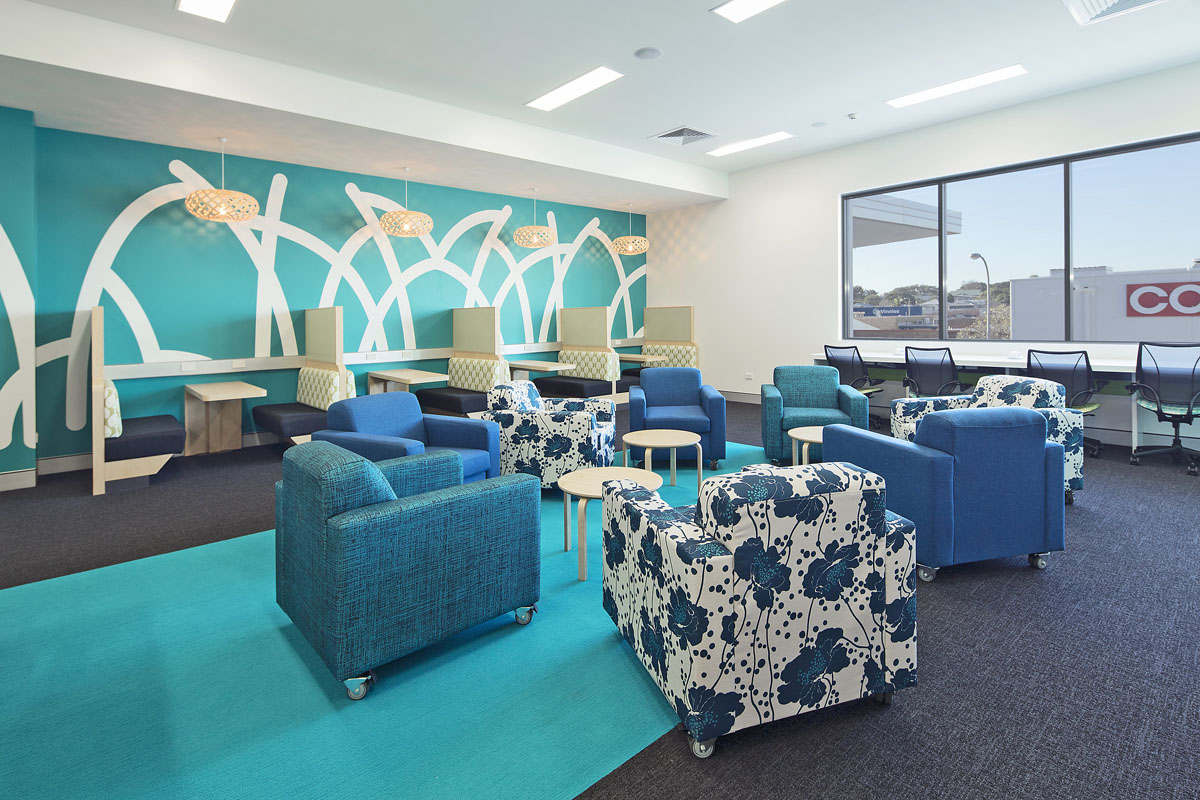

Wynnum Library by Deluca.
Photo by Carole Margand (2016)
Wynnum Library by Deluca.
Photo by Carole Margand (2016)
This love of libraries was not one which started early. At school, the library was more of a chore, than a pleasure (except for the forbidden books locked away). The local public library was too far away and intimidating to enter (looking like a courthouse). Recently I visited where I grew up, and there is a new "Wynnum Library", very welcoming and accessible. I spent an hour browsing and recharging my laptop. It was controversial, being built on top of a supermarket, but I like it, because it looked like an airport business lounge, not a courthouse.

My love of libraries came later in life, first as somewhere to sleep at university, before the next party. Then much, much, later, somewhere to find knowledge.

One of the wonders of Canberra's (and most of Australia's) public and academic libraries is that they are open for anyone to walk in. In some countries, you have to show your ID to enter a public library and the public is not admitted to university libraries at all.

NLA and the Internet Revolution


Canberra's libraries give generously of their facilities. This does not involve just keeping copies of other people's books. Along with having an excellent cafe and bookstore, the National Library of Australia (NLA) had a central role in getting the Australian Government on the web. In the 1990s a cabal of politicians, public servants, academics and industry people were working on making government information freely available online. At the time this was contrary to government policy: the government sold information, on paper, in its bookstores. It was decided each government agency would create a website. But there would need to be a central index and none of the central agencies wanted to do it. So the National Library of Australia stepped in and created the Australian Government's first home page. This was so successful that government policy was changed.


ANU and the Innovation Revolution


In my closing address for the 1998 Information Industry Outlook Conference in Canberra, I argued that Australia could emulate Cambridge (England) as a high technology industry center. I could put this confidently, not only because I had been and talked to the people doing it in Cambridge, but because I had read a book. Not really read the book, so much as devoured it. In the ANU's Hancock Library I found Segal Quince & Partners 1985 report on "The Cambridge phenomenon: the growth of high technology industry in a university town" (still in the ANU library). Over several days I made notes, appropriately, on a Cambridge Computer Z88. I included that Summary in a book, which is mentioned occasionally by Cambridge scholars (who apparently had difficulty finding a copy of their report). Technology companies are now springing up in Canberra, next to the ANU campus.

UNSW Canberra and the Education Revolution


Two decades later, I became almost by accident a mature age graduate university student. My studies were in online education and mostly conducted online, at institutions 1,000 km and 13,000 km away. But I found e-books not ideal for intensive study and was delighted to discover that all of Canberra's university libraries would let me borrow books. Most useful for education studies were the small and friendly Australian Catholic University library and UNSW Canberra. UNSW Canberra had a collection of books published decades ago by Open University UK (OUUK) on how to design, plan, budget and deliver distance education. These books had been overlooked in a rush to MOOCs as a new form of education, but many of the problems and solutions discovered with MOOCs has already been addressed decades ago by OUUK.

I left the Department of Defence in 1999, but DoD have now followed me to the ANU (paying for an extra floor in the new ANU Computer Science building). So its back to UNSW Library to brush up on cybersecurity.

Wednesday, October 12, 2016

Australian All Terrain Lightweight Electric Military Vehicles

While at UNSW Canberra today to borrow some library books, I noticed a display of electric and autonomous military vehicles. It is not that unusual as this is also the campus of the Australian Defence Force Academy (ADFA). One product was the Tomcar Military spec v4, with the electric drive option. This looks like a cross between a dune buggy and a golf cart and is made by the Australian company Tomcar.

The electric version is very quiet, which is useful for military operations. But I suggest it needs a synthetic engine noise which can be switched on to make it safer for everyday use, to warn pedestrians.

These type of military buggies, usuals with conventional diesel engines, are popular with the military, where their usual vehicles have become too big to be transported to the battlefield, to complex to be maintained and too expensive to procure.

Tomcar might consider making an articulated, or double articulated version. This would have the electric vehicle at the front, with a trailer for the crew. It would be narrow enough to be transported in a helicopters or small military transport aircraft. As the trailer would have no front wheels, it would be more resistant to mine blasts.

Wednesday, January 20, 2016

Rearming Australia for Cyber Warfare

In "AUSTRALIA REARMED! Future Needs for Cyber-Enabled Warfare" Professor Greg Austin, from the Australian Centre for Cyber Security (ACCS) states "Australia’s defence forces need to maintain distinct capabilities for cyber warfare at the strategic level ... for mobilization of the country in very short time to fight a medium intensity, cyber-enabled hot war ...". The ADF has made a significant step towards this already by including cyber-security in the curriculum of the Australian Defence Force Academy (ADFA), where the ACCS is located.

In an accompanying paper, Group Captain (ret.) Dr. Keith Joiner discussed "Integrating Cyber-survivability into Australian Defence Force Platform Development". He points out that the ADF's taks is not only protect its systems in peacetime, "... but includes preventing its systems and platforms from being crippled or subverted by the offensive cyber operations of an enemy in combat...".

Australia has recently invested billions of dollars in advanced aircraft and ships. In any hostilities these can be expected to come under intensive and sustained cyber-attack, before during and after any conventional warfare. These attacks will not just be directly against the weapons systems, but also through their logistics and support systems, the personnel and their families and friends. It would be unfortunate if these platforms were disabled even before they could be deployed, because the ADF has not spent a few hundred million dollars to to conduct cyber- survivability trials and train personnel to protect the systems.

Thursday, September 25, 2014

Cyber Security Training for All New Australian Defence Force Students

Greetings from the the University of NSW Canberra, where I am attending the ICT for Development Symposium. In his welcome, the UNSWC Deputy Rector, Professor John Arnold, pointed out that all undergraduates would be trained in cyber security, commencing 2015. This is very significant for national security as UNSW Canberra is the location of the Australian Defence Force Academy (ADFA) and trains Army, Navy and Air Force personnel. Northrop Grumman installed a "Cyber Range", which could be used as part of the training. However, while it will be very useful for all ADF personnel to have some knowledge of the topic Australia also needs a specialist CyberWarfare Battalion.

Thursday, July 31, 2014

Chief of Australian Army on Protection of Women in Conflict

Greetings from the Australian National University where Lieutenant General David Morrison AO, the Chief of Army is speaking on "Protection of women in conflict: Chief of Army discusses the London Global Summit".  General  Morrison's "Chief of Army message regarding unacceptable behaviour" went viral on the Internet last year. Gender restrictions on combat roles were removed from the Australian Defence Force, 1 January 2013. There is also a "Defence Abuse Response Taskforce".

In person the General was a little milder than the video, but just as compelling. He made the point that the Army is authorised by the state to use violence, but should respect the diversity of the community. The Army has set targets for women's participation (I have noted this in the café at ADFA). The General was asked why all the Expert Panel members for the 2015 Defence White Paper are white males. The general responded that they had a point and would raise it with the Minister. The General was asked what practical steps were being implemented to involve local women when the ADF is on peacekeeping missions. He made the point that having female front-line troops would aid this and all receive relevant training.

There was a "Global Summit to End Sexual Violence in Conflict" in London on in June 2014. There is a Chair’s Summary, Statement of Action and Summit blog. Curiously, the UK Government have "archived" the website, as if the event is over and they can forget about it now.
Armed conflicts are currently occurring in various regions of the world and the need to protect innocent victims of these conflicts has never been greater. Women are particularly vulnerable in times of conflict and the recent Global Summit to End Sexual Violence in Conflict, co-chaired by William Hague (United Kingdom Foreign Secretary) and Angelina Jolie (Special Envoy for the UN High Commissioner for Refugees) brought together 1,700 delegates and 129 country delegations to consider ways in which women could be better protected. The Summit agreed on practical steps to tackle impunity for the use of rape as a weapon of war, and to begin to change global attitudes to these crimes.

Wednesday, October 24, 2012

Designing a Decision Support Centre

The computer labs on the ground floor of the Computer Science and Information Technology Building (CSIT) at the Australian National University are due to be re-equipped. Rather than just replace the old computers with new ones, I have suggested turning part of the ground floor (about 300 square metres) into a teaching and learning commons, modelled on a military Decision Support Centre.
As well as regular teaching, this would be used to expose senior public servants from the Australian Public Service and senior military officers, to new technology supported decision making techniques. This would be done in much the same way that the the University of Canberra Inspire Centre is used to allow teachers new technology based educational techniques. Also the facility would showcase the latest in low energy technology. Apart from the environmental benefits such energy saving technology saves lives in military operations by reducing the logistics tail and so putting fewer support personnel in harm's way.
Current Building Design

The award winning CSIT Building was purpose designed for computer science in the mid 1990s, with input by computer scientist Dr. David Hawking.

The building was ahead of its time being designed for high performance computer data cabling and work environments have been provided for undergraduate and postgraduate teaching, as well as project work.

The ground floor area originally had a seminar room (the famous N101), two smaller project rooms N118, N102), a computer museum in the foyer (N120), two tutorial rooms (N108, N109), five smaller prac rooms (N110 to N114), and two larger prac rooms (N115, N116).

Later N110 and N111 were re-purposed as postgraduate rooms. Half the dividing wall between the larger prac rooms (N115, N116) was removed to make a larger computer equipped teaching space.

The remaining prac rooms (N112 to N116) are equipped with parallel benches running down the room fitted with desktop computers. There are projection screens at the front of the rooms.

There is a student foyer near the main entrance, this has a notice board shared printers.

Issues With the Spaces

The computer equipment is due for replacement. However, this provides the opportunity to rethink the use of the space.

Changes in Teaching Practice

The facility was designed with a bifurcation of teaching practice on the main axis. There are tutorial rooms on the southern side of the main corridor and prac rooms (computer labs) on the northern side. The tutorial rooms were designed for medium sized groups using conventional face to face teaching techniques lead by a tutor (without computers). The prac rooms were designed for individuals or small groups of students to work, with or without supervision, but without formal presentations.

The prac rooms have now evolved to allow for group instruction, with a presenter at the front of the room, as well as continuing to be used for small group and individual work.
The changes in teaching practice are also reflected more widely in organisations (including the public service and the military), with the regimented approach of "offices" and "meeting" breaking down. A change in the physical design will better prepare students for the world in which they will work.

Changes In Technology

The ANU Research School of Computer Science is a leader in the development of open source software and operating systems. ANU uses a mix of operating systems. There are also new options with students using their own laptops, net books and tablet computers.

The use of "cloud" computing and web based interfaces is rendering the issues of the desktop hardware and operating system used to be largely irrelevant. Students, increasingly have their own mobile computing device, be it a laptop or tablet. The university needs to provide wireless networking to the learning management system and major computing resources. This approach is now reflected in business and government with increasing use of Bring-Your-Own-Device (BYOD).

Computer Assisted Learning

In the last few years ANU has made a major investment in e-learning with the development of the "Wattle" system using the Moodle learning management system and related software. CECS is a leader in the use of this technology for blended learning with the Engineering Hubs and Spokes Project and for e-learning with the award winning ICT Sustainability course.

As a result the University will require fewer large lecture theatres seating hundreds of students and more small computer equipped flexible teaching rooms seating 24 to 48 students. Also space will be required for students to work alone or in small groups with computer access.

This creates an opportunity to skip generations of high cost specialised classroom design and adopt a general purpose open plan layout in the CIST building.

Suggested Approach: Design a Learning Centre

The suggested approach is to remodel the western ground floor of the CIST building as a learning centre, reorienting the space to use the existing entrance on the southern side:

1. Cafe Reception: The existing foyer would be equipped as an informal "cafe" with tables and benches with power points for student laptops. Some spaces would be equipped with wall mounted screens for small group work by students. These could be modelled on the UNSW Eora Exchange (by lahznimmo architects) and the Southbank Institute of Technology Library. Other useful examples are the University of Canberra Teaching and Learning Commons, ANU Hancock West, and University of Adelaide Hub Central.

2. TEAL Room: The internal walls would be removed from the western end of the ground floor to create one large square 18 x 18 m "TEAL" room, like that at the University of Canberra Inspire Centre. This would accommodate classes of up to 120 people. The room could be divided into four smaller rooms with movable partitions.

To accommodate computer based examinations, then the TEAL room would be lined with metal foil insulation, blocking external wireless data access. Students could use their own laptop, a specially filtered WiFi system and a monitored, hosted IT system for their examinations. Students would only be permitted to use their laptops as terminals to the examination server, with any data copied from elsewhere detected and reported by the system. The same system would be available for classes made up of senior public servants and military officers, where sensitive topics may be discussed.
3.  Decision Support: The TEAL room would have a flat floor with a rubber surface making it suitable for movable wheeled furniture. The walls would be plain white-board surfaces and equipped with projectors. This would allow the room to be laid out with movable furniture to emulate a civilian office, or a military command centre. Additional support software would be hosted locally, or accessed from a remote server, such as the Grouputer system. Students would interact with scenarios prepared, including live and simulated content transmitted to the room. Such systems are discussed in "Electronic meeting systems – what they are and how they could benefit Australian government organisations" (S. Lesley Hodges , 2010).
  1. Classroom Design
  2. Flexible learning centre
  3. Learning commons
  4. Command Centre Design

Monday, October 11, 2010

FOI, Accessibility, Data Access and Metadata for the Government Web

The Web Standards Group is meeting to look at recent developments with requirements for FOI, Accessibility, data access, and metadata for government web sites, in Canberra, 19 October, 2010.
October 2010 Canberra WSG meeting

Date: Tuesday 19 October, 2010

Event Details

Time: 2.00pm - 4.30pm ...

Cost: Free

First presentation: Neil Philips

Topic 1: FOI Legislative Requirements to Publish Information On the Web

The Australian Government announced as part of its 2007 election policies that it would reform the Freedom of Information Act 1982 (FOI Act) with the principal objectives of promoting a pro-disclosure culture across the Government and building a stronger foundation for more openness in government. There are substantial changes to the Freedom of Information (FOI) Act commencing on 1 November 2010. Neil will explain what the legislation requires Government agencies to consider when publishing information.

Second presentation: Raven Calais

Topic 2: WCAG 2.0 and the Website Accessibility National Transition Strategy

Raven from the Australian Government Information Management Office (AGIMO), Department of Finance and Deregulation will discuss the endorsement and subsequent implementation of the Web Content Accessibility Guidelines version 2.0 (WCAG 2.0), providing an update on their work since releasing the National Transition Strategy. Federal Government web managers are encouraged to participate to learn more about their new accessibility compliance requirements.

Break for afternoon tea

Third presentation: Gordon Grace

Topic 3: Making Better Use of On-line Data

The USA and UK govern­ments have made signif­icant progress with linked, open data in recent months. Several funda­mental datasets from the Australian Government are on the cusp of being exposed as mean­ingful, reusable, machine-readable assets, further driving the adoption of linked data within and around government.

Making better use of online data offerings using a combi­nation of top-down policy and guidance, together with bottom-up devel­opment efforts from agency web teams, would seem to describe a sustainable, organic growth in linked government data.

Learn about the path to the first release of data.gov.au; a draft roadmap to future releases; the barriers to linked data and open public sector infor­mation (PSI); and the real-world ques­tions this tech­nology aims to solve.

Fourth presentation: Eileen Tannachion

Topic 4: Changes to the Australian Government Locator Service Metadata Standard

In July 2010 the AGLS Metadata Standard Version 2.0 was released. This revised version takes into account changes introduced by the Dublin Core Metadata Initiative (DCMI) in January 2008. It also makes technical changes to support linked data and Semantic Web projects, recognising that the internet is no longer just a medium for publishing human-readable documents. Eileen represents the National Archives of Australia and will discuss these recent changes.

...

Friday, June 26, 2009

Internet Learning Future

Matthew Allen from Curtin University of Technology will be giving two free talks at ADFA in Canberra, 17th July, 2009. The morning seminar is for those with online teaching experience and the afternoon for those with an online learning design focus:
Innovative education online: Ideas for the future of learning and the Internet
An Australian Learning and Teaching Council (ALTC) Workshop with Associate Professor Matthew Allen, 2009 ALTC Teaching Fellow, Head, Department of Internet Studies, Curtin University of Technology (http://www.netcrit.net)
Venue: LT 12, Lecture Theatre North (Building 32), UNSW@ADFA, Northcott Drive, Canberra
Map: http://www.unsw.adfa.edu.au/images/adfamap.pdf
Date/Time: 0930 – 1230 Friday 17th July, 2009 (a light lunch will be provided at 1230)

Workshop Description:
Web 2.0 technologies provide significant opportunities to create novel approaches for student learning that go well beyond the dull, artificial world of Blackboard, WebCT and other learning management systems. Web 2.0 connects student learning to the realities of online knowledge networks, content creation and create opportunities for innovative and authentic assessment.

This workshop will provide the chance for you to explore what’s possible, contribute from your own experience, and collectively build a vision for new, effective approaches to online learning. Focusing on the link between these technologies, and pedagogic principles, the workshop will help you discover what is possible, consider how it challenges our ideas about learning, and develop new approaches for your own teaching practice. You will be provided with a framework of ideas, focused discussion
opportunities, and examples from the current research work of the presenter on online learning.

The presenter, Associate Professor Matthew Allen, is a nationally recognised university educator, having received an Australian Award for University Teaching in 2000 and more recently being awarded an Australian Learning and Teaching Council Teaching Fellowship. This workshop forms part of his fellowship project, Learning in Networks of Knowledge (http://altc-link.wikidot.com/).

Objectives:
Through the exchange of ideas, the participants will learn about how to engage students directly with the public, ‘real-world’ Internet, through online knowledge production and their membership of knowledge networks which exist through the Internet. They will have contributed and gained a better understanding of both the potential benefits of this approach, and also some of its challenges (such as management, copyright, assessment, equity and so on).as well as the broader challenges. They will emerge with specific technologies, practices and activities that they can apply to their own teaching.

Pre-requisites:
Participants should be people who have already some familiarity with using online learning techniques in their teaching beyond the level of simply placing materials online in a learning management system. Participants will be expected to share and discuss their current ideas with other workshop members.

To Register:
The workshop will be limited to 28 participants, so please let us
know if you intend to join us.

Contact: Ms. Rachel Hunter, Educational Technology Services, UNSW@ADFA
Email: r.hunter(a)adfa.edu.au
Telephone: 02 6268 8499
Exploring online learning via Web 2.0 and a knowledge networking approach
An Australian Learning and Teaching Council (ALTC) Workshop with Associate Professor Matthew Allen, 2009 ALTC Teaching Fellow, Head, Department of Internet Studies, Curtin University of Technology (http://www.netcrit.net)
Venue: LT12,Lecture Theatre North (Building32) UNSW@ADFA, Northcott Drive Canberra
Map: http://www.unsw.adfa.edu.au/images/adfamap.pdf
Date/Time: 1400 – 1530 (afternoon tea at 1530) Friday 17th July, 2009

Seminar Description:
The 90-minute seminar / discussion is aimed at developers and designers who are active in developing innovative approaches to the use of the internet as a teaching environment. It will canvass broader issues arising from Matthew’s ALTC project.

Learning in Networks of Knowledge (LINK) (see below). The session will consist of a presentation by Matthew of a draft paper on the underpinning questions and issues, the current research program, and will then allow extended discussion and debate about possibilities and problems with web 2.0 – based online learning.

The Learning in Networks of Knowledge (LINK) Project will develop, trial and assess new methods of learning via the Internet.

It assists the re-invigoration of university-level online learning by updating techniques and underlying pedagogic approaches to take account of the changing nature of the Internet in society today. Founded in experience gained over several years with existing online learning approaches, LINK aims to help Australian universities adjust to the new possibilities for Internet education in the late 2000s. LINK involves a sophisticated trialling of new ideas about learning via the Internet, using the most recent forms of online knowledge activity. Its primary outcomes will be broadly applicable pedagogic methods, confirmed and corrected on the basis of the trial, and expressed as examples and guidance material for other academics across the university sector.

The presenter, Associate Professor Matthew Allen, is a nationally recognised university educator, having received an Australian Award for University Teaching in 2000 and more recently being awarded an Australian Learning and Teaching Council Teaching Fellowship. This workshop forms part of his fellowship project, Learning in Networks of Knowledge (http://altc-link.wikidot.com/).

Pre-requisites
Participants should be familiar with and involved in the design of nnovation in online or computer-based learning; the session
will particularly suit those wishing to engage with conceptual underpinning that might guide our fusion of Internet and pedagogy.

To Register
The workshop will be limited to 28 participants, so please let us know if you intend to join us.

Contact: Ms. Rachel Hunter, Educational Technology Services, UNSW@ADFA
Email: r.hunter(a)adfa.edu.au
Telephone: 02 6268 8499