
Showing posts with label History. Show all posts
Showing posts with label History. Show all posts
Saturday, November 05, 2022
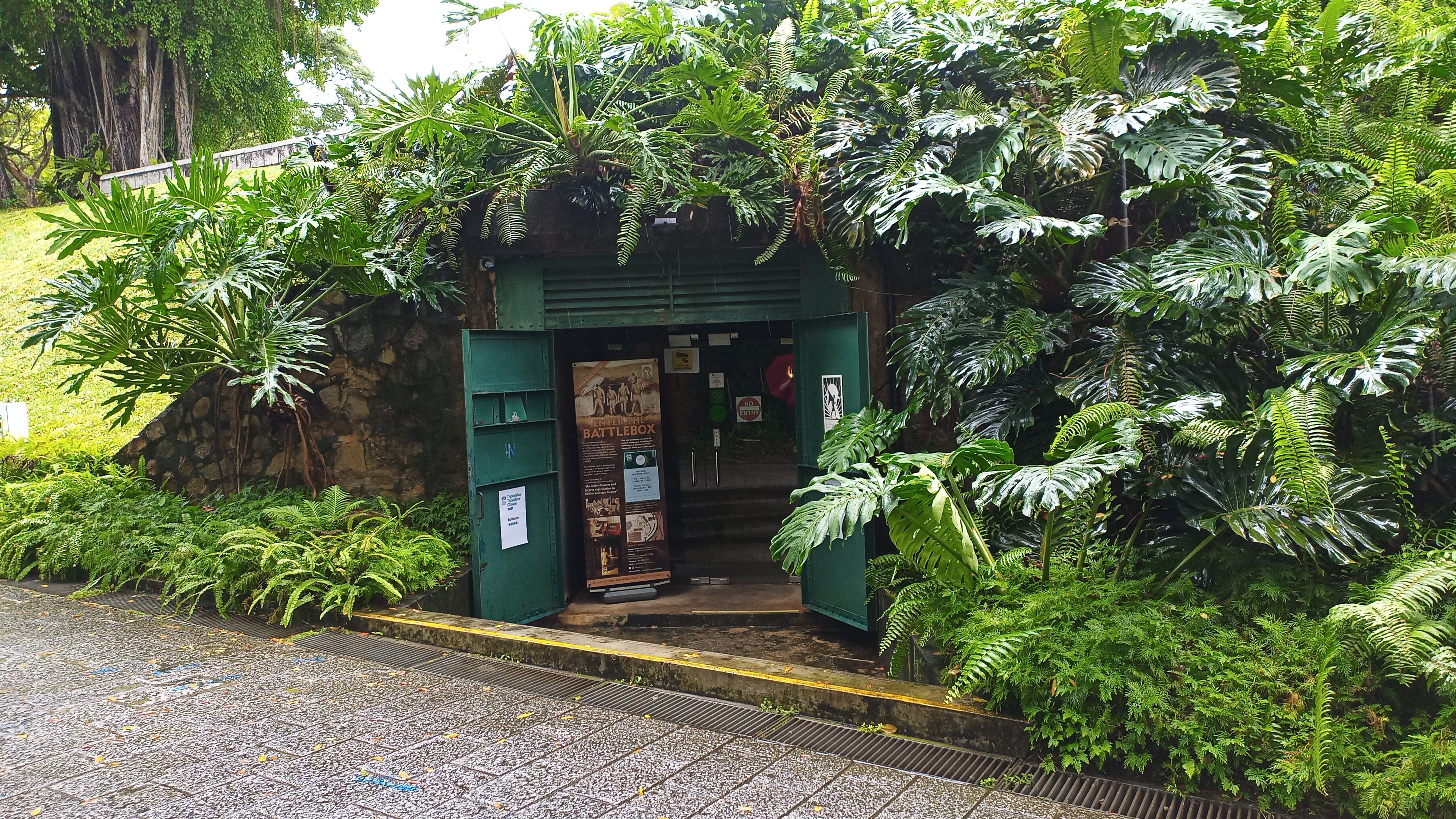
Battlebox Singapore

Saturday, August 27, 2016
Anecdotal History of Annandale

Wednesday, October 15, 2014
Origins of the First World War

 " for the view that nations stumbled into WW1.
Professor Sheffield is the author of numerous war history books. He suggested the idea of WW1 happening by accident is part of a current disillusionment with the effectiveness of the use of military force and not a reading of the history of the early 20th century. In contrast he argues that WW1 was caused by contrast Germany and Austria.
These issues are not just a matter of historical interest. Australia currently has military forces in the middle east and the Prime Minister of Australia has accused Russia of being complicit in the murder of 28 Australians and threatened to physically assault the President of Russia. Wars have been started over smaller incidents.
Sunday, April 13, 2014
History of Sydney's Inner West


Sunday, January 27, 2013
Canberra History Talks
The University of the Third Age is hosting five "Canberra Conversations" events for the centenary of Canberra:
- February 11: How has Canberra’s planning shaped our lives?
- April 8: The bush capital – the environment and its impact
- June 17: The capital as civic cradle
- August 12: Canberra at Play
- October 14: Self-government in the Territory, and politics all round
Friday, January 18, 2013
Fellows Garden Australian National University House

The construction of ANU University House and other original buildings for ANU academics were discussed at the highest levels of the Australia government, intended to attract world class academics to accelerate the economic development of the nation and were influenced by cold war politics, as detailed in Milton Cameron's book "Experiments in Modern Living: Scientists’ Houses in Canberra 1950–1970".
Monday, February 20, 2012
Telecommunications in 1860s Canberra
The full text of the book "Canberra's Engineering Heritage" is avialable on-line, courtesy of Engineers Australia. This includes a chapter on "Telecommunications in Canberra", starting with the telegraph in the 1860s.
Table of Contents
Friday, August 05, 2011
Turkey in the Modern World
 The Cambridge History of Turkey: Volume 4, Turkey in the Modern Word covers the period from the nineteenth century to the resent day. This includes the turbulent period of the collapse of the Ottoman empire, the Young Turks, the Turkish Republic and militarily coups, the Kurdish and Islam issues. There is some repetition as authors on different topics cover the same period. I found the chaopted on the struggle for independence, art and novels and Istanbul of most interest. One point I would disagree with is Sibel Bozdoğan's description of the Kocatepe Mosque as being postmodern because it has a supermarket in the complex. Having a bazaar associated with a mosque was not unusual in ancient times to help pay for the upkeep of the building and the supermarket is essentially just a modern equivalent.
Wednesday, June 15, 2011
Now and Future of History on the Web
Greetings from the Australian National University, where Michael McKernan is speaking on "Doing History Differently". He started by confessing there was an error in his book "The Strength of a Nation: Six Years of Australians Fighting For the Nation and Defending the Homefront in World War II". The chapter "Australia is Also at War" describes how Professor Manning Clark he had been in Bonn (Germany) 8 November 1938 after Kristallnacht was which he described. Mark McKenna, discovered that Professor Clark described his wife's experience as if it was his own. Michael McKernan excuses this lapse, but used it to show how careful historians need to be. He then asked what was the greatest number of Victoria crosses in one military action (Wikipedia says Second Relief of Lucknow, 14–22 November 1857). Also he made the point that history is important to individuals.
Michael McKernan then discussed errors which Mark McKenna, pointed out in Professor Clark's The History of Australia . He then discusses the factual errors in Mark McKenna's work "An Eye for Eternity: The Life of Manning Clark". This included a description of how the statue which was under the dome of the Australian War Memorial was removed to install the Tomb of the Unknown Australian Soldier. McKernan argued that the historian has to check sources and particularly memory.
McKernan then nominated the National Library of Australia's Trove system as the greatest development in libraries, ever. I challenged this, pointing out that the Library of Alexandra might be more significant, which he conceded was important. But even so Trove, which integrates traditional library catalogs, with on-line sources, is a remarkable achievement.
Lastly McKernan nominated the Australians at War Film Archive. The film footage was a byproduct of the TV series "Australians at War", and has been archived with a green screen background so it can be reused. He also mentioned the Channel 9 TV series "In Their Footsteps", combining sound historical research and engaging personal stories.
One of the audience quoted Herodotus "Very few things happen at the right time, and the rest do not happen at all. The conscientious historian will correct these defects." and then asked if this was truly a quote. The Wikipedia suggests it is from Mark Twain's A Horse's Tale (1907). This brings up the issue of the role of Wikipedia in history: for better or worse. McKernan commented it was better, rather than worse.
Michael McKernan then discussed errors which Mark McKenna, pointed out in Professor Clark's The History of Australia
. He then discusses the factual errors in Mark McKenna's work "An Eye for Eternity: The Life of Manning Clark". This included a description of how the statue which was under the dome of the Australian War Memorial was removed to install the Tomb of the Unknown Australian Soldier. McKernan argued that the historian has to check sources and particularly memory.McKernan then nominated the National Library of Australia's Trove system as the greatest development in libraries, ever. I challenged this, pointing out that the Library of Alexandra might be more significant, which he conceded was important. But even so Trove, which integrates traditional library catalogs, with on-line sources, is a remarkable achievement.
Lastly McKernan nominated the Australians at War Film Archive. The film footage was a byproduct of the TV series "Australians at War", and has been archived with a green screen background so it can be reused. He also mentioned the Channel 9 TV series "In Their Footsteps", combining sound historical research and engaging personal stories.
One of the audience quoted Herodotus "Very few things happen at the right time, and the rest do not happen at all. The conscientious historian will correct these defects." and then asked if this was truly a quote. The Wikipedia suggests it is from Mark Twain's A Horse's Tale (1907). This brings up the issue of the role of Wikipedia in history: for better or worse. McKernan commented it was better, rather than worse.
Subscribe to:
Posts (Atom)