Showing posts with label renewable energy. Show all posts

Thursday, November 20, 2025

Despatch Australian Made World's Largest Battery Ship to Türkiye as Climate Talks Venue

This is to suggest the Australian Government borrow Hull 096 from Tasmanian shipbuilder Incat and send it to Türkiye as a venue for climate change negotiations. The world’s largest battery powered ship, which can carry 2,100 passengers is being completed for service in South America. The vessel could be temporarily renamed "Australia". This would send a message to the world that Australia is serious about renewable energy. 

There is a precedent for the use of an Incat high speed ferry as a venus at an international event. During the Sydney Olympics, Austrade organised Business Club Australia, aboard an Incat ferry at Sydney's Darling Harbour. I was a guest onboard and spoke to Robert Clifford AO, Chairman of Incat on the bridge. 


Wednesday, October 22, 2025

Charging for Electric Trucks

Windrose electric prime mover,
Photo by Tom Worthington, CC-BY 20 October 2025
In Australian cities there are now chargers at major box retailer's car-parks and shopping centers. There are also small chargers on electricity poles in inner city streets. This week I saw a Windrose electric prime mover at an interstate highway service station, charging at the regular car chargers. Unfortunately, it was so big it was taking up two bays. There will need to be special provision for truck charging. There is still a problem with charging for those in apartments. Building managers are understandably reluctant to have charging in the basement car parks.

Sunday, August 25, 2024

EV Charging for Strata


Greetings from the Inner West Footprint EcoFestival. One interesting display is from Alchemy Charge offering low cost electric car charging for apartment blocks, using ordinary power points. They have overcome the problem of overloading the building's power supply (or an expensive upgrade) using smart power points. Each box screwed to the wall is controlled by WiFi, to ration the amount of charge provided to each vehicle. 

The challenge for Alchemy will be convincing home owners that low capacity chargers will be worthwhile. Cars are only driven a few km a day, so a low capacity charger will be fine. But the driver thinks they need a full charge quickly.

Last year I was on a committee advising the ACT how to reduce carbon emissions (Turner Et. Al, 2023). Canberra has already implemented many measures, making new ones harder. Especially hard are measures for apartment buildings , as all decisions on changes have to be made jointly, with the costs, and benefit shared. One way I suggested was with Smart low cost power controller/monitors for EVs. This is essentially what Alchemy offer, but with more purpose designed electronics. 

Reference

Towards Net Zero in ACT Apartments, Tim Turner, Robin Eckermann, Jeffory Mitchell, Brand Hoff, Robin Stanton, Glen Hassett , Craig Davis, Tom Worthington, Amy Jowers Suburb, Marea Fatseas, Mishka Talent, Dean Spaccavento, Daniel Shaddock, Lachlan Blackhall, ACT Chapter, Pearcey Foundation, 2023

Thursday, June 22, 2023

Smart low cost power controller/monitors for EVs?

My 20+ years old burglar alarm went off while I was away for the weekend and the neighbors, thinking I was in trouble, called an ambulance. So I decided to buy a new alarm. The new alarm is part of a smart home system. One of the 133 optional extras is a plug in smart energy use monitor and controller. There are many such controller/monitors available, for less than $20 each. I realize these consumer devices might not be up to the task of car charging, but could a similar distributed arrangement be used for EV charging in an apartment building? 

The idea is to avoid running an individual cable from each car space back to a central control/metering point in a basement. Instead the control and metering would be at the socket, with the sockets wired in parallel. Also the wiring would only need to carry about one eighth* the load the sockets could theoretically supply. There would just need to be a dumb circuit breaker for each string of sockets, in case the automation failed and tried to power too much at once. 

Smart high power chargers already have the capacity to be remotely controlled and used for metering, but cost thousands of dollars, and require expensive high capacity circuits to be run to the building. The power also costs money. A low cost alternative would be an ordinary domestic outlet with a smart controller built in. The householder would simply plug their car in to charge, or if security is needed, use an app to start. The smart system would charge only about one in eight cars at a time*, monitoring which cars had charged, & which would accept more. 

A workable setup might use a 20 amp cable, with 16 sockets, but  only two sockets ever being active at any time. A system would ration the power available, between the cars. Each smart power point would report when power is no longer being drawn from them, indicating the car no longer needs charging, and can be provided to another. The householder could have the option of only using off peak low cost power, or on-site free surplus solar power.

 * Back of the envelope calculation: 

The average Australian car travels about 33 km a day.

An electric car, such as the Tesla Model S, uses 19 kWh/100 km.

So that is 6.27 kWh per day per car needed. 

From an Australian domestic outlet you get 2.4 kW.

So it will take 2.6 hours to charge for an average day driving. Let us round it up to 3 hours. So in 24 hours you could charge 8 vehicles from one outlet.

ps (added 6 July 2023): Laws restrict what the body corporate which runs an apartment block, and companies supplying power, can do. The body corporate typically can't charge householders for electricity generated on its own roof, nor can they contract for a bulk supply, & charge for that. Also the companies who can charge, and how much they can charge, is heavily regulated, creating monopolies which can make super-profits. An alternative approach might be for the body corporate to levy householders a fixed amount in advance for car charging. This would be based on the number of car charging spots the household has. If the charging is only low rate, it may not be worth metering individual apartment use: everyone would pay the same amount per car. If it is worth metering, there could be a refund, for power not used.

Tuesday, April 20, 2021

Gigworker's Shelters to Reduce Energy USe

Cabmen's shelter,
by Andy Scott, 2019, CC BY-SA 4.0
 Recently I have noticed quite a few people sitting in vans and utes, parked with the engine running. They appear to be on-call workers, prepositioned around the city, waiting to be called to fix something. Also I noticed an electric car charger which can also be used to return power to the grid. Perhaps parking spaces could be distributed around the city, equipped with charging, for service vehicles. The drivers could either wait in the vehicle, or in the modern equivalent of a Cabmen's Shelter, nearby. 

Thursday, March 19, 2020

Video Conference on COVID-19 and the Rebewable Energy Business

Greetings from the Australian National University in Canberra, where I am taking part in a webinar (video conference) on "COVID-19 and the Household/Commercial Solar and Battery Storage Market", hosted by the Smart Energy Council. Interestingly there is a demand for batteries and solar in regional areas, perhaps due to a wish to be independent from the grid. However, demand is expected to reduce. The supply from China, the effects of the reduction in the value of the Australia dollar, and the government incentives were discussed. There was a reminder to look after staff health, and our own. This was an excellent example of how an industry association can keep their members informed. I suggest other industry bodies and professional societies follow this example.

There were only a few brief dropouts in the audio (fewer than on ABC Radio National this-morning). The talking heads video worked well and the presenters slides were very clear. One improvement would be to give a web link in the text chat with notes. As it was, the presenter suggested photographing the web address on a slide, which is cumbersome.

The video conferencing product being used was Zoom. This is not my favorite, as there is no way for participants to set the audio or video quality to reduce bandwidth. However, it is possible to reduce data use with a smaller video window.

During the presentation, with live video full screen, this was using about 1,000 kbps. If I reduced the size of the video window to 512 by 240 pixels, the data reduced to 300 kbps. Minimizing the video to a "thumbnail" (200 by 112 pixels) reduced data to 220 kbps. Hiding the video reduced data to 120 kbps. This is consistent with Zoom's documentation: 1.2 Mbps for HD video, screen sharing with  video thumbnail at 50-150kbps, and screen sharing only with no video thumbnail 50-75kbps.

During a presentation such as this, video is really only needed at the start to introduction the speaker, and at the end during questions, if at all. In between there are usually slides to look at, so the video can be minimized, or hidden. I suggest participant adopt that way of viewing, and if possible, event organizers set this up as the default.

Zoom, and other video products, adjust to the bandwidth available, but then tries to use all that bandwidth. This makes them poor online citizens, like someone who fills their trolley with toilet paper, if you let them. wink

As there is likely to be a high demand for Internet access over the next few months, I suggest that providers of video conference products set defaults to use less bandwidth. At the very least they could be set so only a small video window appears by default. Also they could provide a low speed option which uses no more than 256 kbps, and this could be made the default setting. As an example, Zoom has a maximum bandwidth setting, but this is disabled by default. This should be enabled and set to no more than 256 kbps.

Tuesday, February 25, 2020

Super-charabanc Peoplemover

Greetings from the Australian National University where Dr Antonia Terzi is speaking on the engineering of the Superbus. This is a prototype high speed people mover. It looks like a stretched super-car, to carry 23 passengers. This is not a practical transport system, but an interesting marketing exercise. Dr Terzi detailed the engineering of a vehicle which could travel at high speed, but also through city streets. However, the aerodynamics would be irrelevant in reality, as a bus (or as this would be more accurately called a "Charabanc"), would not operate at high speed for a significant amount of time.

Artist''s impression of Brisbane Metro Vehicle.
From Brisbane City Council
There have been similar examples of making public transport look attractive to the public. An example are the vehicles for the Brisbane Metro. The articulated buses for this service are being fitted with streamlined noses, and wheel covers, to make them look like light rail. The streamlining and wheel covers have no practical function: they are purely decorative, but are very important to making the service acceptable to the public.

Bishop Austrans Pod
An example of good engineering with poor marketing input was the Bishop Austrans rapid transit system. Australian company Bishop Austrans rapid transit system. This used people-mover sized vehicle pods,  on a light track. Bishop engaged CSIRO to model how many pods would be needed for a given number of customers. Bishop's pods are very similar to the superbus, both being based on automotive technology adapted to on demand public transport. However, Bishop's pods were very unexciting, looking like something from an old science fiction movie, whereas the superbus looks like something from a new movie.

Dressing up a public service in an unnecessary streamlined shell may seem a waste of engineering talent. However, engineering is of no value if the public doesn't want the products produced. One way I suggest this can be does is by providing entrepreneurial training.

Saturday, October 05, 2019

Walgett, Brewarrina, Bourke, Wilcannia and Menindee Lakes


Yaama Ngunna Baaka Corroboree
Tour 2019, Wilcannia.
Photo by - Mark Merritt,
courtesy of Earthling Studios P/L

I attended the Yaama Ngunna Baaka Corroboree Festival, from 28 September to 2 October, in western NSW. This was by bus from Sydney to Walgett, Brewarrina, Bourke, Wilcannia and Menindee Lakes, then train from Dubbo to Sydney. Mat Ward produced a detailed blog of the trip, there is the Water for the Rivers Facebook Page,
so I will just provide a few reflections of my own.

Sometimes you see a photo, and think: that is not real: it was staged: they added the smoke and colored lights.  Well
Mark Merritt's photo of the Corroboree at Wilcannia looks too magical to be real, but I am one of those dots around the circle: that is what it looked like. Leaving early, crossing the old lift bridge over the river to the campsite, I looked back and the moon had risen directly over the ring, the smoke hung low.

While I have written about the problems of telecommunications, and e-learning in regional Australia, this was an academic exercise conducted at a distance. There were two buses, two trucks for supplies, and a convoy of cars. It is rare for me to travel long distances with a large party, and at times voices were raised. But mostly it all worked out.

One highlight were the Brewarrina Fish Traps (Baiame’s Ngunnhu), with a tour by staff from the Brewarrina Aboriginal Cultural Museum. The fist traps may be the oldest existing human made structure.


Save Our Rivers by Copyright © 2019 Mundagutta Bruce Shillingsworth - All Rights Reserved.
 Save Our Rivers by
Bruce Shillingsworth 2019.
You may have missed this year's tour, but the Save Our Rivers Tshirt is still available.

Update
Indigenous community say they've lost their culture to water mismanagement, by Aneeta Bhole SBS, 18 October 2019


Monday, September 16, 2019

Yaama Ngunna Baaka Corroboree Festival 2019


Got my tent, and sleeping bag, ready for the Yaama Ngunna Baaka Corroboree Festival, with local Aboriginal organisations at Walgett, Brewarrina, Bourke, Wilcannia and Menindee Lakes, 28 Sep to 2 Oct 2019. There are a few seats left on the buses: book now.

While I have written about the problems of telecommunications, and e-learning in regional Australia, I am now going to go out and experience it first hand. 
"Each dance group will perform in each township at the corroboree that will begin at dusk:

Betina Bysouth (Menindee / Bendigo)
Barkindji (Wilcannia)
Budjiti (Enngonia)
Kamilaroi (Walgett)
Mungundi (Moree)
Murrawari (Goodooga)
Ngemba (Brewarrina)
Wankamurra (Bourke)
Wakagetti (Brewarrina)
Wiradjuri (Trangie)

Also Aboriginal dance groups ...

Garul Giyalu Rock Mob (Katoomba)
Yama Guroo (Sydney)
Koomurri (Sydney)
Tal-Kin-Jeri (Adelaide)
Mujamundu (Quilpie)
Group (Darwin)"

"In Walgett, Brewarrina and Bourke, the Mothers Milk Bank will involve their musicians as part of their Ruby Hunter project ... In Wilcannia and Menindee the duo JOCEAN from Shell Harbour will perform ... The Murray Lower Darling Rivers Indigenous Nations will lead these programs  ...

Eva Cannan will lead small ethical foraging bush trips and any food collected will contribute to evening meals. ... In Walgett she will be joined with Elder Camellia Bonney  ...

The Indigenous Energy Australia stall will provide information about their leading initiatives...."

Friday, July 19, 2019

ACT Renewables Showcase

I am running a free workshop on "How Green is my Computer?" at the ACT Renewables Showcase in Canberra, 26 July 2019. There is also an electric car exhibition.

Program

9:00-9:20 Registration
9:20-9:30 Welcome/Opening
10:00-17:00 Electric Vehicles Exhibition (in partnership with Tesla Owners Club of Australia and Australian Vehicle Association)
9:30-10:15 Panel: Policy Implications for Renewables with Geoffrey Rutledge (ACT Government), Dr Frank Jotzo (ANU), Dr Andreas Loeschel(University of Munster); moderated by Sylvia Tulloch (BAB Chairman for REIF)
10:30-11:45 Workshop: How Green is my Computer? by Tom Worthington.
11:45-12:45 Panel: Women in Renewables with Shahana McKenzie(Bioenergy Australia), Clara Mazzone (ITP Renewables), Alison Reeve (ACT Government), Michelle McCann (PV Lab), Dr Marnie Shaw (ANU); moderated by Ruth O'Connor (ANU)
13:15-14:10 Seminar: Renewable Energy Innovation and World Trends by Simon Corbell (Energy Estate).
14:25-14:50 Speed Talks: Greening the Future-Bioenergy for Transport and Industrial Application by Dr Clive Stephens (Vtara Energy Group).
14:55-15:20 Speed Talks: How Electric Vehicles Could Shape Our World? by Darryl Bourke (Tesla Owners Club of Australia).
15:25-15:50 Speed Talks: Building Blocks of a Sustainable Energy Future by Vincenzo Marciano and Ryan Wood (Evergen).
16:00-16:55 Seminar: State of affairs: Clean Energy Market Challenges by John Grimes (Smart Energy Council).
17:00-17:30 Closing Ceremony closing remarks by Chief Minister Andrew Barr.
From 17:30, Energy Lab will kick off with their famous annual Hackathon. Join us to explore a variety of opportunities that will accelerate the uptake of clean energy. To register for the Hackathon, click here.
You can find tickets at https://www.eventbrite.com.au/e/act-renewables-showcase-2019-tickets-63848147528

Tuesday, July 31, 2018

Will the NEG transform Australia's energy landscape?

Greetings from the Australian National University in Canberra, where a panel is speaking on "Will the NEG transform Australia's energy landscape?".

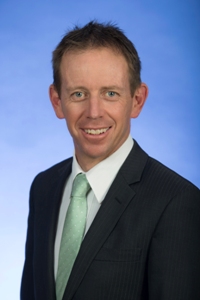
Shane Rattenbury
First up is Mr Shane Rattenbury, ACT Minister for Climate Change and Sustainability.  Minister Rattenbury was one of the recipients of a letter today, from 23 energy researchers: "Call for Full Release of National Energy Guarantee Modelling". He pointed out that the National Energy Guarantee (NEG) will not reduce emissions significantly more than "business as usual". Also there will be a considerable number of coal plants reaching their design life just after 2030, requiring to be replaced.

Also to speak are Professor Frank Jotzo (Crawford School of Public Policy, ANU), Dr Hugh Saddler (energy consultant) and Ms Katharine Murphy (Political Editor, Guardian Australia).

ps:  Professor Jotzo and Dr Saddler agreed that the NEG was not a lot better than "business as usual". Katharine Murphy, looking at the political aspects, suggested the NEG could be useful, not because it achieves any fundamental reform, but primes the political process for something more ambitious.

Tuesday, March 21, 2017

Virtual Power Station Cheaper Than Snowy Hydro 2.0?

Tomorrow I am giving a guest lecture to Systems Engineering students (COMP3530) at the Australian National University on "Environmental Concerns". As usual I will run them through "How Green is My Computer?", an exercise in estimating the carbon emissions from a computer. However, to make it topical, I thought I would see if computers can provide a cheaper alternative to the PM's Snowy Hydro 2.0 Proposal.


Smoothing the peaks ...
Blakers and Fulton,
The Conversation,
CC BY SA 4
In February 2017, a team of ANU researcher, lead by Professor Andrew Blakers released a report proposing that "100% renewable electricity in Australia" was feasible. This would use pumped hydro energy storage: excess power from wind turbines and solar panels would be used to pump water into a high reservoir. At times when there was insufficient wind and sun, the water would run down to a lower reservoir and drive a turbine. Blakers and Fulton described how this could be implemented at the existing Snowy Hydro Scheme, in 2014.


Murray 1 Snowy Hydro Station,
by Martin Kraft/Wikimedia
Commons
, CC BY-SA
Malcolm Turnbull, Prime Minister of Australia then announced the "Snowy Mountains Scheme 2.0." (16 March 2017), to add 2000 megawatts of pumped hydro storage, at a cost of AU$2B ("Malcolm Turnbull plans to upgrade Snowy Hydro to version 2.0" (Video), ABC TV, 16 March 2917).

Dr Lachlan Blackhall
However, are there cheaper, quicker alternatives for low pollution energy, using computer and telecommunications? Companies including Canberra's Reposit Power (Founded by ANU graduate Dr Lachlan Blackhall) aggregate the power from home solar systems (and batteries) and sell this back to the grid.

However, there is another underused source of on-demand power available in people's homes: the air-conditioner. The air-conditioner is a large part of the energy supply problem but could be part of the solution. A home ducted home air-conditioner uses about 5KW of power. A medium room air-conditioner uses  2.3KW. What if we could pay householders to halve their air-conditioning energy use at times of high energy demand?

Smart meters and some air conditioners have a Demand Response Enabling Device (DRED) option. This allows the electricity supplier to remotely switch the air-conditioner to a lower power mode at times of peak demand. The supplier offers a cash payment up front and a lower electricity charge to householders who take up the option. However, this is not very popular.

If we could use smart-phones, and sharing economy techniques to provide more of an incentive to consumers, would this be cost effective?

A quick back-of the-envelope calculation:
Cost of Snowy #2 power: $2B for 2000 MW = $1,000 per KW.

Assuming a consumer would halve their air-conditioner consumption on demand, 5KW to 2.3KW = 2.7 KW saved. This would have to cost less than $2,700 to be cheaper than Snowy #2. Retrofitting DRED may well cost more than this. However, smart air-conditioners may require no extra hardware. The difficulty would be making it feasible for the consumer to enable the function, without requiring a technician to visit.

Raspberry Pi Computer,
photo by By Ayaita
(Own work) [CC BY 3.0],
via Wikimedia Commons
The computing power needed to provide the DRED function, could be provided by a computer equivalent to a $50 Raspberry PI. The computer needs no touch screen as it can instead use the consumer's smart-phone for the interface. The connection to the energy supplier can be via WiFi to the household hub. The system could be made fail-safe (and prevent the consumer cheating it) by having the unit programmed to operate on low power, until it receives an encrypted signal from the power company to switch to high power.

However, how many households would need to have DRED? The Snowy Hydro 2 scheme is proposed to produce 2000 MW. At 2.7 KW saved per household, that requires almost three quarters of a million households: 8% of the 9m in Australia. Also it is unlikely that these householders would be willing to give up half their air-conditioning for long periods. But such a system might be used during the annual peaks and when there is a problem with regular supply, rather than have fossil fuel stations on standby. So I propose the Snowy 2 Scheme include a 2000 MW virtual power station to be operational by the end of 2021 at a cost of $200M.

Friday, January 13, 2017

Building a green Internet

The report "Clicking Clean: Who is winning the race to build a green Internet?" (Greenpeace USA, 10 January 2017), identifies Apple as the leader in green computing. leadership spot for the third year in a row among platform operators. The report criticizes Amazon Web Services (AWS) for data centers in Virginia (USA) power by electricity from coal. 

One point the report makes is that more than half of global Internet traffic is now video streaming. This is an area, I suggest, where technology could make improvements. Improved compression algorithms can reduce the size of the streamed data. Also more intelligencer systems can detect the size of the display and therefore what resolution image is required. There is no point in streaming
8K ultra high definition television to a pocket size mobile device, or a tiny picture-in-picture window on a large TV. Lower resolution video will be indistinguishable to the viewer, saving bandwidth and energy.

For more on green computing, see my book "ICT Sustainability: Assessment and Strategies for a Low Carbon Future".

Friday, December 09, 2016

Lights Out in Cyber Attack

Professor Roger Bradbury, from then ANU National Security College, has portrayed the "South Australian power shutdown ‘just a taste of cyberattack'" (ANU Reporter, 2016). He speculates that Australia's electrical, telecommunications, water, sewerage, transport and financial services infrastructure already has been compromised by China, in preparation for a "surgical cyberattack" in a future dispute over the South China Sea. The effects of a possible cyber attack are not exaggerated, but perhaps Professor Bradbury should not have singled out China.

It is likely that all nations are now preparing for cyber-attacks, as a routine adjunct to conventional military operations. This year I ran ANU computing students through a "Cyberwar: Hypothetical for Teaching ICT Ethics". This was based on a possible conflict over the South China Sea. However, I was careful not to identify who might be attacking who. 
 
Professor Bradbury suggests that our systems can be made less vulnerable by not having them top-down or hierarchical. He suggests "We need 21st-century networks that have no centre: no main power station, no main water dam, no main interconnector, no main transport hub or central train station...". In this he is perhaps suggesting a system like the Internet, which consists of a collection of interconnected networks (literally an Inter-Net). However, even a system with no hierarchy is vulnerable to attack if it uses the same computer control software for all iots nodes and those nodes are all connected to the Internet.
 
One way to build resilience is to rely on gravity, as is done with much of the water supply. Water is pumped to reservoirs and then flows by gravity. Similarly, sewage systems have overflow valves, which open to allow sewage to flow into waterways (bad for the environment, but better for human health than sewage backing up into people's homes).

The electrical grid can be similarly protected by having generators independently working to maintain the system, rather than acting via central control. Local home solar panels could have a role in this, by boosting the grid when required. However, these systems need to be protected from hacking, or they could be used to attack the grid.

Wednesday, November 30, 2016

Batteries for Smart Grids

Greetings from the Australian National University in Canberra, where Philipp Braun is speaking on how to work out the use of home batteries for solar panels (more formally "Hierarchical distributed optimization and predictive control of a smart grid").

Phillip compared a centralized versus distributed approach. With the centralized approach the electricity authority issues commands to the batteries to charge or discharge, with distributed the controller in each house tries to predict what will be needed. He has worked on an approach combining centralized and distributed approach: the central system sends out a suggested solution, which the local system then modifies.

While interesting, Phillip's approach does not allow for micro-grids. That is coordinating the households in a neighborhood. This is an attractive alternative as it can take into account how the households are physically wired together, as well as local climatic conditions which will effect solar power production and power use. As well as physical constraints making micro-grids practical there are also financial and regulatory reasons to coordinate household power, even if they are near-by.

Phillip is now at ANU, and has published a number of papers.

The Canberra based company Reposit Power, founded by an ANU graduate, produces systems for controlling home batteries. They recently featured in the ABC TV documentary "Battery powered homes".

Monday, February 22, 2016

Battery Storage of Energy for Heating Canberra Homes

Greetings from "Creating Energy Efficient Cities in Switzerland and Australia" at the Australian National University in Canberra, where a representative from the ACT's Environment and Planning Directorate, is outline their next generation renewables strategy incorporating an innovative pilot program of distributed energy storage using home battery storage. What was curious is that the winter peak electricity use in Canberra is for space heating, which conventional wisdom says is not a good use for battery storage of energy. The storage of heat directly has been the usual way to provide space heating storage. The drop in the cost of PV panels has resulted in these now being cheaper than use of direct solar water heaters for domestic supply, however, even hear storage as hot water is used.

It would be interesting to see if the ACT Government would consider energy saving options as an alternative to provision of PV panels and storage. That is, if technology can be used to reduce or shift energy consumption, at a lower cost than generation or storage, then that should be used. This approach was taken up by Ms Martina Blum, Energy Officer, City of Zurich in a talk on the "2000-Watt society – Zurich’s path to sustainable energy use". Zurich’s approach to reduce energy use could usefully supplement the ACT's renewable energy approach.

Dr Andreas Luzzi, CEO Laros Technologies, will then speak on "Passivhaus brought to Canberra". This is an example of a home designed for the 2000-Watt-Society  initiative.

Thursday, December 03, 2015

Export Electrical Energy on Ships

At the Canberra Innovation Network tonight an executive from a local renewable power start-up mentioned that there was a proposal to export electrical power from Australia. This would be done with a high voltage cable through Indonesia. As a thought experiment I suggested exporting a ship load of rechargeable batteries (just as Sneakernet can transport comparable amounts of data to a fiber optic cable).

A quick back of the envelope calculation


A Lithium battery has an energy density of about 2.63 MJ/l, whereas fuel oil is 35.8 Mj/l, 14 times as dense.

The Tesla Powerwall has 10 kWh capacity and is
1300 x 860 x 180 mm (0.2 m3). A standard 20 foot shipping container is 38.5 m3, which would fit about 191 Powerwalls, with 1.91 MWh. The largest ships can carry 18,270 containers, with 3,500 MWh. A HV DC cable can carry 6,000 MW, so there would need to be a ship arriving every half hour t provide this capacity.

However, a major issue with renewable power is storage. The power provided by a storage battery is much more valuable than that from a cable, as the battery stores power. If renewable power has to be stored in batteries anyway, then it might be feasible to transport them in some circumstances.  

ps: None of this had anything to do with the event  I was at, which was a debate about programming languages and the eternal golden braid. ;-)

Sunday, November 22, 2015

Flexible Coal: Better to Wear Away Than Rust Away

"Flexible Coal" with current base-load power stations converted to peaking plants, may provide a way to increase the use of renewable energy and reduce greenhouse gas emissions. Photo-voltaic and wind generated power are intermittent: when the sun stops shining, or the wind stops blowing, the energy production stops. Conventional wisdom has been that these renewable sources could not make up more than a small fraction of energy generation, until an affordable way to store that energy was found.

The problem was that coal fired power stations, now used to provide the base-load in countries such as Australia, could not be simply switched on when needed. However, the report "Flexible CoalEvolution from Baseload to Peaking Plant", from the U.S. Department of Energy, Office of Energy Efficiency and Renewable Energy, indicates that with some limited hardware modifications and changes to  operational practice, coal fired power stations can be cycled on and off and run at lower output than previously thought (less than 40% of capacity). Cycling the plant does damage equipment and limit its life expectancy, but may be preferable to scrapping a working plant and having to replace it with an alternative such as gas power.

Modifying coal power stations to provide a backup for renewable energy could significantly reduce greenhouse gas emissions far quicker than storage options, such as batteries. Instead of coal providing the base-load and renewable energy supplementing this, PV and wind could provide most of the energy on most days of the year. Coal power would just be switched on when needed: on cloudy windless days, at peak times during the day and at night. Also excess renewable power could be used to heat the coal station's equipment, so it is ready to start more quickly and also reduce damage from cooling.

The conversion of coal stations to peaking plants would provide a political solution for the Australian Government, needs to find a way to reduce greenhouse gas emissions, while not being seen to be damaging the Australian coal industry. Obviously off-peak coal power stations are not a long term option, as they still will emit significant amounts of carbon dioxide pollution. However, this could be a useful interim measure for the decade or so it takes for storage of renewable energy to become practical.

Tuesday, August 18, 2015

Applying German Renewable Energy Transformation in Australia

Andreas Löschel, Professor for Energy and Resource Economics, University of Münster, will speak on "Germany’s energy transition and implications for Australia", at the Australian National University in Canberra, 12.30pm, 28 August 2015.

"With the energy transition or Energiewende, the German government aims to deeply reduce carbon dioxide emissions by increasing renewable energy to 60 per cent of total energy supply by mid-century, and by drastically reducing total energy consumption.


Achieving these ambitious goals could have significant economic and social costs, and poses challenges for policy design and practical implementation. Germany’s support for renewables through long-term feed-in tariffs is effective, but not efficient. EU emissions trading scheme are not high enough to trigger fuel substitution. In energy efficiency, large gains were made since the early 1990s but in recent years annual improvements were at only half the rate required to achieve the targets. Germany’s industrial energy costs remain competitive and there is no structural shift away from energy-intensive industries. To succeed, the Energiewende will need clearer priorities and a hierarchy of the many separate goals.
Many of these issues are relevant to Australia’s efforts to reduce greenhouse gas emissions and transition in Australia’s energy system, and especially the current policy debate over renewable energy.
Professor Andreas Löschel holds a chair for Energy and Resource Economics at the University of Münster and is Director of the Centre of Applied Economic Research Münster (CAWM). He chairs the Energy Expert Commission of the German Government to monitor energy transformation. He served as Lead Author on the IPCC Fifth Assessment Report, was visiting scholar at MIT, Stanford, Tsinghua and ANU. Before his present appointment Professor Löschel was head department at the Centre for European Economic Research (ZEW) in Mannheim and Professor of Economics at the University of Heidelberg. He advised the European Commission, the European Parliament, the OECD, the World Bank and national ministries in Germany and the UK on environmental, energy and climate change issues. He has been ranked among the 25 most influential economists in Germany.
Professor Loeschel’s visit is arranged by the Centre for Climate Economics and Policy at Crawford School, with funding from the German government."

Monday, June 01, 2015

Canberra Start-up to Keep Tesla Charged

The Australian National University has reported that Reposit Power will be supplying software to Tesla for use in its Powerwall home battery system. Reposit Power was co-founded by Dr Lachlan Blackhall, who was awarded his PHD at ANU.  Lachlan was also the driving force behind a program at ANU to encourage students to set up their own companies. Now called "Innovation ACT' and including students of other Canberra universities, the program begins its 2015 challenge next month.