Showing posts with label Smart Apartment. Show all posts

Thursday, June 22, 2023

Smart low cost power controller/monitors for EVs?

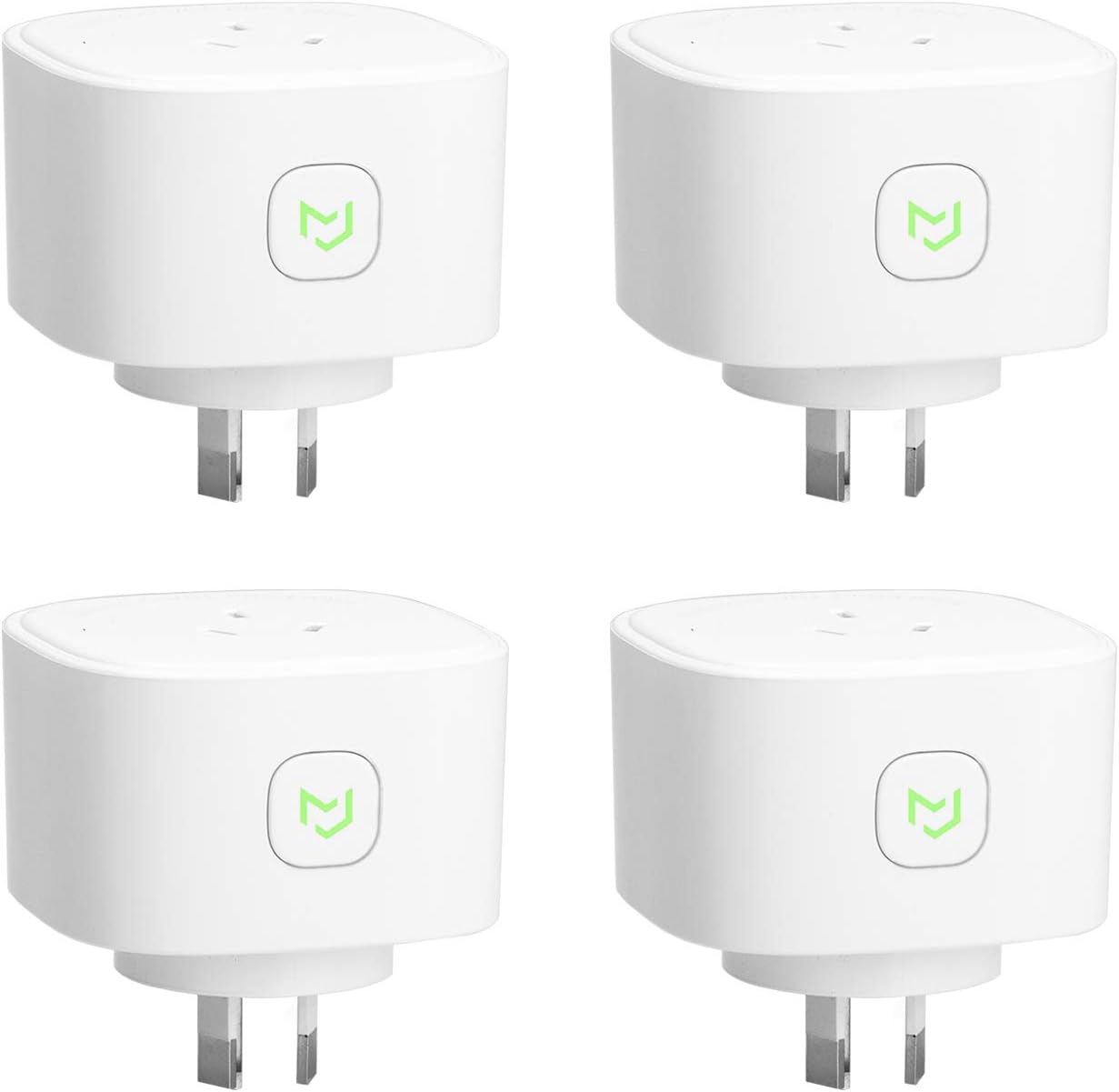
My 20+ years old burglar alarm went off while I was away for the weekend and the neighbors, thinking I was in trouble, called an ambulance. So I decided to buy a new alarm. The new alarm is part of a smart home system. One of the 133 optional extras is a plug in smart energy use monitor and controller. There are many such controller/monitors available, for less than $20 each. I realize these consumer devices might not be up to the task of car charging, but could a similar distributed arrangement be used for EV charging in an apartment building? 

The idea is to avoid running an individual cable from each car space back to a central control/metering point in a basement. Instead the control and metering would be at the socket, with the sockets wired in parallel. Also the wiring would only need to carry about one eighth* the load the sockets could theoretically supply. There would just need to be a dumb circuit breaker for each string of sockets, in case the automation failed and tried to power too much at once. 

Smart high power chargers already have the capacity to be remotely controlled and used for metering, but cost thousands of dollars, and require expensive high capacity circuits to be run to the building. The power also costs money. A low cost alternative would be an ordinary domestic outlet with a smart controller built in. The householder would simply plug their car in to charge, or if security is needed, use an app to start. The smart system would charge only about one in eight cars at a time*, monitoring which cars had charged, & which would accept more. 

A workable setup might use a 20 amp cable, with 16 sockets, but  only two sockets ever being active at any time. A system would ration the power available, between the cars. Each smart power point would report when power is no longer being drawn from them, indicating the car no longer needs charging, and can be provided to another. The householder could have the option of only using off peak low cost power, or on-site free surplus solar power.

 * Back of the envelope calculation: 

The average Australian car travels about 33 km a day.

An electric car, such as the Tesla Model S, uses 19 kWh/100 km.

So that is 6.27 kWh per day per car needed. 

From an Australian domestic outlet you get 2.4 kW.

So it will take 2.6 hours to charge for an average day driving. Let us round it up to 3 hours. So in 24 hours you could charge 8 vehicles from one outlet.

ps (added 6 July 2023): Laws restrict what the body corporate which runs an apartment block, and companies supplying power, can do. The body corporate typically can't charge householders for electricity generated on its own roof, nor can they contract for a bulk supply, & charge for that. Also the companies who can charge, and how much they can charge, is heavily regulated, creating monopolies which can make super-profits. An alternative approach might be for the body corporate to levy householders a fixed amount in advance for car charging. This would be based on the number of car charging spots the household has. If the charging is only low rate, it may not be worth metering individual apartment use: everyone would pay the same amount per car. If it is worth metering, there could be a refund, for power not used.

Tuesday, January 07, 2020

Personal Ultrasonic Air Cooler for the Smart Apartment

With the hot weather and smoke in South Eastern Australia, I needed a little personal cooling in the Smart Apartment, so I put a small low voltage ultrasonic humidifier up in front of a low voltage electric fan.  The humidifier produces a cloud of water droplets (looks like fog), and the fan blows it to me, making a cooling breeze. This is much more effective, and safer, than hanging a wet cloth in front of a mains powered fan.

I have a Beurer LB12 Mini Air Humidifier, from Appliances Online. This is similar to the Elechomes Ultrasonic Mini Cool Mist Humidifier, available on Amazon.These units run on low voltage, from a mains plug-pack. You use a plastic bottle as a water tank: fill the bottle, screw on a one-way valve and upend the bottle on the unit. A small bottle of water lasts a couple of hours. When the water runs out, the humidifier turns off.

Mini USB Personal Fan
I use a 12 volt fan from a computer, connected to a mains plug-pack. But if you don't want to worry about connecting wires, you could use a Mini USB Personal Fan.

Tuesday, February 05, 2013

Bubble shower adapter to save water

CSIRO are promoting the New Zealand made Oxijet ‘low flow’ shower adapter from company Felton. This screws in between the water pipe and the shower head, injecting tiny air bubbles to bunk up the water. To the person showering it appears they are getting more water than they actually are, thus proving a shower with less water. I have had a device of this sort from Australian company E-Co  in my shower since 2005 and it works very well, the effect being of showering in effervescent water. There was also the Oxygenics shower head., seems to operate on the same principle as the E-Co and CSIRO units. CSIRO previously announced a device in 2007. That CSIRO announcement appeared to be worked very similar to that of a maker of a bubble shower already on the market.

Saturday, February 05, 2011

Fridges smaller inside to increase efficiency

apartment refrigeratorThis is to suggest smaller fridges be built in larger cabinets, resulting in a 25% reduction in electricity use and a lower cost appliance.

The Australian and US governments run schemes to rate the efficiency of appliances, such as refrigerators. The more stars on the label, the less electricity used. But these ratings are relative to other appliances of a similar capacity. So a smaller, less efficient fridge may use less electricity, than a large more efficient one.

Human nature, and the market pressure in home design, results in kitchens having large spaces reserved for the fridge. Even my modest one bedroom "smart apartment" has a space for a 410 litre (14.4 cubic foot) fridge, far larger than needed for one or two people. I bought the smallest fridge I could get which had a separate freezer compartment. This was an "apartment refrigerator" of 212 litres (about 7.5 cubic feet). It looked silly in the large space, so I built a cupboard around it, to fill up the space (leaving recommended gap between fridge and walls).

However, a better alternative would be a small capacity fridge which is larger on the outside. The extra space between the outer and inner walls could be filled with more insulation. This would make the fridge more efficient, without greatly increasing the cost.

One simple way for a manufacturer to make a small capacity big fridge would be to use the outer casing and door of a large capacity fridge, with the inner case, shelves and motor of a smaller unit. Using the outer case of a 300 litre fridge with an inner capacity of 200 litres would allow the insulation to be tripled in thickness.

As well as being more efficient due to more insulation, the big-small fridge would use less power than a large unit, simply because it was smaller, having less volume to cool.

As an example, the WHIRLPOOL WRI21X 212 litre fridge uses 415 kWh/annum and has 1.5 stars on the Austrlaian Energy Rating Scheme. The WHIRLPOOL WRID41T has a higher 2.5 star energy efficiency rating, but uses 465 kWh/annum. So the more efficient fridge uses 12% more energy than the smaller model. With insulation three times as thick it should be feasible to make the smaller fridge 25% more efficient than the larger model.

According to a report from 1993,
Sanyo produced a prototype fridge with insulation 2.4 in. (6 cm) thick (twice as think as the standard model) and found a 21 to 28% energy saving.

A big-small fridge would be appeal to the customer, as they would be getting more bulk of fridge for their money, as well as a more efficient unit. A 410 litre fridge costs about 75% more than a 212 litre model. So a 212 litre unit in a case as big as a 410 litre unit could be priced one third higher than a regular unit, but still look cheap compared to the bigger model.

Monday, January 24, 2011

Sensor LED Light Strip Kit

Jaycar Electronics sell a Sensor LED Light Strip Kit. This consists of a 300 mm flexible self adhesive strip with 12 LEDs in it, a PIR detector the strip plugs into and a 240 to 12 volt power supply.

The LEDs are rated at 130 lumen and are 2 Watt per strip. With the light spread out over the length of the strip they are more useful than one bright LED.

The PIR detector is much smaller than those used for 240 lights, being about half the size of a matchbox.

I installed the strip under a shelf in my pantry. About the only problem is that the plug for the power supply is a little loose.

The lights are quite bright and so make the area above the shelf where they are installed seem dim. I might move them to the top shelf and install a second strip (extra strips can be purchased separately). The strips have a socket on one end and a plug on the other and up to six can be daisy chained together and run from one power supply.

The Sylvania 72452 LED Motion Activated Guideway Lighting Kit provides similar features. But it has the LEDs in a rigid bar.

Sunday, January 02, 2011

Buying a Stick Mixer

hand blenderIt being the holiday season there was a need to make fruit drinks and cold (Gazpacho) soup. What I found hand at a friend's house was an immersion blender (stick mixer). With this I was able to hollow out a half watermelon, making the drink and the serving bowl for it at the same time. But buying a stick mixer did not turn out to be that easy, as there are so many models.

I made the mistake of taking the easy option and buying the cheapest model at the Coles supermarket: "Stick Mixer model XB980C" (Matrix Home Appliances, $15). The blade did not turn freely and it made a high pitched sound (of a stuck bearing) when I turned it on. This went back to the shop: Coles provided a prompt refund.

Choice Magazine has an article: "The perfect blend: looking for a light and portable blender, rather than a full-blown food processor? One of these will fit the bill. Test: Handheld blenders" (January 2009). I found that the ACT Library has an electronic subscription and I was able to access the article. This indicated there were other $10 to $20 mixers like the Coles model (similar to the Kalorik), another range around $70 (such as the Braun) and then Barmix models for several hundred dollars.

Woolworths had two models of mixers for less than $20. A plastic body unit came with a mill attachment. This looked very similar to the Coles unit (described as "good" in a discussion of "Food processor or stick mixer?" on Ocerclockers) . Much more impressive was the "Presto" Model SW-108 Sick Mixer". This had two speeds (170 Watt and 220 Watt) and detachable stainless steel shaft. Unlike the Coles unit, this had two sets of bearings to hold the shaft in the removable unit. This and the stainless steel made it look much more robust. The stainless steel guard around the chopping blade has a sharper edge than the plastic one did, which made easier to use it to shop into soft ingredients, such as fruit. It worked very well for making fruit punch. At $16.99 this stood out from the other mixers. With the white motor body black accents and stainless steel shaft this looks a lot more expensive that the other under $20 units.

Looking further online I noticed that BigW were selling what appears to be the same mixer, as the "Abode Stick Mixer 180W" for $14.95. This has blue accents instead of black on the body.

Friday, October 22, 2010

Fixing a washing machine online

After my success of using the web to help fix a toilet flush, I am attempting to diagnose a problem with the washing machine. A search on "Fisher and Paykel Fisher Paykel Intuitive Eco Washer not draining" found useful items in FixYa.com. That gave me the confidence to tile up the washing machine and look underneath. But the problem was not quite the same as described so I looked for "pump hot" and found the Fisher Paykel Washer Diagnostic Fault Codes. This said:
The pump is fitted with a thermal cut out device. Check if this device has been activated. If it has wait until the pump cools down before restarting. Check for any pump blockage and condition of pump before attempting to restart. i.e. pump seizure ...

Wednesday, March 10, 2010

Invitation to the O'Connor Wetland Planting Day, 14 March 2010

The ACT Government has invited the community to help plant native plants at the Banksia St O'Connor Wetland in Canberra, 9am - 12 noon, Sunday 14 March 2010. There is another wetland in David Street (behind the shops) across the road from City Edge, where my Smart Apartment is.
*COMMUNITY PLANTING DAY*
Banksia St O'Connor Wetland
9am - 12
Sunday 14 March 2010

Bring sturdy shoes, hand tools, buckets and a wheelbarrow & a rake if
you have one.


*Edwina Robinson*
Urban Waterways Coordinator
Sustainability Programs
Department of Environment, Climate Change, Energy & Water
6207 5520/ 0466 153 641

Monday, February 15, 2010

Battery Backup Pump for the Smart Apartment

Zoeller 507-0005 Basement Sentry Battery Backup Pump SystemAfter flooding in the basement of the Smart Apartment I have suggested a battery backup pump be installed. This consists of a 12 volt electric pump, a battery, battery charger and some complicated plumbing. This pump would then come on automatically if the main pump does not.

Sunday, February 14, 2010

Flooding in the smart apartment

While we have had only a drizzle of rain in my part of Canberra, the electric pumps in the basement of the "smart apartment" have failed and it is now ankle deep in water. Fortunately the Transact fibre optic node is mount a metre above the floor and is not in danger, unless there is heavy rain. I am going out not to buy a bilge pump.

Tuesday, February 09, 2010

Smart Home in Sydney for Free

The NSW Government is offering a family a free smart home in Sydney for a year. The family will receive free accommodation in return for writing about their experience using the energy and water efficient features of the house at the Newington Smart Village Project in western Sydney.

A "Smart Home Family brief" is provided. This is a 2.39 Mb zip file with:
  • Smart Houme (sic.) add 8-2-10.pdf
  • Smart Home Family Application 8-2-10.doc
  • Smart Home Family Brief 8-2-10.pdf
  • Making a tender response to Smart Homes.doc
A house has been acquired in the Sydney suburb of Newington to be the Smart Home. It is being developed to be a ‘house of the future’ showcasing and testing new technologies to reduce household energy and water use and greenhouse gas emissions.

The house, like other Newington houses, was designed and built to minimise energy and
water requirements. The Newington Smart Home already has:
  • passive design features such as a northerly aspect, well placed trees, window glazing and insulation to reduce the need for heating and cooling appliances;
  • a 1kW solar power systems to supplement the home’s electricity supply;
  • grey water; and
  • a gas‐boosted solar hot water system. ...
The Newington Smart Village

The Newington Smart Village is being established as a trial by EnergyAustralia and Sydney Water. The Smart Village will use innovative energy and water management
technology to give 1,000 households in Newington and Silverwater the ability to reduce their environmental footprint and their household utility bills. This is a $10 million, two‐year program.

The Smart Village Program’s scope covers:
  • Next Generation Smart Meters ‐ 1,000 household electricity smart meters with two‐way communication will be installed as well as 1,000 water meters and 500 recycled water meters. This allows Sydney Water and EnergyAustralia to communicate with residents on household energy and water use via a one‐stop‐shop website or in‐house display.
  • Smart grid switches – New smart switches are being installed on the electricity network to give EnergyAustralia greater information and monitoring of the network, and of Smart Village energy use. It will also allow faster response to power outages.
  • Home Area Networks (HANs) in 100 homes ‐ This will allow smart appliance monitoring and control so households can remotely turn appliances on and off using iPhones (if they have them) or via a tailored website. This will help homes better control their energy use and equipment, running costs and greenhouse emissions.
  • In‐house displays and tailored household websites – This will give households real time information on energy and water use, cost, greenhouse impact. The website includes the ability to compare use and enter neighbourhood competitions.
  • Incentives to reduce energy use ‐ Households can choose to trial innovative incentive packages and products, such as bill rebates for reducing energy use below normal in peak times, and free use of electric vehicles.
  • Renewable energy solutions – will be added to the grid as part of the trial including energy storage solutions to offset peak electricity demand and renewable energy technologies such as fuel cells. Electric cars and car recharging connection points on the electricity grid will also be tested. ...
From: "Newington Smart Home Family -
Brief", EnergyAustralia, February 2010
Curiously, applicants have to apply via the Energy Australia E-Tendering Portal. The tendering system requires the entry of complex information and does not suit such a competition. The tendering process and documentation is more than is reasonable for a family to complete.

Unfortunately the demonstration smart home appears to be of the same time as previous failed smart home projects, including the iHome at Pyrmont in Sydney. These projects equip homes with computer operated controls which require an excessive amount of attention from the householder. Experience shows that the novelty of such systems wears off quickly. The householder does not want to know the power consumption of their home minute by minute or to be able to control appliances remotely. They want the systems to be autonomous: that is the appliances control themselves. In many cases a combination of computerised, simile electronic and mechanical controls are better than full automation. In the case of the Sydney iHome, the high technology systems were removed at the end of the trial, as they provided no useful service to the house holder. It therefore makes little sense to conduct another such trial of a failed approach to energy saving.

Also the competition process has problems it is using the system designed for companies to submit tenders, so that private citizens are instructed to pretend they are overseas companies, to avoid having to enter an Australian ABN. Instructing citizens to enter false information into a government tendering system would appear to be a bad precedent to set.
Details For Notice #ENERGY-447194

SMART HOME FAMILY
This tender is
CURRENT
· TenderLink Ref : ENERGY-447194
· Type of Notice : Request for Tender
· Region : New South Wales
· Contract Value : Not Specified
Closing Date/Time 22/02/2010 6:00 p.m. NSW

EnergyAustralia and Sydney Water are looking for a "Smart Home Family", including a resident writer, to occupy and write of their experiences in the Newington Smart Home located within the Newington Smart Village Project. A house is being developed to showcasing both current best practice and be a real life laboratory testing new technologies to reduce household energy and water use and greenhouse gas emissions. The Smart Home will be integrated with an intelligent electricity grid and its key objectives include:
  • To provide a feature location for education on sustainable energy and water usage, smart metering and publicising the Newington Smart Village trial;
  • To showcase and test 'best of breed' appliances and quantify the potential energy and water savings;
  • To demonstrate the opportunities and benefits of a Home Area Network (HAN) environment;
  • To explore alternative electricity supply and storage options, such as micro generation and battery storage technology; and
  • To showcase the use of an electric vehicle and monitor its charging patterns, and potential integration with the battery storage.
Smart Home Family will increase the educational benefits of the house through living and reporting on their experience. A full description of the project and requirements of the family is provided in the Smart Home Family brief.

From: #ENERGY-447194, EnergyAustralia, 2010

Friday, February 05, 2010

Breakfast at O'Connor

A cliché of 1960s Hollywood comedies is an exotic neighbour climbing through the the window of your apartment (Barefoot in the Park, 1967). Ideally you are a struggling writer (Breakfast at Tiffany's, 1961). I thought this fanciful, until it happened this morning.

Interrupted while making some changes to my latest book, I opened the door of my Smart Apartment to an Amazon. This was a neighbour dressed their Australian Defence Force issue combat boots and camouflage uniform. Back from a run and forgetting her key, she swung out my window and disappeared from view. I assume she arrived safely, as I did not hear a thud.

This makes me think:

1. Those sitcoms are not so fanciful afterall,
2. With resourceful personnel like this, Australia's enemies need beware.

Thursday, October 23, 2008

China Eco Expo

The Chinese government is running an International green building & Sustainable Cities Exposition ("China Eco Expo"), June 18-20, 2009 in Beijing. This is sponsored by the PRC Ministry of Construction and includes a Trade show and Conference. If anyone would like to fly me over I would be happy to speak on green ICT and building.

Saturday, September 13, 2008

Compact and bijou not he slums of tomorrow

Apartment PlanIn "Compact and bijou - the slums of tomorrow?" (by Ray Furlong, BBC News, 12 September 2008) the question is asked if small apartments will become inner-city slums. The issue here is not the size of the smallest apartment, but the mix of sizes and styles. I purchased a 64 m2 one bedroom flat in Canberra's "City Edge" complex.This is ideal for one or two people. This was built by a consortium of a non-profit housing cooperative and a developer. There is a mix of housing styles, from small 50 m2 bachelor flats (with an innovative sliding bedroom wall) to three bedroom family flats and town houses.

It is silly to suggest a mandated minimum size will somehow increase the quality of housing; all it will do is reduce choice and increase cost. What is needed is a mix of different sizes and styles to suit different families and different stages in life.

Other things being equal, the cost of building a home is proportional to the floor area. If the floor area was set by legislation to 100 m2, this would double the price of the smallest home someone could buy. This would not result in everyone getting a home twice as big, just in many more people not being able to afford any home at all.

Wednesday, March 26, 2008

Making housing affordable

The NZ government has issued a request for proposals for research on investment in housing: "Research on institutional investment in residential rental accommodation" (DBH08/03/2, Department of Building and Housing). The issue is that, like Australia, home ownership is declining in New Zealand, making rental housing more important. Like Australia, private companies tend not to invest in rental property, it is mostly private investors with one or two properties or government or non-profit social housing.


The NZ Government want to work out why companies don;t invest and how to encourage them. This research would therefore seem to be applicable to Australia, where the government is considering how to provide tax incentives for such investments.

NZ have done quite a bit of work already in this area, with the Final Report of the House Prices Unit: House Price Increases and Housing in New Zealand , (March 2008), New Zealand Housing Strategy, and Policy proposals for Housing market (Cabinet Minute 1 February 200), Increasing choices and reducing costs in the housing market Cabinet 3 March 2008).

The NZ RFP mentions the Australian Federal Government's National Rental Affordability Scheme. This aims to provide 100,000 new rental properties by tax credits of $6000 a year for 10 years. The provider has to rent the homes at 20 per cent below market rates. State Governments will provide an extra $2000. However, there does not appear to be any research to show if this incentive will produce the desired outcome. So the NZ research could be very useful for Australia.

Open Source Low Cost Housing Proposal

One way to make housing affordable would be to reduce the cost of homes, by building them more efficiently and designing them to use fewer materials. This could be combined with energy efficiency to produce homes which cost less to rent and less to live in. As an example a home which is designed to be space efficient and so is 25% smaller, will cost about 25% less to build and use less energy to heat. Fitting an apartment with a $20 clothes drying racks in the laundry and on the balcony will save about $100 on the cost of a dryer, as well as saving electricity.

The Australian and NZ governments could jointly sponsor "open source" designs for low cost energy efficient housing. The plans could be made available free online and developers encouraged to use them. Local Government could pre-approve the designs to speed construction (or where councils refused to cooperate, state governments could override local planning powers to permit these buildings).

Modular construction techniques could be used to build housing quickly and cheaply. The modules could be clad to blend in with local housing styles and suit the local climate.

Monday, March 17, 2008

Classroom in a Donga?

Prefabricated steel buildingThe Australian slang for a portable building used on a mine site is a Donga. These are also used for prefabricated private housing in remote locations and for public buildings, including classrooms of schools. The size of the buildings is limited by the materials which can be easily transported on a truck. An example is Statewide Constructions range of buildings. These seem to be built in units of 4.35 by 10.8 m. Could a computer classroom fit in this?

The Queens University accessibility guidelines, require
workstations to have a surface at least 600 mm deep. Clear floor space is required 1200 mm deep, which can include 480 mm under the work surface. Guidelines on Computer Furniture Selection for Schools, suggests 900mm minimum between rows of desks.

Assuming the same curved designs for the fronts of desks, as previously discussed, so small could they be? Assuming that wheeled chairs are used, there is little value in making the curve of the desks less than 150 mm deep. This is because when a wheeled chair is unoccupied and pushed into the desk, it is about 150 mm deep. Therefore the unused chairs will fit into the curves this deep, effectively taking up no room. There is therefore no point in making the curve any shallower.

Assuming there has to be a straight path 900 mm between the desks, the curves of the desk will therefore result in the actual distance between the front of one desk and the opposite one being 1050 mm (900 + 150).

Assuming the room is 4200 m wider and there are rows of desks a minimum of 600 mm deep and maximum of 750 mm against each side wall, then two waling spaces 900 mm wide. This leaves a space 900 mm wide (4200 - 2 x (750 + 900)) in the center for two desks face to face.

At first glance, 900 mm would not appear enough space for the depth of two desks. However, the seating is assumed to be staggered; that is the students are not sitting directly opposite each other. One student face the space between the two students opposite. Assuming flat panel LCD screens are used and placed within 600 mm of the front of the desk, there will still be 300 mm behind the desk for the opposite student.

Assuming each student has 1200mm width of desk space, and an LCD monitor is 400 mm wide, there will be 800 mm between the back edges of the screens on each side of the student. As these screens will be 300 mm from the edge of the desk it should not look overly cramped.

It is likely that students will choose to place the LCD screens much closer than 600 mm away. Assuming the displays are about 450 mm from the desk front, they will then form a neat row down the center of the room
.

Four rows of 6 six student desks could be fitted in, allowing for circulation room at each end for a total of 24 students.

Tuesday, February 26, 2008

HP Kitchen Computer

HP TouchSmart IQ770 19HP released their TouchSmart IQ770 PC in 2007. This has a a 19 inch wide LCD touch screen and built in digital TV tuner (for the North American market). It is the sort of computer you might have on the kitchen bench. But unlike the sub $1,000 Linux based TV/computers ASUS is planning to release this year, the HP is around $US1,500. This is because the Touchsmart has a disk drive and enough processing power to run Windows Vista.

Thursday, January 17, 2008

How to fix a dishwasher using the Web

dishwasherAfter several years of having to manually advance the dishwasher through the cycle, I thought it was time to fix it. The web turned out to be a useful resource to do this. Apart from the inconvenience, I was using more water having to use more water to rewash partly washed dishes. To find out how to fix just about anything, try typing into a search engine "how to fix a ...".

One danger is that how to instructions can get you to attempt repairs you should not really try. In this case the Dishwasher Troubleshooting Tool proved most useful. The symptom was " Dishwasher cycle does not complete" and the suggested checks were: Unfortunately these are generic instructions not specific to a particular model. But after testing the timer motor and heating element, I tried the thermostat. There turned out to be a small press button on the thermostat. I pressed this and it stayed pressed. The dishwasher then worked. This seems to be an overload cutout, but was not mentioned in any of the instructions.

Fisher Paykel Double DishDrawer dishwasherOf course, a replacement smaller countertop dishwasher, or a drawer unit would use less water and be more convenient for small loads. The Fisher Paykel Dual DishDrawer units look very attractive, with the ability to fill one drawer, while the other is washing. But as my unit is now working there is no point in replacing it.

ps: Another part of the dishwasher which may need replacing is the cutlery basket. There are some replacements ones sold, but these can be flimsy plastic. A better alternative might be a bit of the stainless steel security fly screen mesh used in windows. Offcuts are available from suppliers, such as Alucom in Canberra. Aluminum mesh is not suitable, as the harsh dishwasher detergent tends to dissolve it.

See also:

Sunday, October 07, 2007

Shipping Container Cafe

I am not sure how serious this is as a product, but for the 52nd International Art Exhibition in Venice architect Adam Kalkin designed a fold out cafe in a shipping container, (called the "push button house") Folded this looks like a rusty old container, but at the press of a button the sides fold down to make a cafe, complete with seats, tables and even lamps.

See also:

Getting all your hooks in a row

Metal 3m Command hook3M sell a range of "Command Systems" stick on hooks. These are useful as you can remove them (usually) without damaging the wall. One catch is that the larger hooks come in two parts: a backing plate with the adhesive strip on it and a cover which slides down with the hook on it. If putting up a row of hooks, this can cause a problem (which I just discovered).

According to the instructions you assemble the hook and press it onto the wall. But however carefully you position the row of hooks, if the covers are not firmly in place on each hook, some slip down a bit after being installed and the row looks uneven. Also the hooks have a rounded body making them difficult to position vertically. I discovered, by trial and error, that it was easier to stick just the rectangular backing plates on the wall and only when they are aligned put the covers over them.

Other products

3m Command cable clipsAs well as the regular hooks, there also metal hooks, cord clips, Velcro type interlocking fasteners, Soap Dishes, and Shower Caddies. The soap dish and shower caddy use a different formulation of adhesive for their Water-Resistant Strips. The catch is these cost much more than regular stick or screw on products. However, being able to move a hook, without having to fill in and repaint over a hole can make it worthwhile. Also the hooks come with spare adhesive strips which can be used to mount other items (I have used to stick a fire alarm to a ceiling, but don't recommend it).