Showing posts with label Carbon Trading. Show all posts

Friday, April 10, 2015

Carbon Trading in China

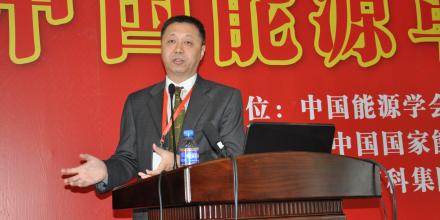
Professor Zhong Xiang Zhang (张中祥), School of Economics, Fudan University, will speak on "Carbon emissions trading in China", at the Australian National University in Canberra, 1pm, 17 April 2015. His paper is available on-line:
"The Chinese central government has approved the seven pilot carbon trading schemes. These seven pilot regions are deliberately selected to be at varying stages of development and are given considerable leeway to design their own schemes. These pilot trading schemes have features in common, but vary considerably in their approach to issues such as the coverage of sectors, allocation of allowances, price uncertainty and market stabilization, potential market power of dominated players, use of offsets, and enforcement and compliance. This article explains why China opts for emissions trading, rather than carbon or environmental taxes at least initially, discusses the key common and varying features of these carbon trading pilots and their first-year performance, draws the lessons learned, discusses the potential pathways for evolution of regional pilot carbon trading schemes into a nationwide carbon trading scheme, and raises fundamental issues that must be addressed in order to make such an emissions trading scheme to work reliably and effectively and with an increasingly expanded coverage and scope."

From: Zhang, ZhongXiang (2015), Carbon Emissions Trading in China: The Evolution from Pilots to aNationwide Scheme, CCEP Working Paper 1503, April 2015. School of Economics, Fudan University.

Monday, July 08, 2013

Planting Trees Will Not Offset Fossil Fuel Emissions

Professor Brendan MackeyGreetings from the Australian National University in Canberra, where Professor Brendan Mackey, Director of the Griffith Climate Change Response Program, is asking "Does planting trees offset fossil fuel emissions?".  Appropriately the talk is being held in the timber paneled forestry lecture theater. The talk is based on the paper Untangling the confusion around land carbon science and climate change mitigation policy (by Mackey, Prentice, Steffen, House, Lindenmayer, Keith and Berry in Nature Climate Change, 2013). To cut to the chase, they find that planting trees will not 'offset' emissions from burning fossil fuels. It is not that trees don't store carbon, it is just that the amount to be stored is too large. However, avoiding cutting down more trees would be useful for not further increasing emissions.

Professor Mackey commented this was his first presentation using Prezi. He apologized if this made us seasick, but it was a very clear and interesting visual presentation (much better than another dull Powerpoint slide show).

The issue of carbon emissions is not just an academic one for ANU.  The ANU student newspaper has a lead article criticizing thee university for increasing its investment in coal seam gas mining (ANU Turns Up The Gas, Woroni", Ben Latham, No 7, Vol 65, Thu 16). Research by Southern Cross University suggests that far more methane is leaking from coal seam gas mining than previously expected (Fugitive Emissions from Coal Seam Gas, Santos and Maher, 2012). So it appears possible that coal seam gas increases global warming, not reduce it.

Wednesday, August 29, 2012

Australia to Join European Emissions Trading System

The Australian Government and European Commission have agreed to link the Australian and European carbon emissions trading systems, by 1 July 2018. Australian and European businesses will be able to buy and sell carbon units on the Australian emissions trading scheme and the European Union Emissions Trading System (EU ETS).

The linking will require the minimum price set for carbon in Australia to be removed to make it compatible with Europe. The lower price of carbon in the European system may cause some adjustment problems for Australia.

The linking also has implications for how, and if, Australia runs its own on-line system for carbon trading. The Australian Government was tendering for a carbon trading system. But it may be simpler to use the European system directly. There have been problems with the security of the European system, but these should be resolved by 2018.

Monday, January 09, 2012

China Carbon Tax Proposed

The Chinese Ministry of Finance has proposed a carbon tax for China, starting at 10 yuan ($US1.59) per tonne, starting in 2016. This is much lower than the Australian and European carbon prices and there appear to be no proposals to move to a market mechanism, as the case with Australia and Europe. However, like Australia, the proposal is to gradually increase the price, to lessen concerns over its effect on economic development. As with Australia, the tax is proposed to be revenue neutral, with other forms of taxes being reduced. Many of the students in my course "ICT Sustainability: Assessment and Strategies for a Low Carbon Future" are from China and the carbon price is likely to see an increase in interest in how to reduce energy use and therefore cost and carbon emissions.

... The main targets of the tax will be large users of coal, crude oil and natural gas, and tax cuts will be given to companies that take steps to reduce their emissions, Su said.

Jiang Kejun, a researcher with the National Development and Reform Commission's Energy Research Institute, who helped draft the tax proposal, said the tax is likely to be collected only from producers and wholesalers of fossil-fuel based energy. This will make it easier to collect the tax. ...

Source: China Daily 2012-1-6

From: "Officials weighing green benefits of carbon taxation", Climate Change Info-Net, Department of Climate Change, National Development and Reform Commission, China, 5 January 2012

财政部财政科学研究所副所长苏明21日在中国绿色经济展望论坛上表示,明年在积极的财政政策下,对战略性新兴产业尤其是低碳产业“实施更加积极的财政政策”,包括投资补助、财政贴息、股份投资、财政支持担保、政府采购、税收等六大手段。 ... Deputy Director, Institute of Fiscal Science, 21 Su Green Economic Outlook Forum in China, said that next year in a proactive fiscal policy, strategic and emerging industries, especially for low-carbon industry "to implement a more active fiscal policy", including investment subsidy, interest subsidy, equity investments, financial support guarantees, government procurement, taxation and other means of six.

苏明称,投资补助要从生产环节转移到消费环节,但生产环节的投资补助不会取消。 Su said the investment subsidies from production areas to consumption areas, but the production processes of investment grants will not be canceled.

所谓“投资补助”,是指由中央预算内(含国债项目资金)安排的,专项给予符合条件的固定资产投资项目的资金。 The so-called "investment grants" refers to the central budget (including the bond project funds) arrangements, given the special conditions of investment in fixed assets in line with project funds.

在财政贴息方面,此举将引导金融机构推动低碳产业发展。 Discount in financial terms, which will guide financial institutions to promote low-carbon industries.

所谓“财政贴息”,是指政府代企业支付部分或全部贷款利息,间接向企业成本价格提供补贴。 The so-called "financial discount" refers to the government on behalf of the company to pay part or all of the interest on loans, indirect subsidies to businesses to provide cost price.

在财政支持担保方面,财政可与社会资本合资设立担保公司,或建立担保风险补偿金。 Security aspects of the financial support, financial and social capital can be guaranteed a joint venture company, or create a security risk compensation.

在税收手段方面,从2012年起,针对战略性新兴产业尤其是低碳产业,有望启动企业所得税的优惠政策,既包括税收减免等直接手段,又包括投资抵免等间接手段。 Means of taxation, from 2012, the strategic emerging industries, especially for low-carbon industries, is expected to start the enterprise income tax incentives, both tax relief and other direct means, but also including investment credits and other indirect means.

所谓“投资抵免”,是指政府对纳税人在境内的鼓励性投资项目,允许按投资额的多少,抵免部分或全部应纳所得税额。 The so-called "investment credits" refers to the taxpayer in the territory of the government to encourage investment projects that allow for the amount of investment, some or all of the income tax credit amount.

“可以根据购置设备的投资额进行抵免”。 "According to the amount of investment for the purchase of equipment credits."

苏明解释道,战略性新兴产业大多也属于“低碳产业”的范畴。 Su explained that most of the strategic emerging industries also are "low-carbon industry" category.

为确保高碳产业向低碳产业的经济结构调整,苏明说道,碳税有望在“十二五”后期开征,征税对象包括煤炭、原油、天然气等温室气体排放大户,从每吨二氧化碳10元的较低税率起步,税率逐步提高。 To ensure high-carbon industries to low-carbon industry's economic structure adjustment, Su said, the carbon tax is expected in the "five" post-levy, tax base, including coal, crude oil, natural gas and other greenhouse gas emitters, from 10 per tonne of carbon dioxide lower rate of $ start, the rate gradually increased.

但苏明认为,明年经济增长速度放缓,再加上力推中小企业的结构性减税,并不是开征碳税的好时机。 However, Su believes that next year's economic growth is slowing down, coupled with the structural pushing tax cuts for SMEs, the introduction of a carbon tax is not a good time.

对 于低碳产业融资现状,中央财经大学气候与能源金融研究中心主任王瑶向记者表示,我国低碳融资主要集中在以联合国清洁发展机制(CDM )机制下的资金流入、多边开发机构的资金流入、国外私人部门的资金流入为主,但国内融资才开始启动,仍以中央财政拨款和补贴为主,主权财富基金、政府引导 基金、绿色金融服务等仍处在初级运作阶段。 Financing for low-carbon industry status quo, Central University of Finance Climate and Energy Center for Financial Research Renwang Yao told reporters that China's low carbon financing mainly in the United Nations Clean Development Mechanism (CDM) mechanism inflows, inflows of multilateral development institutions foreign-based private sector capital inflows, but domestic financing was started, still dominated central government grants and subsidies, sovereign wealth funds, government guidance funds, green financial services is still in the initial operational phase.

北京中创碳投科技有限公司战略总监钱国强向记者总结道,财政政策只能“紧急输血”,起到拉动社会资本的杠杆作用。 Beijing Science and Technology Co., Ltd. in creating carbon investment money Guoqiang, director of strategy to reporters concluded that fiscal policy can only "emergency blood transfusion", play a stimulating social capital leverage.

但要建立解决低碳产业融资的长效机制,有两个前提:一是碳资产要有价格,让风电、水电等新能源企业以及碳捕捉等高新技术企业能把碳卖得出去;二是要实行强制性的碳减排,让排放量超过配额的高碳企业花钱买碳。 But to establish a long-term financing to solve the mechanism of low-carbon industries, based on two premises: First, have a carbon asset prices, wind power, hydropower and other new energy companies and carbon capture carbon and other high-tech enterprises can sell out; two to implement mandatory carbon emissions, so that the quota of carbon emissions than spend money on corporate carbon.

此外,还可探索针对低碳企业碳资产的抵押贷款。 In addition, companies can also explore carbon for carbon asset mortgages.

参与国家发改委应对气候变化相关工作的中创碳投有限公司副总经理郑喜鹏表示,大量低碳技术在研发后只能变成论文发表,无法实现市场化;许多地方政府推行的示范工程、示范园区难以向全国推广。 National Development and Reform Commission in response to climate change-related work in the record, Deputy General Manager Zheng Xipeng carbon investment, said a large number of low-carbon technologies into the research and development only after the paper published, the market can not be achieved; many local governments to implement the demonstration project, demonstration zone is difficult to promote the country.

“这是因为缺乏一座桥梁——商业模式。否则,光靠政策、资金、技术的堆砌,是堆不出一个成熟市场的”,郑喜鹏表示。 "This is because the lack of a bridge - the business model, otherwise, rely on policy, funding, technology, pile, heap is not a mature market," Zhengxi Peng said.


From: "Idea of ​​financial support for low carbon industries emerge" (translation of 低碳产业财政扶持思路浮出水面), Economic Information Daily, Ministry of Commerce, China, 15 December 2011

Wednesday, November 09, 2011

Australian Carbon Pricing Legislation Approved by Senate

The Australian Senate approved the Clean Energy Legislative Package on 8 November 2011. A fixed price on carbon of $23 per tonne will commence from July 2012 for large emitters. Tax cuts, renewable energy subsidies and other compensation measures will be introduced at the same time. The price of carbon will increase each year for three years, at which point it is planned to introduce market based pricing.

Clean Energy Act 2011
This is the central Act of the Package. It sets up the carbon pricing mechanism and deals with assistance for emissions-intensive trade-exposed industries (the Jobs and Competitiveness Program) and the coal-fired electricity generation sector.

It also contains rules for who is covered, the Opt-in Scheme for large fuel users and what sources of carbon pollution are included, the surrender of emissions units, caps on the amount of carbon pollution from 1 July 2015, international linking, monitoring, enforcement, appeal and review provisions.

Clean Energy (Consequential Amendments) Act 2011
This Act makes amendments to other laws to ensure that the mechanism is integrated with existing regulatory schemes and processes, including the National Greenhouse and Energy Reporting System, the Carbon Farming Initiative, the Australian National Registry of Emissions Units, the regulation of financial services and competition and consumer laws.

Climate Change Authority Act 2011
This Act sets up the Climate Change Authority, which will advise the Government on the setting of carbon pollution caps and periodic review of the carbon pricing mechanism and other climate change laws.
The Act also sets up the Land Sector Carbon and Biodiversity Board, which will advise on the implementation of land sector measures.

Clean Energy Regulator Act 2011
This Act sets up the Clean Energy Regulator, which will administer and enforce the carbon price mechanism, the National Greenhouse and Energy Reporting System, the Renewable Energy Target and the Carbon Farming Initiative.

These are procedural Acts, which deal with the way in which charges are paid under the mechanism. They comply with the requirements of section 55 of the Constitution.

These Acts coverimposing an equivalent carbon price on aviation and non-transport gaseous fuels through excise and customs tariffs; and, reducing the business fuel tax credit entitlement of non-exempted industries for their use of liquid and gaseous transport fuels, in order to provide an equivalent carbon price on business through fuel tax.

On 10 July 2011, the Government announced household assistance measures to help Australians adjust to a low emissions economy on 10 July 2011. These Acts will make law the household assistance measures, including:

  • higher payments to pensioners, veterans, self-funded retirees and families and assistance to aged-care residents and Essential Medical Equipment Payments recipients;
  • tax cuts to assist low and middle income families, by tripling the tax free threshold from $6,000 to $18,200 in 2012-13 and adjusting the first two marginal tax rates; and
  • a further increase in the tax-free threshold from $18,200 to $19,400 in 2015-16

Thursday, July 28, 2011

Carbon Pricing Legislation for Comment

The Australian Government has released a "Clean Energy Legislative Package" for comment. This is intended to implement the "Clean Energy Future" carbon pricing policy, previously announced. Comments on the proposed legislation can be made until 22 August 2011.

Two overview documents are provided:
  1. Clean Energy Legislative Package - Summary of legislation (PDF 181 KB)
  2. Securing a clean energy future: Making it law (PDF 413 KB)
Provided are drafts of thirteen bills:
  1. Clean Energy Bill 2011
  2. Clean Energy (Consequential Amendments) Bill 2011
  3. Clean Energy Regulator Bill 2011
  4. Climate Change Authority Bill 2011
  5. Clean Energy (Unit Shortfall charge—General) Bill 2011
  6. Clean Energy (Unit Issue Charge—General) Bill 2011
  7. Clean Energy (Charges—Excise) Bill 2011
  8. Clean Energy (International Unit Surrender Charge) Bill 2011
  9. Ozone Protection and Synthetic Greenhouse Gas (Manufacture Levy) Amendment Bill 2011
  10. Ozone Protection and Synthetic Greenhouse Gas (Import Levy) Amendment Bill 2011
  11. Fuel Tax Legislation Amendment (Clean Energy) Bill 2011
  12. Excise Tariff Legislation Amendment (Clean Energy) Bill 2011
  13. Customs Tariff Amendment (Clean Energy) Bill 2011
One omission from the list of draft legislation is the household assistance to be provided.

Here is an extract of Clean Energy Legislative Package - Summary of legislation:


2. Clean Energy Bill 2011: Carbon Pricing Mechanism

Establishes a carbon price which is expected to apply to around 500 of the nation’s biggest polluters with:

  • rules for who is covered and what sources of carbon pollution are included;
  • liable entities’ obligation to surrender emissions units corresponding to their carbon pollution;
  • caps on the amount of carbon pollution from 1 July 2015;
  • carbon units issued as personal property;
  • allocation of carbon units, including by auction and the issue of free units;
  • mechanisms to contain costs, including the fixed charge period and price floors and ceilings;
  • links to the Carbon Farming Initiative (CFI), by making carbon credits eligible for surrender;
  • linking to other credible emissions trading schemes;
  • assistance for emissions-intensive trade-exposed activities and coal-fired electricity generators; and
  • monitoring, enforcement, appeal and review provisions.

3. Clean Energy Regulator Bill 2011: Establishes Regulator

Sets up the Clean Energy Regulator as a statutory authority that will administer the mechanism and enforce the law.

The responsibilities of the Regulator include:

  • providing education on the mechanism and how it works;
  • assessing emissions data to determine each entity’s liability;
  • operating the Registry;
  • monitoring, facilitating and enforcing compliance with the mechanism;
  • allocating units including freely allocated units, fixed price units and auctioned units;
  • administering the National Greenhouse and Energy Reporting System (NGERS), the Renewable Energy Target and the CFI;
  • accrediting auditors for the CFI and NGERS; and
  • working with other national law enforcement and regulatory bodies, including ASIC, the ACCC, AUSTRAC, the Federal Police and the Director of Public Prosecutions.

4. Climate Change Authority Bill 2011: Establishes Independent Review Body

Sets up the Climate Change Authority, which will be an independent body that provides the Government expert advice on key aspects of the mechanism and the Government’s climate change mitigation initiatives.

Establishes the Land Sector Carbon and Biodiversity Advisory Board.

5. Clean Energy (Consequential Amendments) Bill 2011: Links mechanism, regulator and other functions

Makes consequential amendments to ensure :

  • NGERS supports the mechanism;
  • the Australian National Registry of Emissions Units covers the mechanism and the CFI;
  • the Regulator covers the mechanism, CFI, the Renewable Energy Target and NGERS;
  • public accountability and financial management rules for the Regulator and Authority;
  • that emissions units and their trading are covered by laws on financial services and regulated by ASIC;
  • that activities related to emissions trading are covered by laws on money laundering and fraud;
  • synthetic greenhouse gases are subject to an effective carbon price through existing synthetic greenhouse gas regulation of those substances;
  • a refundable tax offset is provided for eligible conservation tillage equipment; and
  • the taxation treatment of emissions units for the purposes of GST and income tax is clear.

6. Clean Energy (Unit Shortfall Charge—General) Bill 2011: Procedural Bills

7. Clean Energy (Unit Issue Charge—General) Bill 2011

8. Clean Energy (Charges—Excise) Bill 2011

9. Clean Energy (International Unit Surrender Charge) Bill 2011.

10. Ozone Protection and Synthetic Greenhouse Gas (Import Levy) Amendment Bill 2011

11. Ozone Protection and Synthetic Greenhouse Gas (Manufacture Levy) Amendment Bill 2011

The elements of the mechanism which oblige a person to pay money are implemented through separate bills that comply with the requirements of section 55 of the Constitution.

12. Excise Tariff Legislation Amendment (Clean Energy) Bill 2011: Fuel Tax Arrangements

13. Customs Tariff Amendment (Clean Energy) Bill 2011

Impose an effective carbon price on aviation and non-transport gaseous fuels through excise and customs tariffs.

14. Fuel Tax Legislation Amendment (Clean Energy) Bill 2011

Reduce the business fuel tax credit entitlement of non-exempted industries for their use of liquid and gaseous transport fuels, in order to provide an effective carbon price on business through the fuel tax system.

15. Clean Energy Amendment (Household Assistance) Bill 2011: Household Assistance

Implements the household assistance measures announced by the Government on 10 July 2011. This bill will amend relevant legislation to increase pensions and allowances, income support allowances and family payments and provide income tax cuts for lower and middle income households. There is no exposure draft of this bill.

16. Clean Energy Finance Corporation (CEFC): Clean Energy Institutions

17. Australian Renewable Energy Agency

Legislation to establish these agencies will be introduced in 2012 following the consideration of advice from the Chair of the CEFC as to governance and investment mandate of the CEFC.

18. Steel Transformation Plan: Steel Assistance

Legislation to establish the Government’s Steel Transformation Plan will be introduced at the same time as the Clean Energy Legislation Package.

19. Other funding measures: Programs

Other funding measures, including the Clean Technology Programs, coal sector assistance, household and community sector energy efficiency programs and land sector programs, will be implemented through the budget process.

20. Implementing Regulations: Legislative instruments

Subordinate rules for the implementation of the plan and decision making by the Regulator. These include :

  • Pollution caps

    Jobs and Competitiveness Program details

    Application requirements for generator assistance

    Procedural details

    Auction rules


Here is the text of "Securing a clean energy future: Making it law":

On 10 July 2011, the Australian Government announced the details of a carbon pricing mechanism to reduce our carbon pollution and move Australia to a clean energy future.

The mechanism will be made law by the Clean Energy Legislative Package (the Package). The Government released drafts of the key bills in the Package on Thursday 28 July 2011.

The Government will receive submissions and meet key stakeholders and legal experts about the Package.

The carbon pricing mechanism is one part of the Government’s overall Clean Energy Plan. Other key aspects include support for renewables, support for energy efficiency and support for our land sector.

The Clean Energy Legislative Package

The Package:

  • implements the carbon pricing mechanism, as outlined in Securing a clean energy future: The Australian Government’s climate change plan, for Australia to reduce carbon pollution and move to a clean energy future;

  • sets out how the carbon price will be run, and what businesses will have to do;

  • links the carbon price to the Carbon Farming Initiative and to credible schemes overseas;

  • provides for assistance to emissions intensive and trade exposed industries through the Jobs and Competitiveness Program and to electricity generators to ensure energy security;

  • excludes agriculture from the mechanism;

  • sets up a Clean Energy Regulator to run the mechanism;

  • sets up an independent Climate Change Authority to advise on key aspects of the carbon price mechanism and the Government’s climate change mitigation initiatives;

  • applies an effective carbon price to transport fuels (except for fuel used by households and in light commercial vehicles) through excise and customs tariffs;

  • provides a refundable tax offset for conservation tillage equipment; and

  • gives assistance to Australian households that need it most, including pensioners and low and middle income earners.

The bill incorporating these household assistance measures will be part of the package of clean energy bills that will be introduced into Parliament later this year.

More information about the Package and related climate change initiatives is in the attached tables.

The development of the Package

The Package will set out in law the way that Australia will introduce a carbon price to reduce Australia’s carbon pollution and move to a clean energy future.

It takes into account a wide range of public discussion, debate and consultation over the past decade on how Australia should tackle the challenge of reducing carbon pollution.

The Government will introduce the Package into the Parliament, which must pass both Houses for it to become law. Before introducing the Package, the Government is seeking comments from stakeholders and other interested parties on the drafting of the Bills.

Links to other climate change initiatives

The carbon pricing mechanism will be linked through the legislation to the Government’s Carbon Farming Initiative.

The Carbon Farming Initiative will cut carbon pollution in the agricultural sector through reducing or avoiding emissions or by removing carbon from the atmosphere and storing it in soil or trees. For example, carbon can be stored by growing a forest or reducing tillage on a farm in a way that increases soil carbon and emissions can be avoided through capture and destruction of methane emissions from landfill or livestock manure.Bills to set up the Carbon Farming Initiative and the Australian National Registry of Emissions Units were introduced into Parliament in March 2011, and are expected to be passed in 2011.

Public engagement on the Package

The Government published drafts of key bills in the Package on Thursday, 28 July 2011, along with commentaries to explain them. These bills implement the detailed policy announced on 10 July 2011.

Submissions on the Package can be sent to the Department of Climate Change and Energy Efficiency until 5pm on Monday, 22 August 2011. Before then, the Department will meet with stakeholders and legal experts to discuss the draft bills.

The Government will consider the views it receives on the drafting of the bills before they are introduced into the Parliament.

The Parliamentary Process

The Government intends to introduce the Package in the Spring 2011 sittings of the Parliament. It will then work to have the Parliament pass the Package by the end of 2011.

The Government announced that the carbon price mechanism will start on 1 July 2012. By working to have the Package passed before the end of 2011, the Government wants to ensure that arrangements required for the carbon price are in place before 1 July 2012, and to ensure that liable businesses have as much time as possible to prepare for carbon pricing.

What happens after the Package is passed?

Once the Package is passed, the Government will prioritise the setting up of the Clean Energy Regulator so that it can ensure the smooth implementation of the mechanism.

The Government will also complete the regulations that are needed to ensure that the mechanism can start on 1 July 2012.

Regulations and legislative instruments

Some practical aspects of the carbon pricing mechanism will be implemented through legislative instruments, including regulations.

Regulations are made by the Governor-General on the recommendation of the Government, and provide flexibility in applying laws to businesses and individuals. Regulations can be necessary to give effect to a law or allow for future changes in circumstances to be taken into account, without the need to go back to Parliament and amend the law every time a change needs to be made.

The Parliament has the power to disallow regulations after they are made. This way, regulations remain subject to Parliamentary scrutiny over time.

The Package includes different regulation-making powers:

  • regulations about the Jobs and Competitiveness Program and the Energy Security Fund: the detailed design of the Program and the Fund require engagement with affected industries and, later, expert advice from the Climate Change Authority.

  • regulations setting pollution caps, price ceilings and floors: before the commencement of the flexible price period, regulations will need to be made to set pollution caps, price ceilings and price floors, taking account of circumstances at the time these decisions are made.

  • regulations that clarify issues covered by the law: while the law may apply generally, it may also allow the Government to specifically define concepts or identify situations covered to make it more certain. This means the law can factor in economic changes and changes to business activity over time.

  • regulations spelling out what the Regulator may take into account when making routine decisions: the Government may want to ensure that regulatory bodies consider specific issues when making routine decisions. The relevance of particular things may change over time.

  • regulations dealing with administrative issues: these typically cover things like the way in which a Regulator may undertake its work, the information a person has to give the Regulator and the way in which they do so. These things will change over time with changes to administrative and business practices and technology.

Roadmap for making the carbon price mechanism law


Note: this timeline is based on a 1 July 2012 start for the carbon pricing mechanism

10 July 2011

Securing a clean energy future: The Australian Government’s climate change plan

28 July – 22 August 2011

Public submissions invited on the Clean Energy Legislation Package and discussions with key stakeholders and legal experts

August – September 2011

The Government considers stakeholder views and decides the final form of the Clean Energy Legislation Package

September – November 2011

Clean Energy Legislation Package is considered by the Parliament and the Government works to have it passed. Drafts of key regulations will be available at that time.

Before 1 July 2012

The Government prepares, seeks views on and finalises regulations to be made under the Clean Energy Legislation Package which are needed for it to start on 1 July 2012

The Government puts the draft regulations before the Federal Executive Council for consideration by the Governor-General

The Government sets up the Clean Energy Regulator and the Land Sector Carbon and Biodiversity Board

The Clean Energy Regulator and the Land Sector Carbon and Biodiversity Board start work before the start of the carbon pricing mechanism

1 July 2012

Start of the carbon pricing mechanism

Start of the first fixed charge year (the charge is set at $23.00)

Start of the Jobs and Competitiveness Program (which requires regulations to be made by 1 March 2011)

The Climate Change Authority is established

Commencement of the Energy Security Fund

From 1 July 2012 onwards

Ongoing implementation, awareness raising and education about the carbon price mechanism and the Carbon Farming Initiative

1 July 2013

Start of the second fixed charge year (the charge is set at $24.15)

By 31 May 2014

The Government must table in Parliament regulations specifying the pollution cap numbers for the first five flexible charge years of the carbon pricing mechanism (eligible financial years beginning on 1 July 2015, 1 July 2016, 1 July 2017, 1 July 2018 and 1 July 2019)

1 July 2014

Start of the third fixed charge year (the charge is set at $25.40)

By 1 July 2015

Start of the flexible price period

The Government must table regulations specifying the pollution cap numbers for eligible financial years beginning on 1 July 2020; if these do not take effect a default cap will apply

By 1 July each year thereafter

The Government must table regulations specifying the pollution cap numbers for the eligible financial year beginning five years later; if these do not take effect a default cap will apply

The Clean Energy Legislative Package and related legislation

Which Bill?

What does it cover?

When will it be law?


The bills marked with * have been released in draft


Clean Energy Bill 2011*

This is the central bill of the Package. It sets up the carbon pricing mechanism and deals with assistance for emissions intensive trade exposed industries (the Jobs and Competitiveness Program) and the coal-fired electricity generation sector.

It contains rules for who is covered and what sources of carbon pollution are included, the obligation to surrender emissions units, caps on the amount of carbon pollution from 1 July 2015, international linking, monitoring, enforcement, appeal and review provisions.

Passed by Parliament by December 2011 with commencement before 1 July 2012

Clean Energy Regulator Bill 2011*

This bill sets up the Clean Energy Regulator, which will administer and enforce the mechanism

Passed by Parliament by December 2011 with commencement before 1 July 2012

Climate Change Authority Bill 2011*

This bill sets up the Climate Change Authority, which will advise the Government on key aspects of the carbon price mechanism and the Government’s climate change mitigation initiatives, and the Land Sector Carbon and Biodiversity Board, which will advise on the implementation of land sector measures.

Passed by Parliament by December 2011

The Board will be set up before 1 July 2012

The Authority will be set up on 1 July 2012

Clean Energy (Consequential Amendments) Bill 2011*

This bill makes amendments to other laws to ensure that the mechanism is integrated with existing laws, regulatory schemes and processes. It includes changes that ensure:

  • the National Greenhouse and Energy Reporting System (NGERS) supports the mechanism;

  • the Australian National Registry of Emissions Units covers the mechanism, as well as the Carbon Farming Initiative (CFI);

  • the Regulator covers the mechanism, CFI, the Renewable Energy Target and NGERS;

  • the Regulator and Authority are set up as statutory agencies and regulated by public accountability and financial management rules;

  • that carbon units and their trading are covered by laws on financial services and regulated by ASIC;

  • that activities related to emissions trading are covered by laws on money laundering and fraud;

  • synthetic greenhouse gases are covered by the carbon price through extending existing regulation of those substances;

  • the taxation treatment of emissions units for the purposes of GST and income tax is clear; and

  • the Regulator can work with other regulatory bodies, including ASIC, the ACCC and Austrac.

Passed by Parliament by December 2011

Different parts of this bill will start at different times, depending on the element of the mechanism to which they relate

Clean Energy (Unit Shortfall Charge—General) Bill 2011*

Clean Energy (Unit Issue Charge—General) Bill 2011*

Clean Energy (Charges—Excise) Bill 2011*

Clean Energy (International Unit Surrender Charge) Bill 2011*

Ozone Protection and Synthetic Greenhouse Gas (Manufacture Levy) Amendment Bill 2011*

Ozone Protection and Synthetic Greenhouse Gas (Import Levy) Amendment Bill 2011*

These are procedural bills, which deal with the way in which charges are paid under the mechanism. They comply with the requirements of section 55 of the Constitution.

Passed by Parliament by December 2011 with commencement before 1 July 2012

Fuel Tax Legislation Amendment (Clean Energy) Bill 2011*

Excise Tariff Legislation Amendment (Clean Energy) Bill 2011*

Customs Tariff Amendment (Clean Energy) Bill 2011*

Separate bills will implement other reforms linked to the introduction of the mechanism. These cover:

  • imposing an effective carbon price on aviation and non-transport gaseous fuels through excise and customs tariffs

  • reducing the business fuel tax credit entitlement of non-exempted industries for their use of liquid and gaseous transport fuels, in order to provide an effective carbon price on business through the fuel tax system.

Passed by Parliament by December 2011 with commencement before 1 July 2012

Clean Energy Amendment (Household Assistance) Bill

The Government will introduce a bill to deliver household assistance measures to help Australians adjust to a low emissions economy. The Government announced the detail of these changes on 10 July 2011.

This bill will make law the household assistance measures, including:

  • higher payments to pensioners, veterans, self-funded retirees and families and assistance to aged-care residents, Essential Medical Equipment Payments recipients;

  • tax cuts to assist low and middle income families, by tripling the tax free threshold from $6,000 to $18,200 in 2012-13 and adjusting the first two marginal tax rates; and

  • a further increase in the tax-free threshold from $18,200 to $19,400 in 2015-16.

Passed by Parliament by December 2011 with commencement before 1 July 2012 where assistance commences on 1 July 2012.

Most of the funding initiatives will be delivered as part of the 2012 Budget process.

Measures being delivered administratively or through other legislation

What is the initiative?

What does it cover?

When will it be law?

Support for innovation

The Government will introduce legislation to deliver assistance to promote the development and adoption of new low emissions and energy efficient technologies. The Government announced the detail of these changes on 10 July 2011.

These bills will make law these measures, including:

  • the Clean Energy Finance Corporation (CEFC), which will invest in the development new renewable energy, energy efficiency and low emissions technologies and the transformation of existing manufacturing businesses to help them meet demand for these new activities; and

  • the Australian Renewable Energy Agency (ARENA), which will be a new independent statutory agency responsible for funding new renewable energy projects. It will take over existing national renewable energy initiatives.

The legislation implementing these changes will be passed before 1 July 2012 and take into account the report of the Chair on the investment mandate and detailed governance arrangements for the CEFC.

Most of the funding initiatives will be delivered as part of the Budget process.

Industry and business assistance

The Government will deliver assistance to help businesses adjust to a low emissions economy and take advantage of the opportunities that this will create for them. The Government announced the detail of these changes on 10 July 2011.

Specific Bills will make law:

  • the Steel Transformation Plan to assist Australia’s steelmakers adjust to a low emissions economy;

  • the small business instant asset write-off threshold will increase from $5,000 to $6,500 for depreciating assets;

The Government will also administratively implement:

  • grants to industry associations and non-government organisations to deliver information about energy efficiency to small and medium businesses and community organisations;

  • the Clean Technology Investment Program to deliver grants for manufacturing businesses to investing energy efficiency capital equipment and low emissions technologies, processes and products;

  • the Clean Technology Food and Foundries Investment Program to deliver grants for metal forging, foundry and food businesses to invest in energy efficiency capital equipment and low emissions technologies, processes and products;

  • the Clean Technology Innovation Program to deliver grants for research into innovation in low emissions technologies, processes and products;

  • the Clean Energy Skills Program to deliver funding to education providers on new workplace skills to deliver low emissions technologies, processes and products; and

  • the Clean Technology Focus for Supply Chains Program to deliver funding to promote and assist businesses to reduce the emissions intensity of supply chain logistics; and

  • the Coal Sector Jobs Package to assist the most emissions-intensive coal mines and Coal Mining Abatement Technology Support Package to assist the coal industry implement abatement technologies

The legislation implementing these changes will start before 1 July 2012 where the relevant body or program starts on 1 July 2012.

Most of the funding initiatives will be delivered as part of the Budget process.

Household and community assistance

The Government will assist people and communities adjust to a low emissions economy and take advantage of the opportunities that this will create for them.

  • an expansion of the Low Carbon Communities Program to assist low-income households increase energy efficiency, reduce energy costs and support local government and community organisations to assist them;

  • improved advice to households on energy efficiency and clearer information on government assistance; and

  • the Remote Indigenous Energy Program to deliver financial support to build renewable energy generation in around 55 remote indigenous communities.

Funding initiatives will be delivered as part of the Budget process.

Transport measures

Mandatory vehicle emissions standards will be introduced to significantly reduce the average CO2 emissions for light vehicles in Australia.

Regulations to introduce the new standard are being developed

Regional structural adjustment assistance

The Government will set up a Regional Structural Adjustment Assistance program to make funding available to assist regions strongly affected by the introduction of a carbon price.

Funding initiatives will be delivered as part of the Budget process.

Land sector measures

The Government will deliver a wide range of measures to reduce greenhouse gas in the land sector. These measures include:

  • the CFI non-Kyoto Fund to purchase non-Kyoto compliant CFI carbon credits, which cannot be purchased under the mechanism;

  • the Carbon Farming Futures Fund to deliver funding, with the advice of the Land Sector Carbon and Biodiversity Board, to help landholders benefit from carbon farming practices by encouraging research, developing better estimation methods, funding on-farm abatement, fostering greater awareness of carbon farming and the conservation tillage tax offset;

  • the Biodiversity Fund to deliver funding, with the advice of the Land Sector Carbon and Biodiversity Board, to restore and protect biodiverse carbon stores;

  • the Regional Natural Resources Management Planning and Climate Fund to help regional communities plan for the impacts of climate change and maximise the benefits of carbon farming projects;

  • the Indigenous Carbon Farming Fund to support indigenous communities implement carbon farming projects;

  • the Carbon Farming Skills Initiative to ensure that landholders can access credible, high quality advice and carbon services;

  • the removal by regulation of native forest wood waste from eligible renewable energy sources under the Renewable Energy Target with transitional arrangements for existing accredited power stations.

Most of the funding initiatives will be delivered as part of the Budget process.


Sunday, July 24, 2011

Clean Energy Future Videos

The Australian Government has released a series of videos as part of its "Clean Energy Future" strategy.
  1. Length: 1:05 Prime Minister Julia Gillard launches the Clean Energy Future website

  2. Length: 1:20 Minister Combet introduces Australia's plan for a clean energy future

  3. Length: 1:17 What are the benefits of a carbon price?

  4. Length: 1:35 How does carbon pricing work?

  5. Length: 1:26 Why act on carbon pollution now?

  6. Length: 2:00 Professor Will Steffen explains the impacts of climate change

  7. Length: 1:28 Case study: Geothermal energy

  8. Length: 2:04 Case study: Solving Australia's energy puzzle

  9. Length: 2:11 Case study: Opportunities in renewables

  10. Length: 0:31 Household Assistance

  11. Length: 0:46 Cutting Carbon Pollution

  12. Length: 0:46 Creating a Clean Energy Future

  13. Length: 1:01 Australia's Clean Energy Future

  14. Length: 0:46 Cutting Carbon Pollution

  15. Length: 0:46 Creating a Clean Energy Future

  16. Length: 0:46 Household Assistance

  17. Length: 0:45 Mark Dreyfus provides energy efficiency tips

  18. Length: 1:20 Minister Combet introduces Australia's plan for a clean energy future

  19. Length: 2:00 Professor Will Steffen explains the impacts of climate change

  20. Length: 0:52 Household assistance: singles

  21. Length: 0:59 Household assistance: families

  22. Length: 1:11 Household assistance: self-funded retirees

  23. Length: 1:17 What are the benefits of a carbon price?

  24. Length: 1:35 How does carbon pricing work?

  25. Length: 1:26 Why act on carbon pollution now?


Sunday, July 10, 2011

Australian Government Carbon Emmissions Strategy

The Australian Government today released its "Clean Energy Future" strategy, including an initial carbon price of $23 per Tonne. The price will increase by 2.3% per year for three years, after which a trading scheme with a market price will be introduced. The carbon price will only be levied on very large carbon emitters, with numerous exemptions and compensation for industry sectors and individuals.

The government has adopted a strategy to emphasize the compensation package for individuals and assistance to business, while limiting the carbon tax to the minimum possible range of industry at the lowest feasible price. The small number of organizations which will need to register for the scheme (about 500) will limit the cost and complexity of administering the scheme and also limit the political opposition. Most voters will be overcompensated and the industry assistance schemes give numerous opportunities for positive government publicity. Assuming that the minority government can stay in office long enough to bring the scheme into operation, it should be successful, both in political and environmental terms.

The Australian Government has gone to considerable lengths to provide detailed, clearly prepared on-line information about the new strategy. Unfortunately the home page fails validation with 11 HTML errors. The page also rated 0 out of 100, on the W3C mobileOK Checker and failed an automated accessibility test. While these problems will not prevent most people accessing the information and could be easily corrected, this does not indicate the level of attention to detail needed for a policy on which the future of the nation depends.

A price on carbon pollution will create incentives to reduce pollution and invest in clean energy. A carbon price will ensure that pollution is reduced at the lowest cost to the economy.

Under the carbon price, around 500 of the biggest polluters in Australia will need to buy and surrender to the Government a permit for every tonne of carbon pollution they produce. For the first three years, the carbon price will be fixed like a tax, before moving to an emissions trading scheme in 2015. In the fixed price stage, starting on 1 July 2012, the carbon price will start at $23 a tonne, rising at 2.5 per cent a year in real terms. From 1 July 2015, the carbon price will be set by the market.

The carbon price will be accompanied by assistance supporting households, jobs, businesses and communities, to help them adjust, lower their carbon pollution and to protect our international competitiveness.

To assist households with price impacts, there will be two rounds of tax cuts and increases in pensions, allowances and benefits. Significant tax reform will mean that more than 1 million people will no longer need to file a tax return. Increasing the tax-free threshold and cutting taxes also boosts incentives to work. Over 50 per cent of carbon price revenue will be spent on households. Household transport fuel consumption will not be subject to a carbon price.

Substantial industry assistance will be provided to support jobs and competitiveness as we move to a clean energy future for emissions-intensive, trade-exposed industries, manufacturing, food processing, metal forgers and foundries, electricity generators and small business, as agreed by the Multi-Party Climate Change Committee. The Government is also separately investing in protecting jobs in the steel and coal industries.

A $10 billion new commercially oriented Clean Energy Finance Corporation will invest in renewable energy, low pollution and energy efficiency technologies—a major increase in support.

The Government will seek to negotiate the closure of around 2000 megawatts of highly polluting electricity generation capacity by 2020 to reduce pollution and facilitate a smooth energy market transition.

Farmers and land managers will receive significant support to pursue climate change action on the land and enhance biodiversity through a suite of measures including the Carbon Farming Initiative, the Carbon Farming Futures program and a new Biodiversity Fund. Emissions from agriculture will not be subject to a carbon price.

The Government is providing additional support to promote energy efficiency.

Low Carbon Communities will help local councils and communities improve energy efficiency in community facilities, including a new Low Income Energy Efficiency Program.

The Government will expedite the development of a national energy savings initiative....

From: Executive summary, Australia’s clean energy future, Australian Government, 10 July 2011


Scheme architecture ...

Fixed price period

The carbon pricing mechanism will commence on 1 July 2012. There will be a three year fixed price period.

The fixed price

The carbon price will start at $23.00 per tonne in 2012‑13 and will be $24.15 in 2013‑14 and $25.40 in 2014‑15. The prices in the second and third year reflect a 2.5 per cent rise in real terms allowing for 2.5 per cent inflation per year (the midpoint of the Reserve Bank of Australia’s target range).

Fixed price permits

Liable entities will be able to purchase permits from the Government at the fixed price, up to the number of their emissions for the compliance year. Any permits purchased at the fixed price will be automatically surrendered and cannot be traded or banked for future use. Permits freely allocated may be either surrendered or traded until the true-up date for the compliance year in which they were issued. They cannot be banked for use in a future compliance year.

Buy‑back of freely allocated permits

The holders of freely allocated permits will be able to sell them to the Government from 1 September of the compliance year in which they were issued until 1 February of the following compliance year. The price paid by the Government will be equal to the price of the fixed price permits for that year, discounted to 15 June of the compliance year by the latest available Reserve Bank of Australia index of the BBB corporate bond rate, so that the buy‑back price reflects the present market value of the permit. From 15 June onwards, the price paid will be equal to the fixed‑price permits for that vintage. ...

From: Carbon pricing mechanism, Appendix A, Securing a Clean Energy Future, Australian Government, 10 July 2011
Extensive documentation on the "Clean Energy Plan" is provided, including:
  1. Climate change plan: "Securing a clean energy future" and summary.
  2. Financial assistance and tax changes for the community: "Supporting Australian households – helping households move to a clean energy future"
  3. Measures for industry: "Clean energy Australia – investing in the clean energy sources of the future"
Fact Sheets:
  1. Household Assistance
    1. Support for working Australians
    2. Pensioners
    3. Supporting low income households
    4. Self funded retirees
    5. Essential medical equipment
    6. Students and job seekers
    7. Carers and people with disability
    8. Families
    9. Tax reform
    10. Aged care residents
  2. Regional Australia
  3. Supporting jobs and industry
  4. Small business
  5. Local government
  6. Biodiversity Fund
  7. Transport fuels
  8. Tax treatment
  9. Support for the Australian steel industry

Carbon Price Modeling

  1. Website
  2. Modelling Report
  3. Modelling Overview

Wednesday, March 16, 2011

Great Big Carbon Tax Cuts for Everyone

The Australian Prime Minister has a two-stage plan for carbon pricing, starting with a fixed price for up to five years, before an emissions trading scheme (announced 24 February 2011). The federal opposition response was to call this a "... great big new tax to create a great big new slush fund ...". I propose the government implement the opposition's suggestion.

The government has not yet proposed a figure for the carbon price. The temptation would be to make this as low as possible. But as the opposition has pointed out, any price will be seen as a tax on everything. A low carbon price will still have a political penalty, while not sending an effective price signal to reduce carbon emissions.

Therefore I suggest the government set a high carbon price, around $50 per kg of CO2e. This will provide significant funds to compensate the community through the tax and welfare systems. In political terms it could be promoted as a "great big carbon tax cut for everyone".

A carbon price of $50 per kg of CO2e, would increase the price of petrol by about 12 cents per litre (Petrol produces about 2.3035 kg of CO2 per litre) and electricity by about 4 cents per kWh (0.89 kg CO2e/kWh). Assuming fuel use was at the 2007 level of 18.1 billion litres, this would provide $2B extra revenue. Australia consumes approximately 3 pWhr of electricity. If these price increases resulted in a 25% reduction in carbon emissions, this would still produce about $90B in revenue. Assuming income tax review was $600B, this would allow for an average 10% tax cut, as well as increases in pensions and other benefits.Link

Monday, June 01, 2009

Sustainable Energy - Without the Hot Air

Sustainable Energy - Without the Hot Air by David MacKay is available as a paperback, but the full text can also be downloaded. The author is a Professor at the Department of Physics at the Cavendish Laboratory, University of Cambridge.

Addressing the sustainable energy crisis in an objective manner, this enlightening book analyzes the relevant numbers and organizes a plan for change on both a personal level and an international scale—for Europe, the United States, and the world. In case study format, this informative reference answers questions surrounding nuclear energy, the potential of sustainable fossil fuels, and the possibilities of sharing renewable power with foreign countries. While underlining the difficulty of minimizing consumption, the tone remains positive as it debunks misinformation and clearly explains the calculations of expenditure per person to encourage people to make individual changes that will benefit the world at large.

  • Paperback: 384 pages
  • Publisher: UIT Cambridge Ltd. (February 20, 2009)
  • Language: English
  • ISBN-10: 0954452933
  • ISBN-13: 978-0954452933

Tuesday, May 05, 2009

Australian Target Increased for Carbon Reduction

On 4 May 2009 the Australian Government announced an increase in its proposed carbon reduction target to 25% by 2020. At the same time the start of the scheme has been delayed by a year and some concessions for highly polluting industries increased. The maximum end of the government's target now matches the minimum reduction recommended by scientists and so is an improvement, but not a large one. The policy seems to have been released in some haste, as an example the announcement document on the Climate Change Department web site is labelled as being in Microsoft Word format, but is actually in PDF.
STRENGTHENING AUSTRALIA’S 2020 CARBON POLLUTION TARGET

The Government has committed to reduce Australia’s carbon pollution to 25 per cent below 2000 levels by 2020 if the world agrees to an ambitious global deal to stabilise levels of greenhouse gases in the atmosphere at 450 parts per million CO2-equivalent or lower by mid century.

This will maximise Australia’s contribution to an ambitious outcome in international negotiations at Copenhagen this December.

The Government will adopt such a reduction only as part of an ambitious international agreement involving comprehensive global action capable of stabilising atmospheric greenhouse gases at 450 parts per million or lower by mid century.

2020 target range

The Government has already set challenging targets for reducing Australia’s national emissions. The ambitious target range of 5–15 per cent on 2000 levels, which was announced in the Carbon Pollution Reduction Scheme White Paper in December 2008, involves reducing the carbon emissions of every Australian by at least a third over the next decade.

The Government’s assessment in the White Paper was that achieving global commitment to achieve emissions reductions sufficient to stabilise at 450 ppm CO2-e appeared challenging in the near term and that the most prospective pathway to this goal would be to embark on global action that reduces the risks of dangerous climate change and builds confidence that deep cuts in emissions are compatible with continuing economic growth and improved living standards.

The Government’s new commitment of 25 per cent below 2000 levels by 2020 follows extensive consultation with environment advocates on the best way to maximise Australia’s contribution to an ambitious global outcome. It also reflects that international developments since December 2008 have improved prospects for such an agreement.

Nevertheless, achieving this will still be very tough. It will require a significant further shift in negotiating dynamics and all advanced and major developing economies to take serious action to restrain and then reduce emissions. Australia’s conditions for adopting a 25 per cent target are set out below.

The following chart illustrates the strengthened target range.

2020 target range: 5-15 and 25 per cent reductions on 2000 levels

[graph omitted]

When projected population growth is taken into account, a 25 per cent cut in Australia’s emissions by 2020 will almost halve every Australian’s carbon emissions as illustrated below.

[graph omitted]

Conditions for a 25 per cent target
The Government will adopt a 25 per cent target only as part of an ambitious international agreement involving comprehensive global action capable of stabilising greenhouse gases in the atmosphere at 450 ppm CO2-e or lower. Such a comprehensive and ambitious agreement must meet following conditions:
  1. comprehensive coverage of gases, sources and sectors, with inclusion of forests (e.g. Reducing Emissions from Deforestation and forest Degradation - REDD) and the land sector (including soil carbon initiatives (e.g. bio char) if scientifically demonstrated) in the agreement;
  2. a clear global trajectory, where the sum of all economies’ commitments is consistent with 450 ppm CO2-e or lower, and with a nominated early deadline year for peak global emissions no later than 2020;
  3. advanced economy reductions, in aggregate, of at least 25 per cent below 1990 levels by 2020;
  4. major developing economy commitments to slow growth and then reduce their absolute level of emissions over time, with a collective reduction of at least 20 per cent below business-as-usual by 2020 and a nominated peak year for individual major developing economies;
  5. global action which mobilises greater financial resources, including from major developing economies, and results in fully functional global carbon markets.
Meeting the 25 per cent target

Rapid and comprehensive global action is a better value proposition for Australia, and the world.

Australia’s commitment to a 25 per cent target is based on an ambitious global agreement in which the sum of all economies’ commitments is consistent with stabilisation at 450ppm or lower by mid century. We know from Treasury modelling that early global mitigation reduces long-term costs and many of Australia’s industries will maintain or improve their competitiveness under an international agreement to combat climate change.

In the context of ambitious global action involving all major emitters, Treasury modelling suggests that average incomes would rise from $50,400 per person in 2008 to around $54,700 per person in 2020 with a 25 per cent reduction target, rather than around $54,900 per person with a 15 per cent reduction target.

The additional minor short-term costs of deeper cuts in emissions are far outweighed by the benefits of ambitious global action to reduce the risks of climate change.

From: Fact Sheet: Strengthening Australia’s 2020 carbon pollution target , Department of Climate Change, Australian Government, 4 May 2009
Also available are:

Monday, March 30, 2009

Senate Submissions on the Carbon Pollution Reduction Scheme

The Australian Senate Economics Committee has published the 40 submissions received so far for the Inquiry into the proposed Carbon Pollution Reduction Scheme. Here is a copy of my submission (which was Number 7) followed by a list of the other submissions:

Submission to Carbon Pollution Reduction Scheme Inquiry

Tom Worthington FACS HLM

18 March 2009

This is in response to the invitation for submissions to the Carbon Pollution Reduction Scheme Inquiry [1]. It is inadequate to aim to reduce greenhouse gas emissions to between 5% and 15% below 2000 levels by 2020, as detailed in the Draft Carbon Pollution Reduction Scheme Bill [2]. The bill should be changed to aim for a 25% to 50% per cent reduction, as advised by IPCC scientists [3].

A reduction of 15% can be delivered just by the use of more effective use of computers and telecommunications (ICT) [4]. Better ICT can reduce energy use, reducing greenhouse gas emissions and at the same time lowering costs. As an example, the Australian Government is planning to replace interstate travel for some meetings with high-definition video teleconferencing [5].

As well as reducing greenhouse gas emissions from air travel, the use of teleconferences will reduce the cost of airfares. This process of "dematerialisation" is a technique covered in a course I have been teaching to postgraduate ICT students [6].

The Green ICT course was commissioned by the Australian Computer Society (ACS) and is conducted online via the web [7]. A Masters level version of the course is planned to commence at the Australian National University in mid 2009.

Disclaimer

Tom Worthington is the Chair of the ACS Green ICT Special Interest Group and is an Adjunct Senior Lecturer, for the Australian National University Masters course in Green ICT. However, this submission is made in a person capacity and does not necessarily represent the views of the ACS or ANU.

References

1: Senate Standing Committee on Economics, Inquiry into the exposure drafts of the legislation to implement the Carbon Pollution Reduction Scheme, 2009, http://www.aph.gov.au/Senate/committee/economics_ctte/cprs_09/info.htm

2: Australian Government, Draft Carbon Pollution Reduction Scheme Bill, 2009, http://www.aph.gov.au/Senate/committee/economics_ctte/cprs_09/cprs_bill.pdf

3: ABC News, Scientists call for stronger emissions targets, 2008, http://www.abc.net.au/news/stories/2008/12/16/2447163.htm?section=australia

4: The Climate Group , SMART 2020: Enabling the low carbon economy in the information age, 2008, http://www.theclimategroup.org/news_and_events/smart2020pressrelease/

5: Minister for Finance and Deregulation, Australian Government signs teleconferencing deal with Telstra and Cisco, 2009, http://www.financeminister.gov.au/media/2009/mr_082009.html

6: Tom Worthington, Enabling ICT to reduce energy and materials use, 2009, http://www.tomw.net.au//ict_sustainability/enabling.shtml

7: Australian Computer Society, Green ICT Strategies Course Outline, 2008, http://www.acs.org.au/cpeprogram/index.cfm?action=show&conID=greenict

Submissions received by the Committee as at 26 March 2009

  • 1 Professor Joshua Gans (PDF 456KB)
  • 2 The committee received correspondence to its inquiry in the form of standard letters. An example of the letter is attached (PDF 44KB). These were recieved from: Mr Ray Gomerski; Mr Ian Addison; Mr William Shumack; Mr Peter Micenko; Ms Dora Ulgade; Sinclair Knight Merz; Ms Chloe Mason
  • 3 Olivier La Mer Adair (PDF 35KB)
  • 4 Alix Turner (PDF 116KB)
  • 5 Dr Gideon Polya (PDF 351KB)
  • 6 Australian Pipeline Industry Association (APIA) (PDF 196KB)
  • 7 Mr Tom Worthington (PDF 26KB)
  • 8 CRC for Rail Innovation (PDF 45KB)
  • 9 Association of Tourist Railways Queensland (ATRQ) (PDF 46KB)
  • 10 CONFIDENTIAL
  • 11 Griffin Energy (PDF 67KB)
  • 12 Mr Simon Corbell MLA, ACT Minister for the Environment, Climate Change and Water (PDF 168KB)
  • 13 CITIC Pacific Mining Management Pty Ltd (PDF 165KB)
  • 14 Cement Industry Federation (PDF 77KB)
  • 15 Ian McGregor, University of Technology, Sydney (UTS) (PDF 121KB)
  • 16 Dr Chloe Mason (PDF 63KB)
  • 17 Mr Des Moore (PDF 741KB)
  • 18 Dr Klaus Weber (PDF 12KB)
  • 19 Dr David Tranter OAM (PDF 17KB)
  • 20 Mr Andrew Farran (PDF 15KB)
  • 21 Energy Supply Association of Australia (PDF 1731KB)
  • 22 Mr David Kault (PDF 9KB)
  • 23 Quintessence (PDF 98KB)
  • 24 Dr Judith Ajani, Fenner School of Environment and Society, The Australian National University (PDF 92KB)
  • 25 Dr Geoffrey Davies, Research School of Earth Sciences, The Australian National University (PDF 117KB)
  • 26 Climate Action Canberra (PDF 22KB)
  • 27 Australian Workers' Union (PDF 132KB)
  • 28 Carbon Sense Coalition (PDF 215KB)
  • 29 Mr Gerard De Ruyter (PDF 12KB)
  • 30 Australian Geothermal Energy Association (PDF 155KB); Attachment A (PDF 97KB); Attachment B (PDF 755KB)
  • 31 Mr David Bath (PDF 71KB)
  • 32 Mr Ian Dunlop (PDF 100KB)
  • 33 Mr Barry Brook and Mr Tim Kelly (PDF 175KB)
  • 34 Dr Andrew Glikson, Research School of Earth Science and School of Archaeology and Anthropology, The
    Australian National University (PDF 648KB)
  • 35 Locals Into Victoria's Environment (PDF 288KB)
  • 36 Australian Plantation Products and Paper Industry Council (PDF 51KB)
  • 37 Housing Industry Association (PDF 47KB)
  • 38 Australian Ethical Investment (PDF 115KB)
  • 39 Energy Networks Association (PDF 96KB)
  • 40 Chevron Australia (PDF 54KB)