Showing posts with label ANU Crawford School of Public Policy. Show all posts

Friday, April 10, 2015

Carbon Trading in China

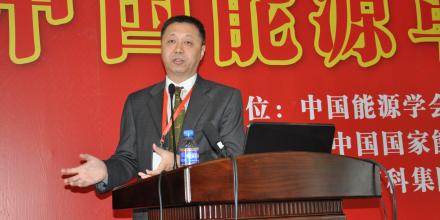
Professor Zhong Xiang Zhang (张中祥), School of Economics, Fudan University, will speak on "Carbon emissions trading in China", at the Australian National University in Canberra, 1pm, 17 April 2015. His paper is available on-line:
"The Chinese central government has approved the seven pilot carbon trading schemes. These seven pilot regions are deliberately selected to be at varying stages of development and are given considerable leeway to design their own schemes. These pilot trading schemes have features in common, but vary considerably in their approach to issues such as the coverage of sectors, allocation of allowances, price uncertainty and market stabilization, potential market power of dominated players, use of offsets, and enforcement and compliance. This article explains why China opts for emissions trading, rather than carbon or environmental taxes at least initially, discusses the key common and varying features of these carbon trading pilots and their first-year performance, draws the lessons learned, discusses the potential pathways for evolution of regional pilot carbon trading schemes into a nationwide carbon trading scheme, and raises fundamental issues that must be addressed in order to make such an emissions trading scheme to work reliably and effectively and with an increasingly expanded coverage and scope."

From: Zhang, ZhongXiang (2015), Carbon Emissions Trading in China: The Evolution from Pilots to aNationwide Scheme, CCEP Working Paper 1503, April 2015. School of Economics, Fudan University.

Tuesday, February 17, 2015

Institution-building in transitional countries

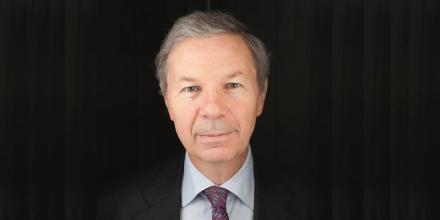
Greetings from the Australian National University in Canberra, where Jean-Marie Guéhenno, President of the International Crisis Group is speaking on "Reconfiguring the international response to rising security threats".  Guéhenno was introduced by his predecessor as President of the International Crisis Group, Gareth Evans, now Chancellor of the ANU.

Guéhenno began by characterizing the Russian intervention in  Ukraine and rise of the Islamic State terrorist group as black-swan events. By this he meant they were events no one expected (but should have). He described the diffusion of power after the end of the cold war. He also mentioned the information connectivity of the world, with news of one death in Europe being reported world wide. 

I was not convinced by Guéhenno's thesis. For more than one hundred years, since the invention so he electric telegraph, we have had global communications. The cold war had the USA and USSR restraining their client states to some extent, but there were still conflicts in places such as Afghanistan, Est Asia and the Middle East.

Terrorist/Liberation movements franchising their operations is not a new phenomenon, nor is the influence of non-state actors in conflict.

Guéhenno's argument that institution-building in transitional countries (which I assume is the new term for developing nations) is a good idea. However, I do not share his concern about parents sending their children to a Madrasa. A Madrasa is simply the Arabic word for a school, usually one associated with Islam. Secular schools and schools of any religion can teach rigid dogma and intolerance, or not.

Perhaps the problem is that Western powers have forgotten that one rule still applies in international relations: the Golden Rule: Those who have the gold make the rules.The Western countries have less funding to spend on military and other interventions, as a result have less global influence.

It is possible to use soft power, through aid and provision of education, but this still costs money. Western democratic governments have gone down a path of promising their citizens peace and prosperity at no cost, which is unachievable.

Australia current has advanced fighter jets attacking ISIS. A more cost effective approach may be to conduct an on-line information campaign and provide low cost education, particularly for teachers and other professionals, with e-Madrasa.

Guéhenno argues that compromise and diplomacy is required, balancing principles with realism. He used the example of calls for removal of the current Syrian government helped with the rise of ISIS.

Guéhenno argued for building of resilient societies. However, this can be undermined by the short term need for politicians to stay in power. An example of this is a recent statement by the Australian Prime Minister, Tony Abbot: "It’s clear to me, that for too long, we have given those who might be a threat to our country the benefit of the doubt." (A message from the Prime Minister, 15 February 2015).

Asked what would be the hot-spots in 2015, Guéhenno nominated Central Asia. 

Asked about terror as a weapon, Guéhenno commented it might be better to have a degree in psychology, than political science.   

Responding to international security threats

"Increasing geopolitical competition is amplifying international conflict and diminishing the global community’s ability to respond to rising distributed threats like extremism and post-authoritarian chaos. The international community needs to get back to basics: supporting the long, hard slog of institution-building in transitional countries; addressing the social and political problems that provide the fertiliser for radical movements; and recognising that we are unlikely to solve conflicts if we only talk to people who agree with us."

Wednesday, February 04, 2015

Responding to international security threats

Jean-Marie Guéhenno, President of the International Crisis Group will speak on "Reconfiguring the international response to rising security threats", at the Australian National University in Canberra, 5:45pm, 17 February 2015. 
"Increasing geopolitical competition is amplifying international conflict and diminishing the global community’s ability to respond to rising distributed threats like extremism and post-authoritarian chaos. The international community needs to get back to basics: supporting the long, hard slog of institution-building in transitional countries; addressing the social and political problems that provide the fertiliser for radical movements; and recognising that we are unlikely to solve conflicts if we only talk to people who agree with us."


Thursday, April 17, 2014

Food and Environmental Security

Greetings from the Australian National University in Canberra, where Professor David Lobell from Stanford University is speaking on "Food and environmental security - Australia’s contribution". Professor Lobell showed a graph of wheat yields in Australia, showing increasing variability over time (due to better production at times of wetter conditions). He argued that this water dependent condition which is common in Australia will also become more common around the world due to climate change and depleted ground water. He showed evidence that Vapour Pressure Deficit (VPD) may result in food production being more sensitive to climate change than previously thought.

Unfortunately while Professor Lobell presented clear and important information on adverse effects on food production of climate change this is unlikely to have any effect on public policy. The Australian Government is in a state of denial on climate change, despite the clear and present danger. What is now needed is research on politics and psychology, to determine how to change public policy.

Later there will be a panel with Dr Mark Howden (CSIRO), Professor Murray Badger, Sarah Bridge (Department of Agriculture) and Professor Robert Costanza (ANU).

Tuesday, February 26, 2013

Measuring Policy Impact of University Research

Greetings from the Crawford School of Public Policy at the Australian National University in Canberra. Paul Harris is speaking on "Pathways to policy impact". ANU and CSIRO are collaborating to look at how the research which is undertaken at a university contributes to the development of government policy. The ANU and CSIRO between them spend more than $2B of public money on research each year, so they are obliged to look at if this expenditure is providing a benefit to the public. Paul pointed out there is much informal interaction between researchers and government people, so clearly it is having an impact. There are some attempts to document this, especially in CSIRO, but this could be done more systematically. Paul pointed out that as CSIRO is a government body, the researchers have more direct access to internal policy processes in government. In contrast ANU as a university does not have as direct access (alto ugh there is less formal consultations made through those of us at the ANU who are former public servants). Paul also suggests that researcher should consider the possible impact of proposed research. The UK Research Councils have done some work on "Pathways to Impact". It occurs to me that this work could benefit from the work done on teaching commercialization to researchers, through projects such as "Innovation ACT". Impact on government policy would then be just one way the results of research could be turned into a useful result. Many of the skills developed in innovation courses would also apply to policy, covering IP issues, how to prepare and present a proposal. Paul gave the example of the US "SPARC Usable Science A Handbook for Science Policy Decision Makers". He pointed out that the process of research to policy is not necessarily linear: instead there is two way interaction between researchers and policy makers. Paul asked the interesting question of the role of science of the public service policy cycle. I suggest this raises a more interesting question about what the actual policy development process is in government and what it should be. My experience of working for government was that there was no workable policy development process: policies had to be developed in secret, as a draft policy could be used by your enemies. Paul touched on this by suggesting that the political impact of research needs to be considered.


Monday, February 04, 2013

Measuring the Impact of University Research

Paul Harris, ANU Crawford School of Public Policy, will talk on "Pathways to policy impact" in Canberra, 26 February 2013.
Event Type: Seminar
Title: Pathways to policy impact
Description: Efforts to measure the 'impact' of research will be a major focus of both government and universities in 2013. The government’s National Research Investment Plan(released in late 2012) states that impact assessment will form an important part of efforts to demonstrate the effectiveness, efficiency and appropriateness of national investments in research into the future.

As part of its 2020 Strategic Plan, ANU has a particular focus on public policy, and creating impact through government and policy. But what is policy impact? Is it different from other kinds of impact? Should we be directing effort in particular ways to try and achieve it?

This seminar will draw on research into science policy, research utilisation and public policy to address these questions. It will examine what we know about the relationship between research and policy and what this might mean for how impact measurement systems might be designed, at the level of individual researchers, research organisations and national policy. It will also provide an overview of work to date in a collaborative project between the HC Coombs Policy Forum and CSIRO examining pathways to policy impact.

Paul Harris is Deputy Director of the HC Coombs Policy Forum in the Crawford School of Public Policy and leads the Forum’s ‘Science, Technology and Public Policy’ program. He is also an advisor at the CSIRO and was previously General Manager, Government and International Relations at CSIRO. In 2012 he completed a secondment in government as General Manager, Science Policy in the Department of Industry, Innovation, Science, Research and Tertiary Education (DIISRTE).

Light lunch will be provided. This event is free and open to the public.

REGISTRATION REQUIRED