Showing posts with label Broadband. Show all posts

Friday, August 15, 2025

Voice data wireless modem for a return of the home phone

TP-Link TL-MR6500v
N300 4G LTE Telephony Wi-Fi Router
My home wireless internet service has been working very reliably. However, after being rushed to hospital in an ambulance recently, I thought it might be useful to have a home phone. In an emergency I don't want to hunt around to find a phone and hope it works. So I connected my home wired phone to a 4G modem. I could not find a single Sim which would do this, so had to run two modems: one for data and one for voice.

Wireless desk phone  

My first option was to buy a 4G wireless desk phone. These look like an old fashioned analog phone, but have a slot for a SIM card and the electronics of a dumb mobile phone inside. These also act as a WiFi hub for home Internet access. They are sold in Australia for seniors, who want the comfort of an old fashioned home phone.

I found one online which also has an ethernet socket. Unfortunately when it arrived this did not work on the Telstra network. So I sent it back and tried again. I ordered another model, but the supplier had discontinued it and returned my money.

Wireless Modem with Phone Socket


For my third attempt I purchased a TP-Link TL-MR6500v, which is a slightly more expensive version of the wireless modem I already had. It is about one centimeter wider, and has a RJ-11 phone socket added on the back. The configuration settings allow the socket to be used for Voice over Internet Protocol (VOIP) or Voice Over LTE  (VoLTE). VOIP requires purchasing an additional phone service, so calls can be made. However, VoLTE uses the mobile phone account associated with the SIM card inserted in the modem. The phone is then essentially free, with the internet access.

Felix Mobile SIM

My existing Telstra data only SIM worked fine in the new router. This might have been sufficient, if I could make emergency phone calls. However, I was unable to determine, with any certainty, if I could. I tried asking Google, but got conflicting answers.

When I did this search: "Emergency call on telstra data sim", Google AI said yes, I could:

"Yes, you can make emergency calls (000 or 112) on a Telstra data SIM, even if it's a data-only SIM and doesn't have a phone number"

However when I searched on "use telstra data only sim for emergency call", Google AI said no, I couldn't:

"No, a Telstra data-only SIM cannot be used to make emergency calls (like calling 000 in Australia). Emergency calls require a voice service, which is not included in data-only SIM plans." 

I solved the problem by replacing the data only SIM with an ordinary voice/data SIM from another provider (Felix Mobile, owned by TPG). This is $5 a month cheaper than the Telstra data only service and like it is shaped to 1.5 Mbps when the data is used up (rather than being cut off).

I plugged the wireless modem into a phone socket on the wall with an RJ-11 cable (cost $1 at a second hand store). The wall phone in the kitchen, which has been unused for more than a decade, then worked (I kept the phone because it covered a large hole a lazy phone installer left). Felix Mobile uses the Vodafone network, which is different to the service I use for my phone, so if one fails, the other might keep working. The phone is powered from the wireless modem, which in turn is powered from an uninterruptible power supply, so it will keep working in a blackout.   


Amaysim

The Felix Mobile SIM worked fine for calls and data on my laptop. But it did not work at all for my set top box. I am not using the set top box for video streaming, just downloading the program guide. Even so, it appears Felix don't allow more than one data device connected at a time, the service being intended for a smartphone. I could not find a reasonably priced service with shaped data which also had phone access. So I signed up for a year long Pay As You Go (PAYG) service from Amaysim, which uses the Optus network. This charges by the minute for calls and per megabyte for data. The charges are high, but I will not be calling out from the phone normally and I have switched off data access, using the modem just as an interface to the analog phone. I have replaced the Telstra Sim for data in my old modem. I paused the Felix service, so I still have an account if needed, but am not charged (it is sitting in my dual Sim phone). This is not an elegant solution, but workable.

Wednesday, October 21, 2020

Wireless Router for More Reliable Online Learning

To improve the performance of Zoom on my slow laptop, and low speed wireless broadband connection, I am trying a router with UDP shaping. That is I slow the data flow to Zoom, to make it work better.

Previously I noticed that with Zoom in full screen mode the sound would break up and image freeze. If I reduced the window size it worked better, but this was fiddly. Also when a presenter shares their screen, Zoom tends to force the display back to full screen, after which I have to shrink it again.

An approach I tried in the past was to slow my Internet connection, which Zoom responded to by using lower resolution video, making everything more stable. However, this also slowed down all my other network use. There are software utilities which will slow just one application, but I found these did not work with Zoom.

The Internet uses two sorts of data transmission: TCP for most applications including as email and web browsing, and UDP for audio, video and interactive games. The utilities I tried to slow an Internet connection only act on TCP, not UDP, so did not slow Zoom.

Not being able to find a software solution I turned to hardware. Many routers allow for slowing, or "shaping" of the speed of the connection. A few allow this to be targeted at UDP specifically. I first tried a TP-Link TL-MR3020 V3 router (around $50 AU). This worked well with Zoom, but the modem would need rebooting every few hours. 

TP-Link TL-MR3420

Some reports indicated that the pocket router could not provide enough power for the Huawei E8372 wireless mode, which has an unusually high power requirement. So I then tried the slightly more expensive TP-Link TL-MR3420 desktop router. This has worked fine so far. This unit is not as portable, but has the advantage of providing four Ethernet sockets for supplying data and one for a wired modem.  The unit can be configured so the wireless modem provides a backup for a wired connection.

Currently I have the data rates for UDP set to: 1024 kbps transmitting and receiving.

A bigger test will come this evening, when I am speaking on "The Virtual University" (6pm, all welcome).

Saturday, August 15, 2020

Optus Wireless Broadband

Huawei E5577
My Telstra wireless broadband has been working adequately during the months working from home due to COVID-19. But just in case this week I purchased an Optus branded 4G Wi-Fi Modem Huawei E5577. This was on special at Australia Post for $10, with a 4GB prepaid SIM (at Officeworks they are $99 with 50 GB). Similar units branded Telstra are also sold. The package had an expiry date which had passed, but the modem and SIM worked fine. 

Huawei E8372
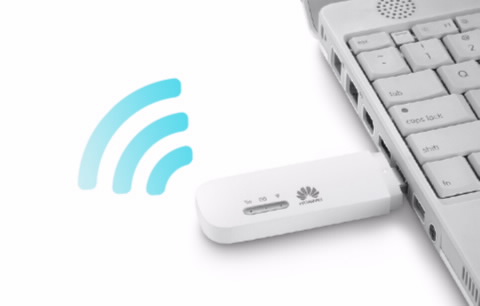
The process of registering the SIM was straightforward and the device was working within a few minutes. The  Huawei E5577 includes a power button, small color screen and a battery, unlike the cheaper Huawei E8372. This makes the E5577 more suitable for use with a tablet computer you carry around. The modem could be left in a bag and communicate with the tablet by WiFi. However, it is less suitable for use with a laptop, as it can't be plugged directly into a USB socket (you need to use the short cable supplied), you have to turn it on and it does not work without a battery. The E8372 has a USB plug built in and simply starts up when power is applied.

The Google Internet speed test reported 18.4 Mbps download, 18.4 Mbps upload and Latency of 24 ms for Sydney which is more than I need. However, in Canberra it recorded only 0.53 Mbps download and 0.35 Mbps upload with 75 ms latency. This compared with 3.35 Mbps download, 0.78 Mbps upload and Latency of 45 ms for the Huawei E8372 using the Telstra mobile network. The Optus service was not enough for video conferencing in Canberra, even with the efficient Zoom product, whereas Telstra worked fine.


Overall I find the Huawei E5577 less suitable for my needs than the E8372, and the Optus service less useful than Telstra. The Optus service, as I experienced it, is not suitable for a student (or teacher) who needs Internet access.

Saturday, March 28, 2020

Wireless Home Office

As I am working from home more, I wanted to ensure I have enough network access. In 2002 my apartment building had fibre installed to the basement. But I did not make much use of this and so switched to wireless a few years later. Now I have two ways to access wireless, through a smart phone, and a wireless modem. Both these operate via the same cellular network, which may become congested with many people working from home during the 


Before I make any changes I wanted to ensure I don't break anything. So I thought I would record the settings for the "Client Mode". I use on a TP-LINK TL-WR802N Mini Router. This is a handy little gadget, which connects my wireless modem to wired Ethernet. But it took a lot of trial and error to set up.


Operation Mode: Client
LAN Type: Smart IP
Host network: 
  •  SSID (to be bridged): [id of the modem] 
  • MAC Address(to be bridged): [address of the modem]
DCHP Server: Disable


Thursday, July 18, 2019

Capped Speed Mobile Broadband Data Plans

Telstra recently simplified its mobile phone plans. Along with this were data plans, from 5 to 100 GBytes per month. What got my attention was that after the data limit is reached, the service keeps working, with no extra charges, but with the speed capped at 1.5 Mbps.

The Telstra speed cap is much higher than for the Belong service I had been using, of 64Kbps. As I am using the service for email and web browsing, not watching moves, 1.5 Mbps should be sufficient. So I signed up for the minimum 5 GBytes for $15 per month.

I found Telstra's website very confusing. So I went into a Telstra store and a very helpful sales person provided a new SIM and signed me up. I walked out with a working service. I am using this with a tiny Wingle (Wifi equipped USB modem dongle). For those wanting a low fuss, low speed broadband, this looks a good option.

Some other mobile data providers are also offering a 1.5Mbps cap. Belong is owned by Telstra and uses the Telstra network. It will be interesting to see if they switch to a 1.5 Mbps cap.

Monday, November 19, 2018

4G Wireless Broadband

Since 2008, I have been using a Huawei D100 3G Router with a USB wireless modem supplied by Virgin for travel. The router is pocket size, with a slot to hold the modem and I have been powering it from USB on my laptop. But Virgin are discontinuing their mobile service in Australia. I only use a tiny fraction of the amount of data I am paying for, so it was time to look for a new plan.


My current USB modem is locked to Virgin, and I had no easy way to find the code needed to unlock it. So I purchased a Huawei E8372 from Australia Post (on special for $19.95). This is branded a Tesltra 4G USB+Wi-Fi 4GX modem. This device is a Wingle: Wifi equipped USB modem dongle.

I would have preferred a simple dongle I could plug into my existing router, but could not find one for sale. The Huawei E8372 has Wi-Fi and doesn't need an add-on  router.

I tried signing up with the Telstra SIM which came already installed in the modem. However, Telstra did not have the address on my driver's license in their database, and while it appeared to accept my passport details, I never received a conformation e-mail and was not able to use the service.

Belong have plans with unlimited throttled data (at 64Kbps). That is, rather than being charged extra, or having the service suspended, as other providers do, Belong slow data to 64 Kbps. This looks useful for occasional lite use. So I tried a Belong SIM, but the modem then asked for an unlock code (despite Belong being owned by Telstra).

So I called Telstra for an unlock code. After going through a few automated steps I was put through to an operator who checked the IMEI number (from the back of the modem box: don't throw the box away). The unlocking cost $25, but curiously the operator would not accept payment over the phone. Instead I went to the Telstra website, paid the money and read them the receipt number. The operator then gave me the unlocking code, which I entered and which worked.

With the router unlocked I had to add a profile for Belong. The only change needed was APN: mdata.net.au.

The next problem was to activate the Belong SIM. The Belong instructions say to download an App, but this will not work with a Wingle. Eventually I found a button on the support website to "set up and connect your Belong mobile service". Belong's system had my address listed (which is odd as their parent company Telstra did not). Within a few minutes the account was activated and the Wingle working. Try saying that really fast. ;-)

The Wingle has advantages over a pocket router and dongle. The Wingle is much smaller and consumes one third the power (1 Watt, versus 3 Watts for a router and dongle). All the configuration settings are in the Wingle and it just needs power from a USB socket to operate (no configuration in the laptop is needed). However, the wingle is slightly fatter than the dongle and I can't use the adjacent USB socket, without using an extension cable.

Something I noticed was that when I plugged the Wingle into my laptop (running Mint Linux), it switched from WiFi to USB for data transfer. I did nothing to enable this switch, it happened automatically.

I also needed a wired Ethernet connection occasionally. The simplest way to provide this was a router configured in "Client Mode". I used a TP-LINK TL-WR802N Mini Router, connected to the modem via WiFi. This unit is matchbox sized, and comes with a short Ethernet cable, a USB cable for power and mains adapter. If I needed a permanent wired connection, I could have used a router with a USB socket for the modem (such as the TP-Link TL-MR3420).

ps: Several days after trying, and failing, to sign up with Telstra, I received an email "welcoming" me to their service. This is far too late. I have asked them not to send any more emails, as I am not their customer.

Monday, August 01, 2016

Time to Virtualise the NBN?


Sorensen and  Medina in "The End of Australia’s National Broadband Network?" (June 2016) deliver what some describe as a scathing assessment of the NBN. The Coalition Government first set out to build a copper broadband network for cities and terrestrial wireless for regional areas in 2007. Then a new ALP government canceled the contracts for the copper broadband, and also abandoned its own hybrid policy (2007), instead switching to FTTP fibre for cities. A later Coalition government then adopted the ALP's previous FTTN hybrid policy, scaling back the FTTP. This is hardly the first case in which a project is in difficulties due to political indecision.

The parts of the NBN which the politicians did not tinker with have gone well: the wireless for regional areas and satellites for remote. In my view the debate over FTTN v FTTP for homes in the city is of less importance, due to mobile broadband. It may not be worth installing fibre or copper for broadband to homes, as it is not homes where the consumer now wants the broadband, but on the mobile device in their hand.

References:

Coalition: Australia Connected: Fast affordable broadband for all Australians, Helen Coonan, Minister for Communications, Information Technology and the Arts, Media Release 80/07, 18 June 2007: https://web.archive.org/web/20070621082132/http://www.minister.dcita.gov.au/media/media_releases/australia_connected_fast_affordable_broadband_for_all_australians

ALP: New Directions for Communications - A Broadband Future for Australia – Building a National Broadband Network, March 2007: https://web.archive.org/web/20070606203548/http://www.alp.org.au/download/now/a_broadband_future_for_australia.pdf

Sorensen,  Lucia Gamboa &   Medina, Andrew. The End of Australia’s National Broadband Network?, Tech Policy Institute, June 2016. https://techpolicyinstitute.org/wp-content/uploads/2016/07/Sorensen_Medina_TheEndofAustraliasNationalBroadbandNetwork.pdf

Wednesday, December 30, 2015

FTTN in Canberra

at the Canberra Times newspaper asked me about the VDSL2 upgrade iiNet is offering in Canberra. This is an upgrade to the more than decade old Transact Fiber to the Node (FTTN) system, with faster modems. It is similar to the FTTN system proposed for the NBN by the current government, but the Canberra system is superior as the copper cable used was laid especially for FTTN and is not old telephone cable.
 "ANU adjunct lecturer Tom Worthington says the Canberra system has the advantage because there is new cable installed to homes, whereas for the NBN the plan is to re-use old phone cables". From  "iiNet offering VDSL2 in Canberra to compete with NBN", by Alexandra Back, Sydney Morning Herald and Canberra Times, December 29, 2015

Thursday, January 09, 2014

Planning to Use Broadband in Australia

In "It’s time for politicians to get technical" (AFR, 3 January 2014), Paul Smith writes about how broadband might be used in Australia. Amongst many others,  I get quoted about the effect on regional employment:
 Tom Worthington, an adjunct senior lecturer at the Australian National University’s school of computer science, also believes the advent of high-speed internet may not prove to be the boon for regional Australian living that many imagine.
He says while better broadband will allow those in regional areas to access services online, this may also result in a loss of face-to-face services.
In other words, while you will be able to consult a doctor, accountant, lawyer or teacher online more easily, you may not be able to see one in person, as they will have moved to the city or to another country.

Thursday, January 02, 2014

Broadband for Smart Cities

Smart Cities by Anthony M. Townsend
The book "Smart Cities: Big Data, Civic Hackers, and the Quest for a New Utopia" (W. W. Norton & Company, 2013) by Anthony M. Townsend, looks at how cities can use information and communications technology. Townsend covers a lot of territory, looking at cities not only in the USA but in developing nations and issues from security, to the environment. Unfortunately the narrative is a little hard to follow and for the first hundred pages I wondered what the book was about. It was only when Townsend started relating his own experience of building community non-profit WiFi services in New York that the book started to make sense. The heavy emphasis on US developments of technology is also a little distracting. There is barely any acknowledgement that many ICT developments came from elsewhere (for example, the World Wide Web from Europe, the ARM chip from the UK and WiFi from Australia). Townsend raises many issues but then seems to move on to another. This is a useful book to dip into, but frustrating to read from start to finish.

The attempts Townsend relates of communities to provide ubiquitous broadband are very relevant to current Australian discussions of the National Broadband Network (NBN). He relates lobbying of government by telecommunications companies interested in not having a public sector rival. Townsend is suspicious of private company involvement in community networking. He portrays non-profit community providers of broadband in USA as heroes and credits mobile data networks in developing nations with being important in economic development, However, Townsend seems reluctant to acknowledge the role of telecommunications companies in providing wireless broadband in developed nations. There has been a problem that the telcos have charged prices for mobile broadband. For Australia I have suggested that mobile broadband could complement cabled services, with some govenrment intervention.

Monday, December 30, 2013

Wireless Broadband for the Community

The take-up rate for the NBN in Tasmania was reported to be 38.5% after three years. The previous government was not too worried about the NBN take-up rate, as the copper network was to be switched off, so consumers would not have much of a choice. Does anyone have statistics for the take-up rate for high speed broadband in other countries?

One option I suggest for Australian urban areas is to combine 4G wireless mobile services with wireless broadband. This could complement FTTN and FTTP. The existing mobile service has limited capacity, but could service moderate home use. The service could be exp[anded by installing picocells on the same fibre used for FTTN and FTTP. Roaming could be enabled to allow a subscriber to any mobile company to use these cells. Also a lower tariff, comparable to wired services, could be offered for those using the wireless service "at home".

Using mobile broadband would create a virtual NBN at low cost. Rather than have to build an extensive wired network and home there were customers, the existing mobile network could be used and then cells added as demand increases.

With advances in 4G the mobile broadband service could carry 4K TV. The advanced HEVC codec allows compression of a HD TV at 6 Mbps and 4k TV at 12 Mbps to 30 Mbps. This could be carried on a 4G LTE-A network, using the Multicast-broadcast single-frequency network (MBSFN) option.

However, many of the community services envisaged for home broadband do not need high speeds. Instead they need trained staff and well designed applications. As an example  home health care is mentioned as a use for the NBN. But a person's vital signs (body temperature, heart rate, blood pressure, and respiratory rate) would only need about 10 bps to transmit.  More sophisticated monitors require more bandwidth, bit still far short of broadband, such as such as electrocardiography at 4 kbps.

But the greatest benefit from home health monitoring is likely to come from checking on the patient's general level of activity and asking them how they are. Advice to doctors, commissioned by the Department of Health recommends a minimum of 640 x 480 Video, with a minimum throughput on the link of 384kbit/s should be available, which far less than high speed broadband.

On-line education is also an application often given for home broadband. But while students like rich multimedia, this does not necessarily improve learning. The report "Evaluation of Evidence-Based Practices in Online Learning: A Meta-Analysis and Review of Online Learning Studies" from the US Department of Education found that video does not improve online learning.

There can be considerable public benefit from broadband without running it to each home. Community centres provide not only a way to consolidate technical services, but also provide experts in health and education. Australia now has free Internet access in public libraries, which is an underrated achievement.

Internet in libraries builds on the library's traditional role providing access to information and literacy. Universities and TAFEs are turning their libraries into learning centres, with computers in place of books. They are keeping the staff to help the students, not only work the computers but with finding, using and creating information. The Gungahlin Town Centre Library in Canberra is a good example, where the one building accommodates the public library, a school library, a TAFE campus and broadband connected community rooms. This could be extended to provide support for university students as well.

Wednesday, December 18, 2013

Wireless Broadband for Regional Australia

NBN trounced by regional offering from locals with an eye for enterprise wireless broadband being offered in the town of Harden in New South Wales.

South Western Wireless Communications is offering broadband from $19.95 a month. But the customer has to purchase the Customer-premises equipment (CPE) and it is not clear what frequencies (licensed or unlicensed) are being used.

I get a mention in the article with my likening the of ALP and Coalition broadband proposals as being like the choice between a Lexus and a 10-year-old Camry and suggesting what younger customers want is wireless broadband.

The distinction between fixed wireless and mobile broadband is now largely one of business model, rather than technology. Ericsson were contracted by NBN Co. to provide a 4G / LTE TDD for fixed wireless rural broadband. The base stations and protocols used are essentially the same as for mobile broadband. The difference is that the customer receives the service via an antenna fixed to their home or business, rather than via a mobile device.

Both ALP and Collation broadband proposals have aimed at fixed location home and small business users. Also these have assumed a high density of new users served by new fibre into each home or terminated at new equipment cabinets in each street connecting the last few hundred metres of copper cable.

The major cost with FTTP is running the cable from street to the home, with FTTN, is installing new optical cabinets  in the street and reconnecting all the copper cables to it. However, an alternative would be to install the optical fibre in the street and then only connecting customers as they require a service. For FTTN, this would require rugged miniature waterproof optical modems, which could be installed in existing pits and cabinets. When a customer ordered a service, the technician would open the pit in the street outside the house and place an optical modem in it. This would be plugged into a fibre cable and power. Copper cable can be used for up to 1 GBPS, but limited to a distance of about 100 m. So each modem need only be designed to provide service to about eight to sixteen homes.

If the customer wanted FTTH, this would require a cable to be run though the existing conduit, or more likely, a new trench and conduit laid, at the householder's expense.

Thursday, September 12, 2013

FttN+P Implementation for Australia

In "The Lexus and the Broadband Network" I likened the choice between the ALP's  FttP National Broadband Network (NBN) and  FttN Coalition Broadband Policy to be like the choice between a new Lexus and a ten year old Toyota Camry car, with the kids wanting a scooter (wireless broadband). The Coalition won the election and so the Fibre to the Node (FttN) option is the one which is to be implemented, but will have elements of the ALP's NBN Fibre to the Premises (FttP, sometimes called Fibre to the Home FttH) in it. The current fiber which has been installed will not be removed. So perhaps the new approach might be termed FttN+P.

An on-line petition proposes "The Liberal Party of Australia: Reconsider your plan for a 'FTTN' NBN in favour of a superior 'FTTH' NBN". To ask a government, which just won an election, to reverse part of its platform is at best a waste of time and may be counter-productive, reducing the chances of getting FttP.

Even if the government thought FttP a good idea, they couldn't be seen to be admitting their previous policy was wrong. Pressure via a petition for FttP would have the effect of requiring the government to defence its policy and thus limit its ability to provide FttP (even where the Government thought it a good idea).

A better strategy would be suggest the FttN policy be "enhanced", without admitting this is a reversal. Some new term, such as FttN+P could be invented, indicating Fibre to the Node, plus Premises (in some locations). The exact meaning of this would be kept vague, so it could cover both roll-out of just fiber in new green-fields sites and the option of fibre in some FttN installations.

Thursday, September 05, 2013

Benefits of Hight-Speed Broadband for Australia

The report "Benefits of Hight-Speed Broadband for Australian Households" (dated 30 July 2013) by Deloitte Access Economics estimates the benefits of high-speed broadband to the average Australian household be $3,800 per year by 2020. This would apply to the ALP's  National Broadband Network (NBN) Fiber-optic network or the hybrid fiber/copper Coalition Broadband Policy.

The Department of Broadband, Communications and the Digital Economy, released the report during the federal election campaign. It is unusual for a government department to release a report on such a politically sensitive topic during the "caretaker" period of government. However, the report does not favor the ALP or Coalition.

The report suffers from a number of deficiencies. It refers to "smart-phones", which the NBN is not designed to support. The report claims that households will benefit from greater choice and competition from e-commerce and online services and greater employment opportunities through teleworking. However, it does not count the cost of greater online access to the Australian market of overseas companies and the off-shoring of Australian jobs made possible. Clearly there will be economic benefits from reduced travel costs and social benefits from better access to education online.

The report does not make clear how high-speed broadband, will provide benefits over lower speed broadband. I teach university classes via the Internet, but because my students could be anywhere in the world, on slow and unreliable Internet connections, I don't assume high-speed broadband. The students find this form of education very worthwhile. My course scored a perfect five out of five for student satisfaction last semester, beating most on-campus courses. Clearly if all my students had high-speed broadband I could use it, but it is not clear to me that this would greatly improve the student's education. As the consultants state in their report it is not a cost-benefit analysis, nor does it compare current broadband with high-speed broadband. The consultants have done a reasonable job within the brief they were given. However, it is questionable if the consultants should have accepted the brief and the report does not provide useful information on which to base decisions.

Benefit
Amount
COMMUNICATIONS > SOCIAL ENGAGEMENT & SOCIAL MEDIA
$74
E-COMMERCE > TRAVEL SAVINGS, CHOICE
$565
ONLINE SERVICES > ENTERTAINMENT
$269
TRAVEL SAVINGS > E-HEALTH, E-EDUCATION, E-GOVT
$217
EMPLOYMENT > TELEWORK, TRAVEL
$634
PRODUCTIVITY > LOWER PRICES, BETTER QUALITY
$1,930
TOTAL
~$3,800

Figure i: Benefits of broadband for households — a national framework

From: "Benefits of Hight-Speed Broadband for Australian Households", Deloitte Access Economics for DBCDE,  30 July 2013

Contents


Broadband Choices for Australia

My "The Lexus and the Broadband Network" analogy was picked up by Australian Science Media Centre and is quoted in "Rural areas to lose in Coalition internet plan, says expert" (Toowoomba Chronicle, 4th September 2013). Expecting more queries from the media on this, I thought I had better summarize the main points of the options offered by the parties. The ALP's  National Broadband Network (NBN), is well known, the Coalition Broadband Policy less well.

Both parties propose a model where different retailers can market essentially the same wholesale product. Cable will be used in the city (fibre for ALP and hybrid for Coalition), fixed wireless in rural areas and satellite in remote areas. The NBN is planned to be completed by 2020 at a cost of  $44B, Coalition by 2019 at $30 billion.

The ALP offers 1 Gbps, Coalition 50 Mbps, on twentieth the speed. But this is only on the cabled networks, the wireless networks will be 25 Mbps (realistically 12 Mbps) and satellite 12 Mbps (realistically 1 Mbps). The NBN fiber system has potential for faster speeds, the hybrid network less so.

Charges for the NBN are around $50 to $100 per month. The NBN wholesale access prices start at $24 a month for 12 Mbps. For the Coalition alternative they are likely to be similar. This has little to do with the cost of the network or technology, but more to do with competition.

Both the party's policies assume one network where the only competition is between retailers offering essentially the same product. But in reality these retailers will be competing with the mobile phone companies selling wireless broadband, currently "4G", at up to 100 Mbps (more realistically 1 Mbps).

ps: I wonder what my former tutors at the University of Southern Queensland in Toowoomba make of this.

Wednesday, August 21, 2013

The Lexus and the Broadband Network

Political commentators in Australia are struggling to explain the difference between ALP and Collation broadband proposals to the voters in nontechnical language. The ALP proposes continued roll-out of Fiber To The Premises (FTTP) for the National Broadband Network (NBN), whereas the Collation wants to use mostly Fiber To The Node (FTTN). My suggested analogy is: Should you buy a new car or fix up the old one, or "The Lexus and the Broadband Network".

The Lexus and the Broadband Network

The ALP FTTP proposal is like the car salesman offering you a new Lexus: sure it is expensive but it will be fast and reliable and last a long time. The Collation's custom auto centre says your ten year old Toyota Camry (copper cable) is mechanically sound, it just needs some new parts (FTTN) and will be much cheaper. Your kids say they don't want an uncool Lexus, or an old Camry, they want a cool Italian Scooter (Wireless Internet). You tell them they will grow out of the scooter in a few years and then want a real car, to which they reply "Whatever". ;-)

ps: In my view, if the government, whoever they are, want to save money, they could prioritize fibre roll-out in greenfield sites and areas with no, or poor broadband.

We have had TFFN in Canberra for just over a decade, with the Transact system. If you have power poles handy, and the citizens don't mind more overhead wires, it is a cost effective system. Also it works okay in new buildings. My apartment building has a fibre optic node in the basement and twisted pair copper to each unit. But if you are going to the trouble of putting new cables underground, then they might as well be fiber-optic, as most of the cost is in digging the trenches.

The areas with copper phone and Pay TV cable could be left for last, where it is working okay. This would be a slight change to the current government's NBN FTTP to achieve cost savings proposed by the opposition. Installing new FTTN should only be done on a limited scale, where the copper cable is new enough to be kept, but so far from the exchange that higher broadband speeds are not possible. The FTTN should be done so it can be upgraded to FTTP later.

Wednesday, May 29, 2013

ABC Four Corners on Cyber-attacks in Australia

ABC Four Corners report "Hacked!" (27th May at 8.30pm on ABC1), alleged that Chinese military hackers were targeting Australian Government departments and corporations to steal secrets and business information. The program contained little hard evidence or new information. One allegation, that the plans to the new ASIO headquarters had been stolen to assist penetration of the building was new, but not particularly significant. However, the program will be useful if it prompts the Australian Government to restart its dormant work on public cyber security policy.

One curious segment of the program had a private security consultant asked if the Australia was preparing for offensive cyber-warfare, that is preparing to attack,. not just defence. The consultant hedged around the question, hinting but not answering clearly.

This reluctance to answer the question is at odds with a media release from Northrop Grumman in 2012 which announced it was building a cyber test range at the Australian Defence Force Academy (ADFA) in Canberra, to train defence force personnel. A cyber range is analogous to a test range for conventional weapons: the cyber range is used to test cyber warfare techniques, which can be both defensive and offensive. I attended a presentation to the Australian Computer Society, 13 March 2013, where one of the staff from Northrop Grumman gave a presentation on the cyber range.

Thursday, May 23, 2013

Need for Australian Cyber Security White-paper

The Australian Government released a Defence White Paper 2013 (May 2013). This highlights the risk of cyber attacks on defence, government and  commercial information networks. The paper claims that the Cyber Security Operations Centre (CSOC) has "allowed the development of a comprehensive understanding of the cyber threat environment and coordinated responses to malicious cyber events that target government networks". However, this addresses only government networks, not essential services provided by the private sector and on which government and defence depend. The paper envisages participation of key industry and private sector partners, but no further details are provided.

In September 2011 the Australian Department of Prime Minister and Cabinet (PM&C) issued a discussion paper “Connecting with Confidence, Optimising Australia’s Digital Future” , with the aim of releasing a cyber security policy white paper in mid 2012. The Australian Computer Society assisted PM&C with consultations, including arranging a meeting in Canberra, 18 October 2011. The ACS released a Submission for the Australian Cyber Policy White Paper. But in a speech October 2011, the Prime Minister said that she thought the Cyber White Paper should be broadened to a "digital White Paper" ("Closing Remarks to the Digital Economy Forum", Speech, Julia Gillard, Prime Minister of Australia, 5 October 2012). No Cyber White Paper has been released. As a result Australia's national infrastructure remains vulnerable to cyber attack. The Australian government needs to revive the cyber security white paper process.

Cyber

2.82 The 2009 Defence White Paper acknowledged that national security could be compromised by cyber attacks on defence, government or commercial information networks. Cyber security continues to be a serious and pressing national security challenge. The seriousness of the cyber threat was affirmed in 2011 when Australia and the US confirmed the applicability of the ANZUS Treaty to cyber attacks. This further emphasised the need for capabilities that allow us to gain an advantage in cyberspace, guard the integrity of our information, and ensure the successful conduct of operations.

2.83 Australia, advantaged by the cyber dimension of our international strategic partnerships, should find that the rise of cyber power has at least as many pluses as minuses. But the net effect on Australia’s position will depend on how well we exploit cyber power, including working with partners and integrating cyber power into national strategy and a whole-of-nation effort.

2.84 The potential impact of malicious cyber activity has grown with Defence’s increasing reliance on networked operations. Reducing Defence’s vulnerability to cyber attacks or intrusions in a crisis or conflict will remain a high priority. This includes protection of deployed networks and information systems. In a future conflict or escalation to conflict, an adversary could use a cyber attack against Australia to deter, delay or prevent Australia’s response or the ADF’s deployment of forces. This would probably include the targeting of information systems, networks and broader support infrastructure perceived to be integral to the ADF’s decision-making and war-fighting capabilities. Once deployed, our forces will need to operate as a networked force in a contested environment.

2.85 It is equally important to protect information in peacetime. Australia’s national security, economic prosperity and social wellbeing now depend on the internet and the security of information. Compromise of Australian Government information could allow an adversary to gain economic, diplomatic or political advantage over us. Compromise of commercial, government or private citizens’ information would undermine public and international confidence in Australia as a secure digital environment.

2.86 Defence capability would be seriously undermined by compromised sensitive information on command and control, operational planning, platform design or weapon system performance. Additionally, without effective mitigation and protection measures in place, the costs to Defence of addressing cyber intrusions could far outweigh the effort expended by an adversary.

2.87 Understanding of the cyber threat has increased markedly since the 2009 Defence White Paper.

The establishment of the Cyber Security Operations Centre (CSOC) within the Defence Signals Directorate (DSD) – to be renamed the Australian Signals Directorate – has allowed the development of a comprehensive understanding of the cyber threat environment and coordinated responses to malicious cyber events that target government networks. Through the CSOC, Australia has increased its intrusion detection, analytic and threat assessment capabilities, and improved its capacity to respond to cyber security incidents.

2.88 Within Defence, there is also a significant body of work to be done to ensure the security and resilience of defence systems in this environment. Network and system management, along with personnel and physical security need to be strengthened as part of our response.

2.89 Australia works within the framework of its traditional defence and intelligence and broader national security relationships to counter cyber threats. More broadly, Australia believes that the existing framework of international law, including the UN Charter and international humanitarian law, applies to cyberspace. Australia is participating in international efforts to achieve a common understanding of these laws.

2.90 In January 2013, the Prime Minister announced the establishment of a new Australian Cyber Security Centre to improve partnerships between government Agencies and with industry. The Centre will bring together cyber security capabilities from across the national security community, fully located in one facility. DSD’s CSOC, other elements of DSD’s Cyber Security Branch, the Attorney-General’s Computer Emergency Response Team Australia, the Australian Security Intelligence Organisation’s Cyber Espionage Branch, elements of the Australian Federal Police’s High-Tech Crime Operations capability and all-source-assessment analysts from the Australian Crime Commission will be co-located. This will facilitate faster and more effective responses to serious cyber incidents, and provide a comprehensive understanding of the threat to Australian Government networks and systems of national interest. The Centre will be overseen by a Board, led by the Secretary of the Attorney-General’s Department, with a mandate to report regularly to the National Security Committee of Cabinet.

2.91 Additional capability will be enhanced through participation of key industry and other private sector partners. Defence will play the principal role in the operation of the Centre and will continue to dedicate significant expertise to this important national capability.

From Defence White Paper 2013, Pages 20 and 21, Australian Government, May 2013

Friday, April 12, 2013

High Speed Rail For South-East Australia

Mr. Anthony Albanese , the Minister for Infrastructure and Transport, released the High speed rail study phase 2 report, 11 April 2013. This looked at the feasibility of Melbourne, Canberra, Sydney, Newcastle and Brisbane being linked by high speed passenger trains. The report finds this technically feasible, with economic and environmental benefits, but media reports have concentrated on the high cost and long time scale of such a project. In my view the project would be politically and financially feasible if built in stages. The Sydney, Canberra, Melbourne sector could be politically justified by eliminating the need for a second Sydney airport and the treat of further aircraft noise over politically sensitive western Sydney electorates. The project could be funded from the sale of land in new "i-Towns" along the route.

Providing a high speed passenger train from Sydney to Canberra and Melbourne would eliminate most flights on one of the world's busiest aircraft corridors. This would free up slots at Sydney airport for other interstate and international flights. It would also allow Canberra to be the second Sydney airport.

Fast train access to regional Australia would allow the rapid development of new "i-Towns". This would relieve development pressure from Sydney and the sale of the developed land in the new towns would pay for the cost of the railway. The new towns would exploit broadband technology to the maximum, to make them attractive and also low cost to develop. Facilities such as an advanced hospital, university campus, offices and entertainment facilities would be integrated and on-line. The railway would provide rapid access to the city for services not available in town. The towns could be built at the same time as the railway, so that revinue from land sales would be avialabl;e quickly.

Wednesday, April 10, 2013

Coalition’s Proposed Alternative to the NBN

The Australian opposition have released "Fast. Affordable. Sooner. The Coalition’s Plan for a better NBN". This proposes halting the roll-out of the NBN Fibre to the Home in Australia and using Fibre to the Node instead. We have had TFFN in Canberra for just over a decade, with the Transact system. If you have power poles handy, and the citizens don't mind more overhead wires, it is a cost effective system. Also it works okay in new buildings. My apartment building has a fibre optic node in the basement and twisted pair copper to each unit. But if you are going to the trouble of putting new cables underground, then they might as well be fiber-optic, as most of the cost is in digging the trenches.

If the government, whoever they are, want to save money, they could prioritize fibre roll-out in greenfield sites and areas with no, or poor broadband. The areas with copper phone and Pay TV cable could be left for last, where it is working okay. This would be a slight change to the current government's NBN FTTH to achieve cost savings proposed by the opposition.