Showing posts with label ANU Climate Change Institute. Show all posts

Thursday, February 08, 2018

Global Financial Crisis Risk from Renewable Power Technology

Greetings from the ANU Climate Update 2018 at the Australian National University in Canberra. Professor John Hewson from the ANU Crawford School of Public Policy warned that advances in renewable power technology could precipitate a global financial crisis. The concern, as I understand it, was that wind turbines, photovoltaic panels and batteries are dropping in cost. The problem then existing fossil fuel investments could become suddenly financial nonviable, disrupting financial markets.

I was reminded about sudden changes in technology yesterday, with the successful launch of the SpaceX Falcon Heavy reusable launch vehicle. This has been under development for at least ten years, but the success makes it a viable option for launching satellites at about one third the current cost.

It is similarly easy to overlook incremental improvements in renewable energy technology, until it is packaged in an understandable form. An example South Australia's 100MW battery and batteries for 50,000 homes.

ANU Climate Update 2018

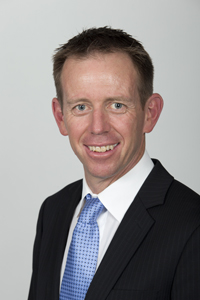
Greetings from the ANU Climate Update 2018 at the Australian National University in Canberra. The opening address was by Shane Rattenbury, MLA, Minister for Climate Change and Sustainability, ACT Legislative Assembly. He invited community comment on the ACT Climate Strategy to a Net Zero Emissions Territory.

The Minister surprisingly admitted that the Australian Capital Territory (where Canberra is) was easily able to become carbon neutral. This could be done as the ACT doesn't have a lot of coal fired power stations to replace.

ps: I am just finishing updating the notes for my course "ICT Sustainability" being offered by ANU in First Semester, starting online 19 February.

Thursday, October 20, 2016

Clean Energy Innovation

Greetings from the Australian National University in Canberra, where Dr Julio Friedmann, Senior Fellow, Lawrence Livermore National Laboratory, is speaking on The Importance of Innovation to Global Clean Energy Development, Past and Future. Dr Friedmann spoke of how there is a glut of hydrocarbon energy available, but also face climate change. He described the Kyoto Protocol as "Mutually Assured Destruction", but praised the Paris Agreement (COP21)in more positively. In the long term global emissions per person need to reduce to that of someone in Zimbabwe, while aiming to improve quality of life.  

Dr Friedmann pointed out the USA has a network of government laboratories working on energy. He also pointed out that Bill Gates, and other entrepreneurs, are contributing capital to long term high risk venture (Breakthrough Energy Coalition), to provide an example to the private sector. To summarize this Dr Friedmann said policy drive finance which then encourages innovation. That is certainly one possible approach, but I suggest this is not the way we got the Internet or the World Wide Web. Both were directly government funded inventions (the Internet by US DoD and the Web European pure science budgets). Only after development with government funding were the Internet and web commercialized.

However, what seems to be missing from Dr Friedman's analysis are political and social aspects. We already have technological and financial solutions to climate change. However, these solutions are politically and socially unpalatable. By offering the prospect of technological fixes in the future, researchers may delay the implementation of proven but difficult solutions. 

Hi tech solutions do not always solve real problems. Dr Friedman gave the example of the testing of aircraft using simulations. However, simulations have limitations. As an example, the launch bar on the F-35C did not lower far enough to hook up to the catapult for launch and the tailhook did not catch on the arrestor wire on the first test. What was needed was not a computer, but a large hammer.

Dr Friedman ended by talking about the need for and possibility of Carbon Dioxide to fuel conversion. This seemed to me an excellent example of what not to do. The problem is to fine an energy source which does involve the burning of carbon as this produces carbon dioxide pollution. Synthetic carbon based fuel can be used to store and transport energy in a convenient fuel, for transport, but will not reduce carbon emissions. Making synthetic fuel will require net energy input. where there are no alternatives, such as for aircraft, synthetic fuel will be an option. But for land transport, there are alternatives such as public transport to replace private cars and freight trains to replace trucks. This requires sophisticated social and political action, rather than new engineering.

Sunday, December 06, 2015

Energy, Climate Change Research and Education After Paris

The Australian National University has a series of events, starting this week, on energy and climate change:

ANU Energy Change Institute Open Day 2015,
ive from the UNFCCC Paris conference by Associate Professor Frank Jotzo. I will be presenting a poster on teaching ICT Sustainability on-line around the globe.

Solar PV - Changing the Energy Landscape, Monday, 7 December 2015, 5:15 pm, Dr Pierre Verlinden, Vice-President and Chief Scientist at Trina Solar

2015 ANU Energy Update, Tuesday, 9am, 8 December 2015, with Mr Ian Cronshaw, International Energy Agency (IEA) and Byron Washom, UC San Diego's Microgrid

Deciphering the Paris Climate talks: where to next?,

Associate Professor Frank Jotzo (back from the UNFCCC Paris conference)

Thursday, October 08, 2015

Will Australia rejoin the World on Climate Change

Greetings from the Australian National University in Canberra, where John Gummer (Lord Deben), Chairman of the UK Climate Change Committee and Special Advisor to the United Nations on Carbon Pricing, is speaking on "Will Australia rejoin the World on Climate Change?". He criticized Australia's proposals of greenhouse gas emissions for the Paris Summit, for using a different baseline to make them look good. He also criticized Australia's linking its response to other countries, especially that of developing countries.In contrast he pointed to the UK carbon budget. Lord Deben argued that because the effect of global warming will global it is in the interests of rich countries to take action. I am not sure that rational approach will necessarily produce the desired effect.

Wednesday, August 26, 2015

Australian Electricity Demand in the Future

Greetings from the Australian National University in Canberra, where Dr Hugh Saddler is speaking on "Electricity demand and Australia’s renewable energy targets: where to?". He showed a graph which showed that the feared "peak demand" for electricity in Australia did not happen. Also he emphasized that not only is demand for electricity in Australia decreasing, but the decrease is accelerating. Dr Saddler points out that some electricity use is not measured (for example power from a roof top solar system which is used in the household). Dr Saddler pointed out this would increase as companies such as Ikea installed their own PV. Residential use of electricity is about at the same level as large industries, both of these are less than general business. All three categories of electricity use are decreasing, residential most rapidly. The largest factor in reduction in electricity use is energy efficiency, not from PV panels. Detached houses use about 50% more electricity than other forms of housing. Dr Saddler concluded that the worst case would be that electricity consumption would remain constant, not increase. Gas consumption for homes is decreasing due to efficient reverse cycle air-conditioning, but this will not significantly increase electricity consumption. There is less scope for reduction for electricity use in business. Interestingly, the Queensland coal seam gas industry is expected to cause an increase in electricity use, associated with the extraction.

Tristan Edis then talked on "50% Renewables: Have We Gone Mad?". He mentioned "Learning the hard way: Australia’s policies to reduce emissions". He argues that regulatory measures have been more effective and less politically contentious than measures such as a carbon price. He argues that emissions need to be reduced by 80% soon and the cost of solar panels and wind turbines have reduced with volume of production. I am not sure I believed Tristan Edis' analysis, but by considering the political palatability of emissions policy he introduced a more useful way to discuss the issues than previously at ANU.

Monday, July 21, 2014

Costs of Climate Change

Greetings from the Australian National University in Canberra, where a "Costs of Climate Change" colloquium is being held. This features Dr Frank Jotzo, Director of the Centre of Climate Economics and Policy, ANU, Dr Mark Stafford-Smith, Chair of the Future Earth Science Committee and Mr Howard Bamsey, Adjunct Professor at the ANU. A recording of the event is available.

A cynic might say that the political cost of Climate Change in Australia is clear: loss of office. ;-)

More seriously, I suggest that the priority for Australian research in this field must change to focus on  how to communicate the seriousness of the situation to the public and to politicians. If researchers continue to fail to communicate their findings effectively they will be in part responsible for the resulting human misery as well as economic loss from global warming.

Dr Frank Jotzo provided a graph explaining the trade-offs between the cost of action now and consequences later. He then provided a carefully worded explanation of the issues which was easy to understand for the academic audience. However, this explanation appear to have had no effect on the public debate (or may well have had a negative effect, with the public becoming suspicious of researchers) . In terms of providing practical measures for dealing with climate change we have enough "facts" and need better marketing.

Dr Mark Stafford-Smith, Chair of the Future Earth Science Committee, discussed the likely increased deaths in Australia due to global warming. But more likely to influence government and industry are effects on infrastructure, such as roads, railways, water supplies and the mining industry. However, the time over these costs will be incurred are outside the planning horizon of industry and government and are not decided centrally.

The last speaker, Mr Howard Bamsey, Adjunct Professor at the ANU, was the only one to address the issue from the point of view of policy making.He pointed out that costs are not as important for matters of vital national interest, such as going to war. He suggested that the previous government appealing to individual's current well-being, pointing out they would be compensated for carbon pricing, was the wrong one and it would have been better to describe it as a sacrifice necessary for the future. Mr Bamsey also pointed out that models for estimating costs are very sensitive to initial assumptions and warned that numbers have a misleading fascination for policy makers.

I suggest that research into policy makers decision making on climate change would be a worthwhile area for increased research into, with reduced funding for research on the physical and economic aspects of climate change (which are unlikely to produce any useful outcomes).

Saturday, August 17, 2013

Publishing in Nature Climate Change

Dr Bronwyn Wake, Associate Editor of Nature Climate Change, will speak on "Have your Climate Change research published", at the Australian National University in Canberra, 2:00 PM 28 August 2013.
Nature Climate Change launched in April 2011 and is a monthly journal dedicated to publishing the most significant and cutting-edge research on the science and impacts of global climate change and its implications for the economy, policy and the world at large. The journal covers the physical, biological and social sciences and strives to synthesize interdisciplinary research. Dr Bronwyn Wake works at Nature Climate Change as an Associate Editor covering the physical sciences and the marine and aquatic environment. Bronwyn will talk about her experiences as an Associate Editor, explain the philosophy of the journal and will provide advice on how to submit manuscripts to Nature Climate Change. About the Speaker: Bronwyn is a chemical oceanographer, with a PhD in trace element biogeochemistry and first class Honours in Antarctic Studies from the University of Tasmania, Australia. Her undergraduate work was at the Australian National University. Prior to joining Nature Climate Change in February 2012, Bronwyn was a postdoctoral researcher at the University of Southampton, UK and European Institute for Marine Studies, Brest, France. Her research work focused on trace metal cycling in marine waters and their roles as micronutrients for phytoplankton.

Governance for climate change adaptation

Dana Dolan, George Mason University, will speak on "Governance for climate change adaptation", at the Australian National University in Canberra,  4:00 PM, 19 August 2013.
More than ever, water allocation in the Murray-Darling region depends on decisions made in Canberra. Climate change is expected to exacerbate water scarcity, adding further urgency to the challenge of adapting to a highly variable climate. Meanwhile, across the globe, Washington DC faces its own climate challenge as federal agencies attempt to coordinate States’ efforts in the Chesapeake Bay watershed. The challenge in this watershed isn’t about who gets to extract how much from the rivers and streams, but who gets to add how much – in terms of pollution. Climate change exacerbates this challenge as well, with more frequent intense storms threatening to wash additional sediment and pollution into the Bay.

With climate impacts on water resources at opposite extremes of the spectrum, what can these two regions learn from each other? Recent institutional changes in the Murray-Darling and Chesapeake regions share a number of intriguing similarities, with implications for adaptation.

This seminar aims to draw parallels between the regions as a first step in furthering cross-national policy learning and collaborative scholarship between the U.S. and Australia.

About the speaker

Dana Archer Dolan is a PhD Candidate in Public Policy at George Mason University, and a Visiting Scholar at The Australian National University. Field work in Australia is funded under an EAPSI Fellowship from the U.S. National Science Foundation, and supported by the Australian Academy of Science. Dana is grateful to her host scholar, Professor Stephen R. Dovers and Dr. Karen Hussey for their continued support and guidance, and to the wider Murray-Darling community for welcoming her during her time in Australia and participating in her research.

Friday, June 07, 2013

Climate Change Governance

Greetings from the Australian National University in Canberra, where Dr Tim Cadman, Research Fellow, Griffith University is speaking on "The global climate change regime complex: institutions and governance". Dr Cadman is the editor of the book "Climate Change and Global Policy Regimes: Towards Institutional Legitimacy". He mentioned the book was on special at $80, but Amazon.com has it at a lower price. Dr Cadman discussed current international initiatives for combating climate change and what might be done in the future. One issue he raised was the potential for the spread of tropical diseases, such as Dengue fever. It happens I gave a talk in Colombo to an audience of tropical disease experts in Colombo about "Mobiles and e-learning for PandemicFlu Response".  It turned out that there were a number of epidemiologists in the audience and the issue was  Dengue fever not flu.

Dr Cadman argued that a participative process was required for development of climate change policy. The participation is required to give the process legitimacy. It would be useful to revise international policy processes to provide for more participation, I am not sure that it is feasible to do this just for the climate change issue, nor will this necessarily lead to a general consensus. However, some form of on-line deliberative democracy might be used. But in the end it is likely that decisions will be made based on international power balances. In brief the issue is: what will China, USA and Europe do?

Dr Cadman called for quality of governance standards across the climate change regime. At one level there could be development and implementation of governance standards. Such standards exist for IT, with ISO/IEC 38500  Corporate governance of information technology. However, similar standards at the policy level would be  much more difficult.

A more direct way academics can  influence climate change measures is in their role as educators. In the course "ICT Sustainability" I set students the task of preparing a sustainability strategy for IT in an organization. where the student has a relevant job I encourage them to get the agreement of their boss to write a real report and submit it to the organization, as well as for assessment. This way there is no need to wait for the student to graduate for their education to have an impact. Some students who have written official reports for their management have worked for large multinational corporations, as well as local, national and international government bodies.

Seminar
The global climate change regime complex: institutions and governance
Since the creation of the United Nations Framework Convention on Climate Change, media and public attention has been focused on the global negotiations to reduce greenhouse gas emissions. Little attention has been paid to the institutions that are charged with the responsibility of developing effective responses. These are often remote from the public, and communities most threatened by global warming are often excluded from decision-making. In this lecture, Dr Tim Cadman introduces and discusses the wide range of institutions within the ‘climate change regime complex’ and their respective roles in global climate change governance, while Dr Jamie Pittock explores governance pertaining water supply and management.

About the Speakers

Dr Cadman is a research fellow in the Key Centre for Ethics, Law, Justice and Governance at Griffith University, Queensland, Australia. He is also a research fellow in the international Earth Systems Governance Project and specialises in the governance of sustainable development, natural resource management, climate change and forestry, and responsible investment. His first book “Quality and Legitimacy of Global Governance: Case Lessons from Forestry” was published by Palgrave Macmillan in 2011.

Dr Pittock is a Senior Lecturer in the Fenner School of Environment and Society at The Australian National University. He has been Director of International Programs for the UNESCO Chair in Water Economics and Transboundary Water Governance and also Program Leader of the Australia and United States Climate, Energy and Water Nexus Project for the US Studies Centre and ANU from 2010. Dr Pittock worked for non-government environmental organisations in Australia and internationally from 1989-2007, including as Director of WWF’s Global Freshwater Programme from 2001-2007. His research focuses on better governance of the interlinked issues of water management, energy and food supply, responding to climate change and conserving biological diversity.

Speaker/Host: Dr Tim Cadman, Research Fellow, Griffith University and Dr Jamie Pittock, ANU
Venue: Frank Fenner Seminar Room
Date: Friday, 7 June 2013
Time: 12:00 PM - 1:00 PM
Website: http://climategovernance.eventbrite.com/
Enquiries: Adhityani Putri on 6125 6599

Tuesday, February 12, 2013

Gunning Wind Farm

Gunning Wind Farm Control Console
Gunning Wind Farm Control Centre
The ANU Energy Change Institute (which I am a member of), had a tour of the Gunning Wind Farm on 11 February 2013. The site is 15 km north-east of Gunning, near Canberra. The 31 wind turbines on the Cullerin Range, are monitored from a small building which also houses maintenance personnel. Operation of the turbines is from ACCIONA's control room in, Melbourne, which also controls other wind farms in Australia. SCADA (supervisory control and data acquisition) software allows personnel to monitor each turbine.

The wind farm is relatively quiet with the sound of the blades overhead barely audible over the sound of the wind. The only time the turbines became noticeable was went one was feathered so the tour party could look at the equipment inside the base of a tower. As the blades were rotated to stop them catching the wind the sound became much louder, but still much lower than traffic noise of a city. Opening the inspection door to the tower was a complex process, requiring the personnel to first call the control room for permission, wait for the mill to stop and then unlock and latch open a very heavy steel door.

The wind farm is an expected life of at least 25 years. The equipment is made overseas. One point discussed by the tour was local manufacture of the steel towers. These require special equipment for the thick curved sections. I suggested that the suppliers for the Australian Submarine Corporation (ASC) may be able to manufacture these as submarines require heavy curved steel sections manufactured to fine tolerances.

ps: The next class for my ICT Sustainability course starts on Monday at ANU. One of my students previously researched if it would be feasible to use a wind farm to power a data centre.

Monday, February 11, 2013

Potential for Wind Energy in NSW

Greetings from the Gunning Shire Hall, where a delegation from the Australian National University's Energy Change Institute is inspecting the gunning wind farm. We started with traditional home baked country afternoon tea and a briefing on the NSW Renewable Energy Action Plan (REP) and Renewable energy precincts. The NSW government has a plan for capturing a share of national wind energy and other renewable investments. As well as the technical issues as to where there is suitably windy land for wind farms, there are issues of land planning and social equity. Gunning is on the edge of Canberra with the expectation of increased land value for housing. Wind farms could threaten that. In contrast areas and individual farmers, who miss out on a wind farm may feel aggrieved. REP run a Renewable Energy Day and community education activities. One point shown by research is that while there is a NIMBY effect ("Not in my backyard), with support for wind turbines dropping the closer of the resident to the proposed site, there is still strong support for wind energy in the community.

Sunday, February 10, 2013

Study of Sustainable Practices at Universities

John Peterson at Keiser University is conducting a study of Sustainable Practices at US universities. He is concentrating on the University Leaders for a Sustainable Future (ULSF) and looking at why so few have signed their "Talloires Declaration" on sustainability and environmental literacy. He has an online questionnaire.

A study of sustainability and environmental literacy at American universities would be useful. But these are global issues and might benefit from looking further afield. The Australian National University (ANU) is a signatory to the Talloires Declaration on sustainability, as I expect other non-US institutions are. The ANU Climate Change Institute and ANU Energy Change Institute research environmental issues. Postgraduate students  in my ICT Sustainability Course work on projects with the university's Green office. Last year I visited Universitas Islam Negeri Sultan Syarif Kasim Riau in Indonesia, to talk at their international Green ICT symposium on Sustainable Development Through Green ICT. I expect other universities in the region have similar initiatives.

Friday, January 25, 2013

Gunning Wind Farm Tour

Acciona Gunning Wind FarmThe ANU Climate Change and ANU Change Institutes (which I am a member of), are hosting a tour of the Acciona Wind Farm at Gunning, NSW on 11 February 2013.
The Gunning Wind Farm in New South Wales consists of 31 wind turbines built on the Cullerin Range, approximately 15 kilometres north-east of Gunning in the Upper Lachlan Shire.

The turbines are located on the privately owned property Walwa, which is predominantly cleared pastoral land. The wind farm site continues to be used for grazing.

Project Snapshot
  • Location: approximately 15 kilometres north-east of Gunning and 70 kilometres north-east of Canberra.
  • Capacity: 46.5MW (31 wind turbine generators).
  • Completion Date: May 2011.
  • Energy Production: Gunning Wind Farm can power 23,250 homes annually.
  • Job creation: 100 manufacturing and installation jobs were created during the construction phase. There are will be nine operations and maintenance staff overseeing the operation of the wind farm
  • Project Value: A$147m.
The Gunning Wind Farm has an electrical substation, access tracks to each turbine, an operation and maintenance facility and 17.4km of underground cabling. A 14km 132kV transmission line was also constructed to connect the wind farm to the existing Yass-Goulburn transmission line.
Prior to development of the site ACCIONA Energy and independent consultants identified how best to utilise the wind farm site and identified constraints. Areas of study included flora and fauna, cultural heritage, sound, visual aspects and vehicle access.
The turbines at Gunning
The Gunning Wind Farm steel towers are 80m high with a base diameter of 4.5m and top diameter of 2.5m. Each tower base is anchored into position by approximately 250m³ of reinforced concrete. The nacelle and hub have a combined weight of approximately 65 tonnes, and together are 12.5m long and 4m high. The fibreglass blades are up to 40m long and weigh up to six tonnes each.
Transmission line
A new 132kV transmission line has been constructed to connect the wind farm to the existing 132kV Yass-Goulburn transmission line. Electricity is generated from turbines at 12kV and is then stepped up at a substation to 132kV to match the existing Yass-Goulburn voltage before connection can be made to the grid. ...
From: Gunning Wind Farm, ACCIONA, 2012

Thursday, May 03, 2012

Emergency management across legal and policy sectors

Greetings from the Australian National University in Canberra, where Professor Steve Dovers, and Dr Michael Eburn from the Fenner School of Environment and Society are talking about "Mainstreaming fire and emergency management across legal and policy sectors: Preliminary findings". They argues that emergency management requires a whole-of-government approach to manage risks, in advance of a disaster. The work has been published as "Mainstreaming fire and emergency management into law" (Michael Eburn and Bronwen Jackman, Environmental and Planning Law Journal (Australia), Volume 28, Number 2, March 2011).

I suggest that they are on the right track, but their approach is flawed by assuming government has a major role in emergency management. In reality the community and industry do most emergency management, with government providing only a minor role.

The authors argue that post-disaster inquiries are done in an ad-hoc way and are becoming longer and more litigious. A simple solution would be apply the approach used in the transport sector, particularly aviation. Rather than assume nothing will every go wrong and set up an ad-hoc inquiry when it does, the transport and airline industries have government run permanent transport accident investigation agencies. These agencies have special legislation which clarifies the purpose of inquiry is to discover the causes of the accidents and prevent them in future. As a result, there are procedures by which personnel such as airline pilots can report problems without this being used as evidence against them.

The authors discuss the issue of personnel fearing being blamed for their actions after a disaster. In part the solution, as the authors discuss is the personnel following agreed procedures and have some limited liability. This applies in some professions, such as computing. Each year, I give ANU IT students a lecture on "Professional Ethics and Social Issues in Networked Information Systems". As an Certified Computer Professional, my liability is limited under state legislation, to a maximum of $5M, in return for which I am required to have insurance and undertake refresher training each year. This system did not just happen by accident, the Australian Computer Society and the Federal Government invested more than $1M researching IT ethics, so we have a reasonable idea of what is feasible.
Emergency management is traditionally seen as the responsibility of the emergency services, such as fire brigades and State emergency services. Vulnerability to fires and the ability to protect life, property and other assets, is, however, largely defined by activities and policy settings in other sectors. This interplay of policy means that fire and emergency management should be seen as a whole-of-government and cross-sectoral issue. This article provides examples of how current Australian law may hinder communities to prevent, prepare for, respond to and recover from, the impact of natural hazards and in particular bush or bushfire events. It identifies areas of further research that are required to reduce community vulnerability and increase community resilience to natural hazard events, in particular bushfire events. ...

From: "Mainstreaming fire and emergency management into law", Michael Eburn and Bronwen Jackman, Environmental and Planning Law Journal (Australia), Volume 28, Number 2, March 2011

Friday, January 13, 2012

ANU Climate Change Institute

The ANU Climate Change Institute brings together people at the Australian National University working on understanding, reversing and adapting to climate change. I am listed as one of the researchers, as teach ICT Sustainability, where students learn to estimate the contribution to carbon emissions from computers and telecommunication, as well as how to reduce it. Also I supervise some student projects (such as if you can run a web server from a wind generator).Link Link

Monday, August 22, 2011

Handbook of Climate Change and Society

At the Climate Research Expo, John Dryzek discussed the The Oxford Handbook of Climate Change and Society, which he prepared with Richard B. Norgaard and David Schlosberg. He said it would be availbel from Oxford University Press, first in hardback. I noticed that Amazon has the text available for preview.

Climate Change and Global Conflict

At the Climate Research Expo, Devin Bowles, from the
National Centre for Epidemiology and Population Health is talking about the indirect effects on health of climate change. He pointed out that changes in weather patterns, such as drought in the Sudan, will result in conflict. As well as the causalities from wars caused, there will also be a breakdown in infrastructure, resulting in disease. The RAND Corporation, a US military think tank, has produced a series of papers on climate change and security

Australian Building Ratings Underestimate Energy Use

Speaking at the Climate Research Expo, Annie Egan mentioned that here research on energy performance of Australian office buildings shows they are about 20% less efficient than the energy rating standards, such as NABERS, would indicate. One problem is that NABERS assumes one person per 15 square metres in an office building, while in reality there are 25 to 42 square metres per person. Also the air leakage of building varies widely.

This research suggests one simple way to improve the efficiency of building: reduce air leakage and adjust airflow depending on occupancy. At present Australian buildings are designed to have airflow for the maximum number of people the building can accommodate. As a result there is no need to seal the building, as a lot of airflow is needed anyway. In reality buildings have far fewer people in them most of the time, so need less fresh air. The buildings could therefore be sealed (at low cost with some sealant) and then the airflow adjusted automatically based on occupancy.

For more on this see: The Potential Energy Savings through the use of adaptive comfort cooling setpoints in fully air conditioned Australian office buildings, a simulation study, Aileen (Annie) Egan,
Energy performance simulation of Australian office buildings

My work aims to investigate energy performance simulation of Australian office buildings and look at sources of inaccuracy with these simulations.
Increasingly these simulations are being relied upon to verify that building designs will perform well. So far I have looked at issues such as occupancy, air leakage and weather data.

Annie Egan
College of Engineering and Computer Science

Latest Climate Change Research Results

Greetings from the Australian National University, where I am talking part in a Climate Research Expo. The university's researchers are discussing climate-related research. I have been invited along to talk about the ICT Sustainability course I run at ANU. Abstracts of the talks are available.

The first speaker was Professor Tony McMichael, National Centre for Epidemiology and Population Health (NCEPH). He discussed the human health effects of climate change, as well as increased deaths due to heat stress, there is expected to be tropical deceases spreading to more of Australia and increased mental illness amongst farmers due to more difficult conditions.

The next speaker was Dr Michael Roderick, Fellow, Joint between Research School of Earth Sciences and Research School of Biology. He talked about the work of the ARC Centre of Excellence in Climate System Science. Climate change is a "big science" issue, as a result considerable effort has to go into coordinating work between large numbers of researchers. In this case the centre will be doing the equivalent to 30 normal research projects.

Like the "Earthquake of the Week" symposium I attended at ANU in March, this was a little like being in a disaster movie. Expert after expert details in the dry language of science the details of a disaster. The question then is what can and will anyone do about this.

Here is the program:

AUSTRALIAN NATIONAL UNIVERSITY
CLIMATE CHANGE EXPO 2011
Monday: 22 August 2011

8:45 – 9:00 WELCOME AND OVERVIEW: Will Steffen
9:00 – 10:00 SCIENCE
Chair: Michael Roderick
Climate change and the prospects for Australia's health Tony McMichael
Introducing the new ARC Centre of Excellence
Michael Roderick
The Ocean and Climate: Why do we need to understand the ocean to understand climate change?
Chris Chapman
Land surface processes
Fubao Sun
Terrestrial carbon cycle
Heather Keith


10:00 –11:00 ENERGY
Chair: Ken Baldwin
New Endex technologies for decarbonising fuels and flue
gases: Rowena Ball
Teaching Energy Efficiency with iPads and the Web: Tom Worthington
Trends in Info-Comm Technology (ICT) Sustainability in a Carbon-Constrained World: Idris F. Sulaiman
Energy performance simulation of Australian office buildings and sources of inaccuracy with these simulations: Annie Egan
Connecting solar PV systems to the US national electrical grid: Arnold Mckinley

11:00 – 11:30 Morning Tea

11:30 – 12:30 ADAPTATION
Chair: Barbara Norman
Climate change governance under politics as usual and the deliberative alternative: A tale of two publics
Simon Niemeyer
China and the Third Pole: Katherine Morton
Adaptation: Hot and cold weather - risk assessment and
projection: Keith Dear
Climate change, conflict and health: Devin Bowles
Future Fire Scenarios and Economic Implications: Project Researchers: Eddy Collett

12:30 – 13:15 Light Lunch (provided)

13:15 – 13:45 ECONOMICS
Chair: Howard Bamsey
Meta-Analysis of the Costs of Abating Carbon Emissions
David Stern
Valuing climate change damage in economic measures of
global sustainability
Paul J. Burke
The Economics of Climate Change Policies in China
Shenghao Feng

13:45 – 14:15 LAW
Chair: Andrew Macintosh
Law and Policy
Karen Hussey
Impact of ‘Law and Policy’ on Bushfire Management
Michael Eburn
“States in Decision: The US and the EU in the international climate negotiations”
Christian Downie

14:15 – 14:30 Break

14:30 – 15:00 ASIA AND THE PACIFIC
Chair: Kyla Tienhaara
Asia and the Pacific: Climate change risk assessment in
Cambodia
Dave Harley
Environmental implications of land use policies in a
decentralised Indonesia
Fitrian Ardiansyah
Sustainability of water resources in rural Bangladesh
Md Zillur Rahman

15:00 – 15:30
HUMAN DIMENSIONS
Chair: Barry Newell
Desert Channels: working on local and global scales
together
Libby Robin
Urbanism, Climate Adaptation and Health Cluster
Katrina Proust
The Oxford Handbook of Climate Change and Society: An overview
John Dryzek

15:30 – 15:45 Closing remarks
Will Steffen
Posters Luke Menzies
Centre for Public Awareness of Science
Maria Taylor
Centre for Public Awareness of Science