Showing posts with label RAAF. Show all posts

Saturday, December 01, 2018

Repairing a RAAF Leather Flying Jacket

In 2014 I purchased an A2 leather flying jacket. Having worn it a lot, it was showing signs of wear. Some would pay extra for the worn-in look, but I decided to carry out some repairs.

There were spots of lighter color, where the leather had worn, some holes in the cloth inside (just above the woven waistband), and the woven cuffs have frayed.

The color of the leather is officially described as "seal brown" (after the sea mammal, not the special forces). But Waproo Dark Brown Raven Oil is a reasonable match for this. I purchased a 50 ml bottle from a shoe repair kiosk, and dyed the shoulder straps, collar, front pockets and front zip flap. There was was only half a bottle left, so I decided to order online a 500 ml bottle. It turned out I only needed about 150ml for the whole jacket. This is a powerful dye, so it is important to keep it off the cloth lining (and anything else you do not want dark brown).


The cuffs I repaired with a darning needle and dark brown DMC Stranded Cotton 3371

The cloth lining was frayed just above the woven stretch cuff at the front bottom of the jacket, on each side, extending about 20 mm up. This is the point where my belt rubs on the inside of the jacket. I repaired it with a "fawn" iron-on patch (polyester cotton). 

I cut the patch length-ways into four strips 23 mm wide. These I ironed onto the cloth lining inside each front side of the jacket, just above the stretch cuff. First I ironed one end of a strip to just next to the zipper, then stretched the jacket out, and kept it stretched while ironing the strip flat onto the fabric. When the patch cooled down I let go, and the fabric puckered around the stretch cuff. It took two overlapping strips to reach the side seam of the jacket. I did not patch the back of the jacket as there was no sign of wear.

The total cost was about $40, and should keep the coat looking good for a few more years.

Saturday, July 04, 2015

Flying Jacket for Australian Prime Minister


For Mr Tony Abbott's visit to the USS Blue Ridge, the Australian Prime Minister wore a Royal Australian Air Force Flying jacket, with RAAF insignia. The PM is not a member of the military and not commander in chief, so it would be preferable for him not to wear a military uniform. The PM should be issued with a flying jacket for military visits, but with civilian insignia.

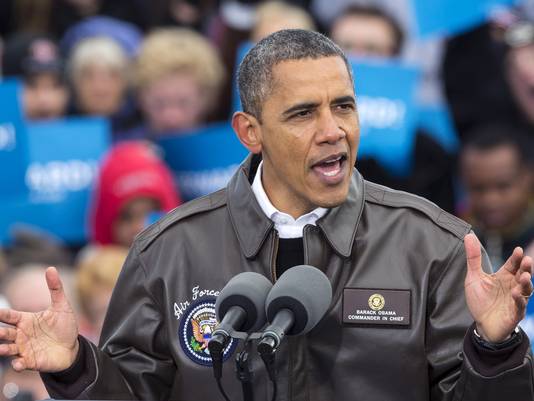
The US President is commander in chief of US armed forces, but even so does not wear military insignia. Instead the POTUS flying jacket has the US Presidential Seal.

Following the US custom, the Australian PM could wear a jacket with the Australian Arms and kangaroo insignia.

Name Patch for Left Side of PMs Jacket

As a member of the Australian Parliament, can use the Australian Arms:


Tony Abbot

Prime Minister of Australia

Kangaroo emblem for Right Side of PM's jacket

The kangaroo emblem is commonly used by the ADF to identify Australian personnel in situations where the Australian flag could be confused with the UK. It is also used by sporting teams and so is suitable for a civilian to wear. The green and Gold of the National Colours would be most suitable:


Australia


Tuesday, April 21, 2015

Propose Australian Defence Force Adopt Common Uniform

This is to suggest that the Australian Air-force and Navy adopt the same Australian Multicam Camouflage Uniform (AMCU) as the Australian Army. The RAAF's recently introduced blue General Purpose Uniform (GPU) should be discontinued as it makes personnel very visible.

Tom Worthington in Disruptive Pattern Camouflage UniformAustralian air-force personnel previously wore the same Disruptive Pattern Camouflage Uniform (DPCU) as the Australian army (the photo shows me wearing the DPCU at a military exercise).


The Royal Australian Navy personnel wear a gray version of the DPCU. There was some logic to the Navy wearing a gray version of the distinctive Australian DPCU, as it showed them to be Australian personnel (the gray background is to hide grime from shipboard duties).

The new RAAF GPU is a blue version of the  Australian Multicam. The RAAF claim this is a "provides a unique and easily identifiable Air Force presence ... still effective in meeting service requirements ... non-warlike environments...". However, the Multicam pattern is worn my many nation's military and similar patterns by potential foes. When rendered in blue the pattern does not look distinctly Australian. The blue color provides no value as camouflage and would make RAAF personnel very obvious targets.

Australian Army, RAAF and RAN personnel are increasingly operating in a joint environment and one where the distinction between peace and war-fighting are blurred. It makes little sense for the joint logistics system to have to carry three uniforms, identical except for color, two of which are unsuitable for use in an operational environment.

The idea that RAAF personnel would wear a uniform not suitable for combat on a peacekeeping operation does not accord with modern practice. A militia force is not going to send advance warning of hostile intent and then politely wait while the RAAF personnel change out of their blue uniforms into camouflage, before attacking. Instead RAAF personnel will be targeted first, as they will be most visible.

A better alternative would be for the Australian Army, Navy and Air Force to wear the same camouflage uniform, with service specific head-wear and patches. The uniforms should also have removable high visibility markings. All services will require high visibility patches on their clothing for some duties, for example on the flight deck of an amphibious ship.

Monday, September 01, 2014

RAAF Leather Flying Jackets

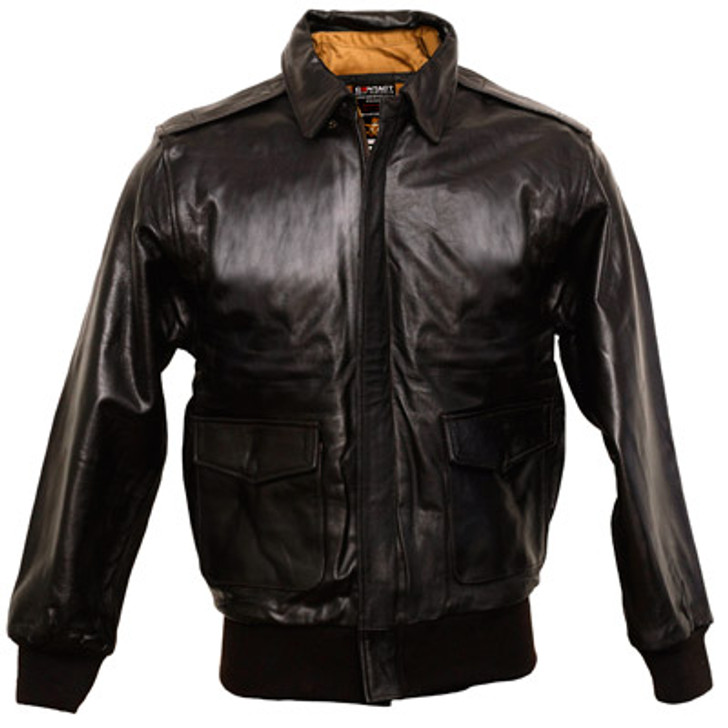
Royal Australian Airforce authorised A2 style leather flying jacket

A few weeks ago I purchased an "A2 leather flying jacket" as worn by Royal Australian Airforce (RAAF) personnel. These are sold in Canberra and on-line by the Military Shop, a non-government store, which sells to the public, as well as to law enforcement and military personnel.

The photo does not really do the jacket justice, which is not as shiny as it appears there (and the shine wears off as the jacket is worn in). Despite the name "flying jacket" these have not been used as much by pilots since World War 2, and are more for bars that the cockpits.

The RAAF style A2 is available in only one color (it is part of a uniform after all): a very dark brown, described as "seal", with a soft tan colored cloth lining. The leather is goatskin, the zip and fasteners are bronze colored metal. I did find a discussion of the issue of leather jackets to RAAF pilots in Hansard (1995) and Air Force Policy stating leather flying jacket are only to be worn by aircrew in flying uniform (2001).

There is only one option with the jacket: with or without Velcro panels for affixing patches. The non-velcro version is for "headquarters" personnel, and the one I chose. The jackets are available in a very large range of sizes from XXXS to 2XXL. This makes it much easier to buy one of these jackets than a civilian one: you decide if you want Velcro or not and then select a size (no worrying about color or style).

A2 style jackets have two large outside patch pockets and two internal ones, plus two pen holders inside. Unlike civilian copies, the A2 jacket has no hand-warmer pockets. It took me several days to get used to not being able to put my hands in my pockets. It may be that this is to ensure a better military posture, or just that such pocket would be difficult to access when strapped into a cramped cockpit.

There appears to be no insulation in the jackets, just the outer leather and inner cloth, making them suitable for winter and spring weather (not summer). There are no buttons, or other attachments, to catch or fall off (the shoulder straps for epaulettes are securely sewn in place). These jackets are not designed for a motorcycle.

The jacket looks well made. The leather collar is held down by two metal press studs and can be stood up to keep your neck warm. There is a leather flap over the main zip at the front which is stiff enough not to need any buttons or Velcro to hold it in place.  There is a metal loop and hook to hold the collar closed, but this is hard to use and not really needed (a metal press stud would have been better). There were a few loose threads around the pockets. The toggle for the inside zipped pocket came off (this also would be better with a metal press stud).

The jacket has stretch material cuffs on the sleeves and around the bottom. This makes it more comfortable to wear when sitting down. I wore the jacket on a 14 hour flight from Sydney to Vancouver and found it very comfortable (it is a flying jacket after all). The jacket was too warm for Vancouver at 25 degrees C, so I stuffed it in my bag for a week. When I pulled it out to wear on the flight back it looked better than before, having taken on a bit of character.

There are numerous A2 Style Jackets offered on-line and in stores. These have the advantage of coming in a range of colors (usually black as well as brown), and hand-warmer pockets. One disadvantage is that some of these jackets have a large US flag sewn inside, or other emblems. The jacket I purchased has just a tiny RAAF emblem inside.

Flying Jacket for Prime Minister

I suggest the Australian PM get a flying jacket, as American presidents do.
 

Name Patch for Left Side of PMs Jacket


The PM can't use emblems of the ADF, not being a member of the military (unlike the US President who is Commander-in-Chief). As a member of the Australian Parliament, the PM can use the Australian Arms. So here is the patch for the left side:


Insert Name

Prime Minister of Australia


Kangaroo emblem for Right Side of PM's jacket

The kangaroo emblem is commonly used by the ADF to identify Australian personnel in situations where the Australian flag could be confused with the UK. It is also used by sporting teams as so is suitable for a civilian to wear. The green and Gold of the National Colours would seem suitable for the left side of the jacket:


Australia


ps: Given the volatile nature of Australian politics it is handy that the name tags are attached with Velcro, so they can be changed quickly, like PMs.  ;-)

Friday, August 30, 2013

RAAF Air Operations Centre

In 2011 I wrote about the design of Australian Defence Command and Control Centers. This was illustrated with images of the DSD Cyber Security Operations Centre, 13 January 2010, DoD photoDefence Signals Directorate Cyber Security Operations Centre (CSOC), opened in January 2010 and depicted staffed by civilians.
The other photo was of personnel in ADF uniforms in the "Air Operations Centre in Canberra". 


There is more on the room in "Taking Command", by Joris Janssen Lok (Aviation Week, 25 June 2007).