Showing posts with label Medical. Show all posts

Saturday, March 19, 2022

Virtual Hospital Provides Real Help With COVID-19

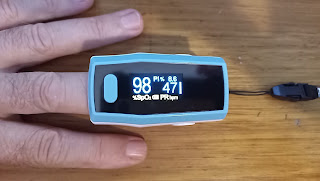
Oximeter on my finger. 
I spent a week as a COVID-19 patient of NSW's first virtual hospital, and it was good. Having had a head cold, with runny nose and cough for a couple of days, last week I took a COVID-19 test. This came back positive. I was in NSW, so filled in their web reporting form (which was remarkably short and easy). I was expecting to be enmeshed in a complex bureaucratic process. But it was not that bad.

In response to the form, I got a text message telling me to self isolate for 7 days, or longer if not well. It also said "To help you get the care you need, please complete this questionnaire". However, by then I felt fine, did not think I needed care, and so did not fill the form in.

Some time later I got a call from "RPA Virtual Hospital". At fist I thought this was a scam, as most unsolicited calls are. But the caller said I had been referred to them by NSW Health. They seemed a little confused as to why they did not have me on file (no reason why they should). They asked about if I was vaccinated, which seemed odd, as they should have access to my vaccination, and medical records online. They also seemed surprised I felt so well. They asked if I needed groceries or medicines. I didn't, as I had been keeping two weeks supply on hand since the start of the pandemic for just such a situation+. They asked about existing health conditions and decided to send me a Oxiometer. Most usefully they explained that I did not need a COVID-19 test to leave isolation after a week (if well). 

The Oxiometer was delivered the next day and is a clever little gadget*. This  indicated my oxygen level was fine, and it was a relief to leave isolation. 

The PRA Virtual is an excellent service. It could be improved by having an easier to find web page. This would help reassure patients it is not a scam. Some sort of app where you enter your pulse & Oxygen reading regularly might be useful, not so much for the readings, but to reassure the hospital the patient is coping. NSW Health might want to amend their instructions to say the questionnaire should be filled in even if you are feeling well.

Also it might be good if the government system, or the hospital, was to contact the patient at the end of the isolation period, to confirm it was now okay to leave isolation. 
+ I am one of the most prepared people for using tech in a pandemic. In 2006 I gave a series of talks around the world on using the web in a pandemic, & in 2009 I set my ANU students the task to design a pandemic web site for the Australian public
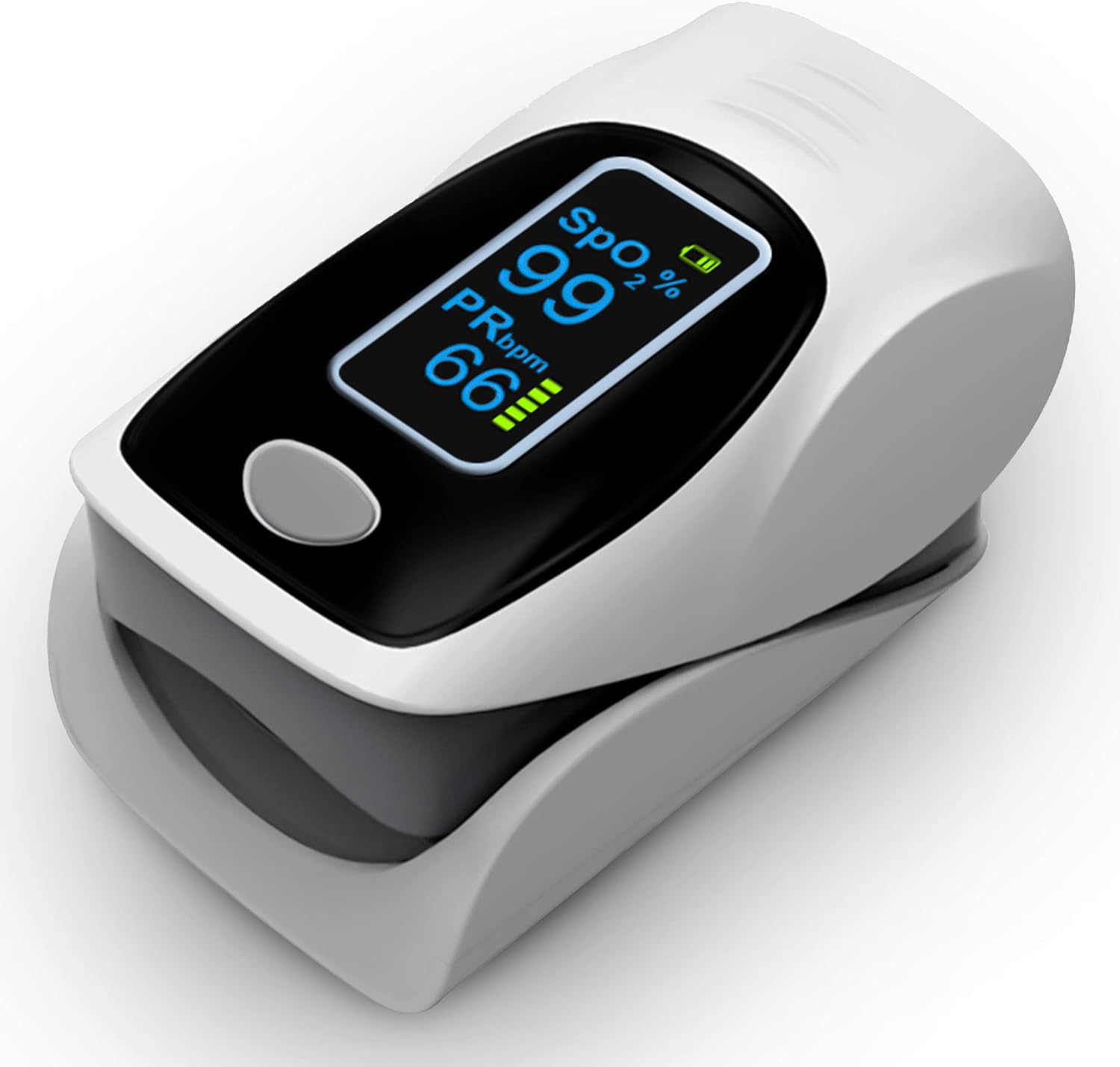
* I ended up ordering an Oximeter online for $15, without a Bluetooth interface. This unit has an Australian Register of Therapeutic Goods (ARTG) registration number. There many units offered online claiming Therapeutic Goods Administration (TGA) "approval", but only 227 listed. Most are around $30.

Wednesday, December 12, 2012

Medical Computer Security Standards

Recent hacking of medical records suggests a greater need for care by GPs. The Royal Australian College of General Practitioners recommend GPs implement a set of "RACGP Computer and Information Security Standards" (CISS) for their practice computer systems. There is a workbook with a check-list provided. This covers Staff roles and responsibilities as well as technical matters.

Contents

Preface
  1. Introduction
    1. How to use this document
  2. Computer and information security checklist
  3. Organisational and technical issues
    1. Risk assessment
      1. Select security coordinator
      2. Articulate the operating parameters
      3. Record all user and technical support contact details
      4. Asset register
      5. Identify the threats and vulnerabilities, and suggested controls
      6. Identify appropriate controls
      7. Security management and reporting, including monitoring
      8. compliance and review planning

      9. Education and communication
      10. Breach reporting
    2. Staff roles and responsibilities
      1. Practice computer security coordinator
      2. Other staff roles and responsibilities
    3. Practice security policies and procedures
      1. Practice security policies and procedures description
      2. Sample confidentiality agreement
      3. Contractual agreements
    4. Access control and management
      1. Setting access levels
      2. Access policy
    5. Business continuity and disaster recovery plans
      1. Business continuity and disaster recovery
      2. Development process and procedures
    6. Staff internet and email usage
      1. Policies for the use of internet and email
      2. Procedures for the safe use of internet and email
    7. Backup
      1. Backup procedure
      2. Backup media cycling
      3. Documenting rotation of backup media
      4. Restoring data
    8. Malware, viruses and email threats
      1. Malware and virus protection
    9. Network perimeter controls
      1. Network perimeter control policy
      2. Intrusion detection system
      3. Firewall
      4. Other controls
    10. Portable devices and wireless networks
      1. Portable devices
      2. Remote access
    11. Physical, system and software protection
      1. Physical
      2. System maintenance
      3. Software maintenance
    12. Secure electronic communication
      1. Healthcare identifiers
      2. Message system record
  4. Conclusion
    • Glossary of computer and information security terms 

    From: RACGP Computer and Information Security Standards, Royal Australian College of General Practitioners, 2011
RACGP cite these standards:
  • AZ/NZS ISO 31000:2009 Risk management – principles and guidelines. Sydney: Standards Australia International, 2009
  • HB 292 – 2006 A practitioners guide to business continuity management. Sydney: Standards Australia International, 2006
  • HB 174 – 2003 Information security management – implementation guide for the health sector. Sydney: Standards Australia International, 2003. Note: this handbook is due for revision shortly
  • HB 231 – 2004 Information security risk management guidelines. Sydney: Standards Australia International, 2004
  • HB 292 – 2006 A practitioners guide to business continuity management. Sydney: Standards Australia International, 2006
  • HB 293 – 2006 Executive guide to business continuity management. Sydney: Standards Australia International, 2006
  • Information Privacy Principles under the Privacy Act 198
  • ISO/IEC 27002:2006 Information technology – Security techniques – Code of practice for information security management
  • ISO 27799:2008 Health Informatics – Information security management in health using ISO/IEC 27002
  • NIST (2008). Computer security incident handling guide. Special Publication 800–61. National Institute of Standards and Technology
  • Office of the Australian Information Commissioner. (2006). National Privacy Principles

Friday, November 16, 2012

Implementation of eLearning: key factors for success

Greetings from the Australian National University  Science Teaching and Learning Colloquium on Research Led Education, where  Alex Webb is discussing online interactive eLearning
resources. She is showing materials for learning radiological anatomy at University of Southampton. The effectiveness of this material for undergraduate medical students at the University of Southampton and postgraduate-entry medical students at the ANU. While university study, these courses also have a vocational aspect, in that medical students are required to meet national standards for their practice, as well as learn theory and undertake research.

Dr. Webb mentioned that accessibility to the material was important. However, I tried looking at the "
Radiological Anatomy" from University of Southampton and was not able to access it. The materials required an Adobe x-director plug-in, which does not appear to be available for Linux. The  screenshots  have tiny text, too small for me to read. The UK, where University of Southampton is located,  has similar disability discrimination legislation to Australia and the university has a web page on how to design and assess accessible materials