Showing posts with label Russia. Show all posts

Thursday, March 20, 2014

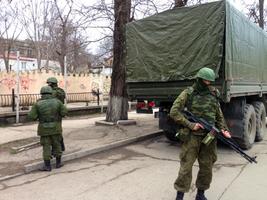
Why Russia Invaded Ukraine

Greetings from the Australian National University in Canberra, where  Professor Paul Dibb is speaking on "Why did Putin invade Ukraine?" (podcast available). The room is packed, with an atmosphere similar to that of the "Preliminary analysis of Japan Earthquake" in March 2011. On that occasion experts were discussing a natural disaster. Professor Dibb started by modesty saying he was no longer an expert on day to day Russian events. He argued that it was necessary to understand the Russian point of view and that of its leaders, without necessarily agreeing with them. He emphasised that Russia is not an island nation and have a history of having been invaded across its land boarders (Sweden 1700s, France 1800s and Germany 1900s).

Professor Dibb believes that President Putin thinks Russia was deceived by the West, with an understanding that NATO would not expand to Russia's boarders. NATO aircraft in Estonia are only about 100km from Russia. Russia suspects the USA wants to encircle Russia with its allies. Crimea provides Russia with one of its few warm water ports. President Putin suspects involvement by Poland in Ukraine.

Professor Dibb commented that Putin is a former KGB officer of the hard type who had to been confronted in Canberra. He pointed out that Russia and the USA still have sufficient nuclear weapons to devastate each others countries (even if the command and control of the Russian systems are questionable).

Professor Dibb  said there was no prospect of a new cold war, as there is no ideological divide. However, he said that Russia is not going to become a democratic country in the Western style, but an autocratic regime (dependent on energy exports). Professor Dibb said Russia would attempt to destabilise and occupy Ukraine, with no prospect of NATO intervention. Russian military doctrine depends on early use of nuclear weapons, due to weakened conventional forces. NATO may conduct some exercises in Poland.

 Professor Dibb said that Australian defence policy needs to look beyond terrorism, climate change and the Internet and focus on "good old fashioned force majeure". He drew parallels between Russia and China as autocratic regimes which are challenging the borders in their region. He said that if China decided to use limited military force to assert claims in the south china sea he doubted that Asian would agree to act. He expressed concern over China's aid to Timor-Leste and prospects for future Chinese military presence there.


Professor Dibb said that USA's development of coal seam gas might counter Russia's energy dominance in Europe.

Professor Diibs were interesting when taken alongside Tuesday's "Causes of World War One Repeated in Asia Today?". In my view nations should look to their own defence, as well as supporting alliances and international bodies. Australia should order more P-8 Poseidon Maritime Patrol Aircraft, an off the shelf replacement for the Collins Class submarine and F-35B Lightning II STOVL aircraft to equip  HMAS Canberra and HMAS Adelaide.

Why did Putin invade Ukraine?


Public Lecture: School of International, Political & Strategic Studies, ANU College of Asia & the Pacific

Speaker: Emeritus Professor Paul Dibb
Date: Thursday, 20 March, 2014 - 12:30 to 13:30
Abstract: This talk examines why Putin decided to intervene in Ukraine. What were the major deciding factors from his point of view?
Getting inside Putin's mind requires understanding Russia’s perspectives on the geopolitics of Ukraine's potential membership of the EU and NATO; the military importance of the naval base in Crimea; the deep history of Russia's relationship with Ukraine--both ancient and modern; and how Putin is playing the Ukraine/Crimea issue in domestic politics.
None of this is to ignore a very different and legitimate perspective coming out of Kiev. But we need to understand what is driving Putin and how much further is he likely to go militarily.
Professor Dibb also addresses the issue of the use of force by Moscow and the reactions of the West. Have we returned to a previous era where military strength is supreme and spheres of influence prevail? And will the Russian experience be replicated in our part of the world by an increasingly powerful and assertive China?

Biography

Paul Dibb is Emeritus Professor of strategic studies in the School of International, Political and Strategic Studies, College of Asia and the Pacific at the ANU. He was head of the Strategic and Defence Studies Centre from 1991 to 2004. Before that he held the positions of deputy secretary for Defence, director of the Joint Intelligence Organisation and head of the National Assessments Staff.
He studied the former Soviet Union for over 20 years both as a senior intelligence officer and academic. He advised ASIO on certain Soviet activities. His book The Soviet Union--the Incomplete Superpower was published by the International Institute for Strategic Studies, London in 1986, reprinted 1987 and second edition 1988.
Light lunch will be provided after the lecture

Thursday, March 13, 2014

Why Putin Invaded Ukraine

Professor Paul Dibb will speak on "Why did Putin invade Ukraine?" at the Australian National University in Canberra, 1:30pm, 20 March 2014.

Why did Putin invade Ukraine?


Public Lecture: School of International, Political & Strategic Studies, ANU College of Asia & the Pacific

Speaker: Emeritus Professor Paul Dibb
Date: Thursday, 20 March, 2014 - 12:30 to 13:30
Abstract: This talk examines why Putin decided to intervene in Ukraine. What were the major deciding factors from his point of view?
Getting inside Putin's mind requires understanding Russia’s perspectives on the geopolitics of Ukraine's potential membership of the EU and NATO; the military importance of the naval base in Crimea; the deep history of Russia's relationship with Ukraine--both ancient and modern; and how Putin is playing the Ukraine/Crimea issue in domestic politics.
None of this is to ignore a very different and legitimate perspective coming out of Kiev. But we need to understand what is driving Putin and how much further is he likely to go militarily.
Professor Dibb also addresses the issue of the use of force by Moscow and the reactions of the West. Have we returned to a previous era where military strength is supreme and spheres of influence prevail? And will the Russian experience be replicated in our part of the world by an increasingly powerful and assertive China?

Biography

Paul Dibb is Emeritus Professor of strategic studies in the School of International, Political and Strategic Studies, College of Asia and the Pacific at the ANU. He was head of the Strategic and Defence Studies Centre from 1991 to 2004. Before that he held the positions of deputy secretary for Defence, director of the Joint Intelligence Organisation and head of the National Assessments Staff.
He studied the former Soviet Union for over 20 years both as a senior intelligence officer and academic. He advised ASIO on certain Soviet activities. His book The Soviet Union--the Incomplete Superpower was published by the International Institute for Strategic Studies, London in 1986, reprinted 1987 and second edition 1988.
Light lunch will be provided after the lecture

Monday, September 10, 2012

APEC Cross-border Mobility of Universities, Researchers and Students

The 20th APEC Economic Leaders' Meeting in Vladivostok has agreed on "Promoting Cross-Border Education Cooperation". The aim is to allow students and researchers to work at institutions in each others countries and allow institutions to provide courses across national boundaries. This will require considerable work on quality assurance and accreditation. But it should be noted that this will not necessarily require students or staff to physically travel between countries, as study and research collaboration is increasingly being done on-line.

Australia already has an education agreement with India, signed by the then Minister for Education, Julia Gillard,in 2010. However, there appears to have been little progress on implementation. Australia is also a signatory to the "Bologna Accords") for standardization of higher education qualifications with Europe. The only other APEC countries to sign the accords are NZ and USA, making implementation of a regional agreement more difficult. Also the mix of government and commercial education providers will complicate the process.
Promoting Cross-Border Education Cooperation
Education is the pre-eminent source of economic development in the 21st century, creating more and higher quality jobs and bolstering productivity growth. Education is also a fundamental component of economic activity. Cooperation in the education sectors of APEC economies fosters innovative growth as students, researchers and education providers build scientific, technological and linguistic communities.
All APEC economies stand to gain from enhancing collaboration on cross-border education. Many developing economies in the Asia-Pacific region are rapidly moving into higher value-added manufacturing and knowledge intensive industries driven by innovation. Access to a wide range of quality higher education services is critical for sustainable growth on this development pathway. The APEC region also contains some of the world’s largest exporters and consumers of education services. Facilitating the flow of students, researchers and education providers, and reducing the transaction costs involved provides opportunities for a significant expansion of cross border education services to the benefit of all economies.
Increasing cross-border student flows will strengthen regional ties, build people to people exchanges, and promote economic development through knowledge and skills transfer. High quality cross-border education equips students with the 21st century competencies they need for their full participation in a globalized and knowledge based society.
Therefore, we, the APEC Leaders, agree that strengthening collaboration among APEC economies is crucial for facilitation of the work on specific policies, including those relating to quality assurance, accreditation, cross-border exchange and data collection. Such work will have a significant impact on the education sector in APEC economies. Important steps were made by economies in 2012 to enhance practical and sustainable educational cooperation, exploring a number of proposals for cross border education within the region as well as research, information, and knowledge sharing. We encourage further development, on a voluntary basis, consistent with individual economies' circumstances, of cross-border education cooperation and facilitation of exchange in education services within APEC in the following areas:
a) Enhancing the mobility of students. This may be achieved, but not limited by the following:
  • identifying, comparing and implementing best practices among APEC economies for course accreditation and quality assurance systems, as well as targeted capacity building projects;
  • developing models to guide reform and implementation of good regulatory practices, drawing on case studies of domestic education providers;
  • exploring ways to increase the transparency of student visa requirements.
b) Enhancing the mobility of researchers. This may be achieved, but not limited by the following:
  • developing existing academic exchanges and joint research activities between and among universities in APEC economies;
  • exploring ways to improve the mobility of the academic workforce.
c) Enhancing the mobility of education providers. This may be achieved, but not limited by the following:
  • exploring ways to enhance transparency of regulation of foreign providers and to remove unnecessary barriers to market access;
  • mapping of existing regulations for the establishment of foreign providers;
  • benchmarking and identifying best practices in APEC on quality assurance systems.
d) Enhancing the existing network of bilateral agreements. This may be achieved by, but is not limited by the following:
  • examining issues related to the flexible design and delivery of educational content (such as online courses) among APEC economies;
  • enhancing availability of data on educational programs in APEC economies.
We instruct Ministers and officials to take forward these priorities on cross-border student, researcher and education provider mobility to develop cross-border educational cooperation in the APEC region while taking into consideration the circumstances of individual economies.
From: Promoting Cross-Border Education Cooperation, Annex D of the APEC 2012 Leaders' Declaration, (the "Vladivostok Declaration: Integrate to Grow, Innovate to Prosper"), at the 20th APEC Economic Leaders' Meeting in Vladivostok, Russia, 9 September 2012