
Libraries Like Airport Business Lounges
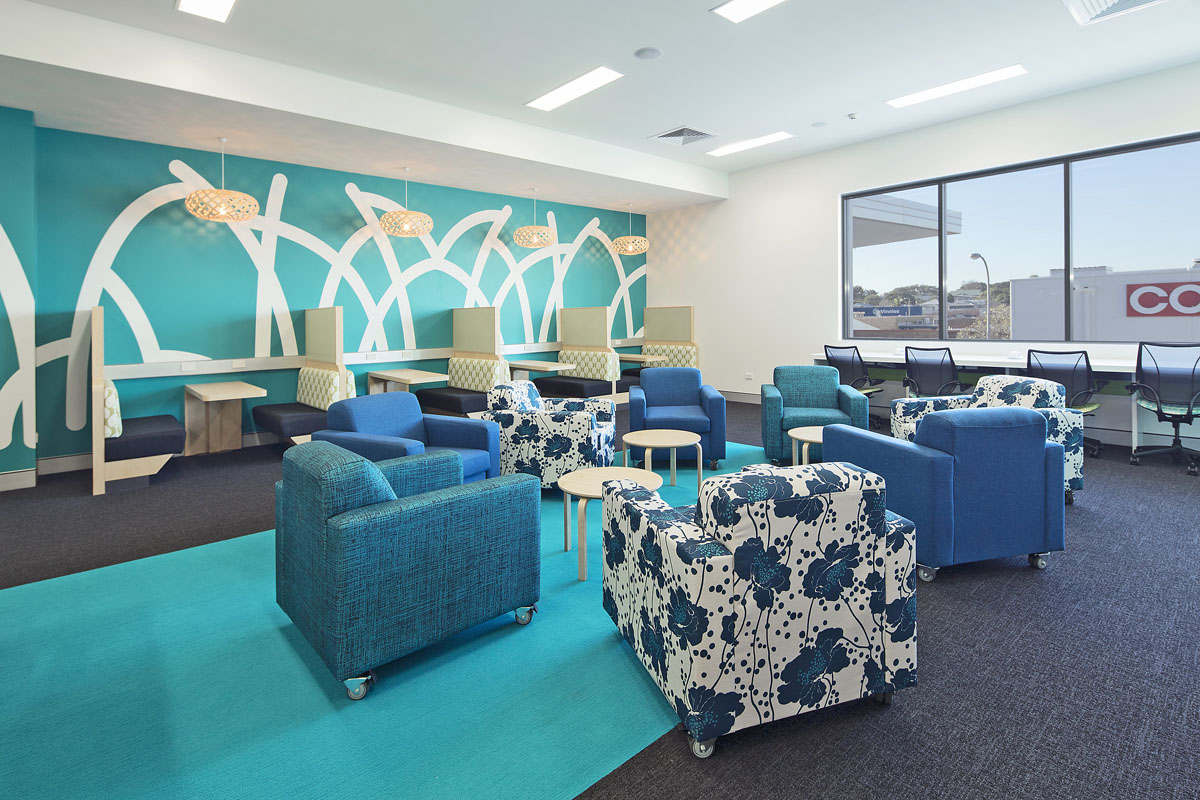 |
| Wynnum Library by Deluca. Photo by Carole Margand (2016) |
My love of libraries came later in life, first as somewhere to sleep at university, before the next party. Then much, much, later, somewhere to find knowledge.
One of the wonders of Canberra's (and most of Australia's) public and academic libraries is that they are open for anyone to walk in. In some countries, you have to show your ID to enter a public library and the public is not admitted to university libraries at all.
NLA and the Internet Revolution
Canberra's libraries give generously of their facilities. This does not involve just keeping copies of other people's books. Along with having an excellent cafe and bookstore, the National Library of Australia (NLA) had a central role in getting the Australian Government on the web. In the 1990s a cabal of politicians, public servants, academics and industry people were working on making government information freely available online. At the time this was contrary to government policy: the government sold information, on paper, in its bookstores. It was decided each government agency would create a website. But there would need to be a central index and none of the central agencies wanted to do it. So the National Library of Australia stepped in and created the Australian Government's first home page. This was so successful that government policy was changed.
ANU and the Innovation Revolution
In my closing address for the 1998 Information Industry Outlook Conference in Canberra, I argued that Australia could emulate Cambridge (England) as a high technology industry center. I could put this confidently, not only because I had been and talked to the people doing it in Cambridge, but because I had read a book. Not really read the book, so much as devoured it. In the ANU's Hancock Library I found Segal Quince & Partners 1985 report on "The Cambridge phenomenon: the growth of high technology industry in a university town" (still in the ANU library). Over several days I made notes, appropriately, on a Cambridge Computer Z88. I included that Summary in a book, which is mentioned occasionally by Cambridge scholars (who apparently had difficulty finding a copy of their report). Technology companies are now springing up in Canberra, next to the ANU campus.
UNSW Canberra and the Education Revolution
Two decades later, I became almost by accident a mature age graduate university student. My studies were in online education and mostly conducted online, at institutions 1,000 km and 13,000 km away. But I found e-books not ideal for intensive study and was delighted to discover that all of Canberra's university libraries would let me borrow books. Most useful for education studies were the small and friendly Australian Catholic University library and UNSW Canberra. UNSW Canberra had a collection of books published decades ago by Open University UK (OUUK) on how to design, plan, budget and deliver distance education. These books had been overlooked in a rush to MOOCs as a new form of education, but many of the problems and solutions discovered with MOOCs has already been addressed decades ago by OUUK.
I left the Department of Defence in 1999, but DoD have now followed me to the ANU (paying for an extra floor in the new ANU Computer Science building). So its back to UNSW Library to brush up on cybersecurity.


